Lawn Mowers for Sale: The Complete Buying Guide 2026
Analytical buying guide from Mower Help on lawn mowers for sale in 2026. Learn how yard size, power type, and features drive price and value.


When shopping lawn mowers for sale, you’ll encounter a broad spectrum of options. Corded electric and cordless battery mowers are typically the most affordable, starting around $150-$500; gas-powered push mowers run $300-$800; riding and premium gas models often range from $1,500 to over $4,000. Choose based on yard size, terrain, and maintenance willingness.
Market landscape: Today’s lawn mowers for sale
The term lawn mowers for sale encompasses a broad ecosystem, from corded electric models to high-end riding mowers. Shoppers now face more power sources than ever, with corded electric, cordless battery, gasoline, and hybrid designs competing for attention. According to Mower Help, the current market emphasizes price-to-value balance and ease of maintenance. For homeowners, the decision often hinges on yard size, terrain, and how much time they want to spend on upkeep. The shift toward cordless options mirrors a broader consumer trend toward simplicity and lower emissions, while still accommodating larger lawns with fuel-powered options. In 2026, retailers and manufacturers frequently bundle mower sales with accessories like specialty blades, mulch kits, and baggers, making it practical to consider total cost of ownership rather than upfront price alone. The density of choices means buyers must translate personal needs into concrete criteria: deck width, drive type, cut quality, and service networks. Across markets, promotions and seasonal sales create windows where the best deals appear, especially at the start of spring and during late summer clearance. This landscape rewards informed shoppers who test run devices, compare features, and ask for in-store demonstrations before committing to a purchase.
Key takeaway: Start with yard size and terrain, then evaluate power type and maintenance implications to find the best overall value.
How to size up your yard and select power type
A practical approach begins with measuring your lawn and noting slopes, obstacles, and typical cutting time. For small, flat lots, corded electric or cordless battery mowers offer maneuverability and quiet operation with little upkeep. Medium yards with moderate terrain often fit well with efficient gas push mowers or strong cordless units, balancing runtime and power. Large properties or hilly landscapes benefit from riding mowers or fuel-powered models with larger gas tanks and higher torque. Consider battery voltage or engine displacement as proxies for performance, but also test cut quality and turn radius in-store. Drive systems (manual push, self-propelled, or riding) influence fatigue and precision; a self-propelled or riding option can dramatically reduce effort on longer sessions. Finally, evaluate dealer networks and parts availability; strong service support reduces downtime and extends the life of lawn care investments. The Mower Help team advises trying models in-store and reading user reviews to gauge real-world reliability.
Key features that influence price and performance
Price often reflects deck size, motor or battery quality, and durability markers like steel decks and reliable transmissions. Common features to compare include deck width (larger decks cover more ground per pass), cutting height range, mulching capabilities, bagging efficiency, and blade quality. Gas mowers with higher displacement typically offer more torque for tough grass, while cordless mowers prioritize battery chemistry and charger efficiency. Maintenance requirements differ: gas engines need oil changes and spark plug care, while electric models require battery maintenance and occasional motor checks. Accessories such as baggers, mulch kits, and grass catcher funnels can push up total cost but add convenience and soil-health benefits. The buying process should account for service networks, warranty length, and available replacement parts. In general, the smarter move is to balance upfront price with expected lifespan, maintenance costs, and energy use over time. The overall value grows when you choose a model that aligns with yard characteristics and your willingness to perform routine upkeep.
Maintenance costs and ownership value
Ownership value hinges on ongoing costs beyond the purchase price. Regular maintenance, such as oil changes or battery replacements, can extend mower life and performance. Corded electric mowers typically have lower long-term maintenance costs than gas engines but require reliable electrical access and cord management. Cordless models depend on battery health and charger availability; a degraded battery can drive up replacement expenses. Riding mowers carry higher upfront and maintenance costs, but they deliver efficiency for larger properties and rough terrain. The best approach is to forecast annual costs: routine parts, fuel or electricity, and seasonal tune-ups. Proper storage, blade sharpening, and cleaning reduce wear and help maintain performance. When evaluating options, compute total cost of ownership over 5-7 years rather than focusing solely on sticker price. The Mower Help perspective emphasizes aligning performance expectations with yard size to maximize value and minimize hidden costs.
Practical tip: Schedule annual maintenance reminders and keep spare blades on hand to avoid downtime during peak mowing seasons.
Buying channels and negotiation tactics
Where you buy matters almost as much as what you buy. Big-box retailers often offer competitive pricing and seasonal promotions, while local dealerships can provide personalized service, test runs, and flexible warranties. Online marketplaces may present favorable financing options but require careful inspection of model year and condition when buying used units. To maximize savings, compare price quotes across 2-4 sellers and ask for bundles that include accessories or extended warranty coverage. Timing is crucial: spring launch promos and late-summer clearances frequently yield the best deals, especially for flagship models. Don’t overlook refurbished units from reputable sources, which can balance cost with reliability when properly inspected. Always verify warranty terms, service networks, and return policies before finalizing the purchase. The aim is to strike a balance between upfront affordability and long-term reliability, reducing total ownership friction.
Common myths about lawn mowers for sale
One common myth is that bigger engines always mean better performance; yard size, grass density, and terrain are equally important factors. Another myth is that corded electric mowers cannot handle hills; modern cordless models and higher-powered mowers tackle moderate grades effectively. A third misconception is that maintenance-free mowers exist; all machines require periodic blade sharpening, air/fuel filtration, and component checks. Finally, some buyers assume used equals poor value; with careful inspection, a well-maintained used mower can offer substantial savings without sacrificing reliability. The best approach is to test drive, review service records, and compare total cost of ownership across new, used, and refurbished options. The Mower Help guidance emphasizes transparent testing and reputable sellers to reduce risk.
Quick start buying checklist
- Define yard size and terrain.
- Choose power type (electric, cordless, gas, or riding).
- Set a realistic budget and desired features.
- Check warranty length and service networks.
- Inspect blades, deck, wheels, and carburetion (for gas models).
- Compare after-sale support and delivery options.
- Read reviews and test run in-store whenever possible.
Comparison of mower types by price, runtime, and power source
| Mower Type | Average Price Range | Typical Run Time | Power Source |
|---|---|---|---|
| Gas-Powered Lawn Mower | $500-$1,800 | 60-180 minutes per tank | Gasoline |
| Corded Electric Lawn Mower | $150-$500 | Continuous while plugged in | Electric cord |
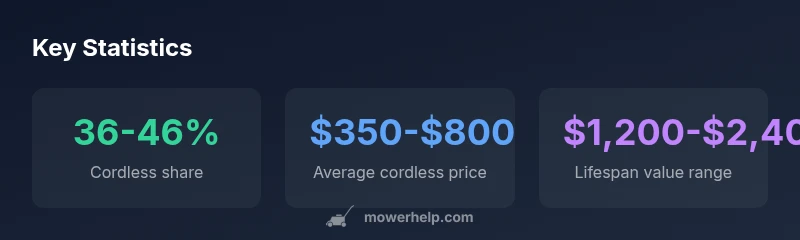
| Cordless Battery Lawn Mower | $350-$800 | 20-60 minutes per charge | Rechargeable battery |
| Riding Mower (Entry) | $2,000-$4,500 | 2-5 hours | Gasoline/Hybrid |
Got Questions?
What is the best mower type for a small lawn?
For small lawns, corded electric or cordless battery mowers typically offer the best balance of cost and convenience. They’re lighter, quieter, and easier to maintain than most gas models. Choose a model with a deck width that covers your area efficiently and a favorable warranty.
For small lawns, cordless or corded electric mowers are usually best for value and ease of use.
Should I buy a new or used mower for sale?
New mowers come with full warranties and reliable performance. Used mowers can be a good value if you inspect the engine, blades, and battery or fuel system closely and verify service records. Weigh the risk of hidden wear against the purchase price.
New mowers have warranties; used ones can save money but require careful checks.
Do cordless mowers have enough power for hills?
Cordless mowers work well on flat to moderately hilly lawns, especially higher-voltage models. For steep terrains, gas-powered or riding mowers with high torque are often more reliable. Always test on your slope if possible.
Cordless can handle hills, but for steep slopes consider gas or riding mowers.
What warranty should I expect on lawn mowers for sale?
Most new mowers come with 2- to 5-year warranties covering structural components; engines or batteries may have separate terms. Read the fine print for exclusions and parts coverage. Consider extended warranty if your usage pattern warrants it.
Warranties vary; check coverage for deck, engine, and battery and their limits.
Where can I find the best deals on lawn mowers for sale?
Look for seasonal promotions at big-box retailers and local dealers, and compare price quotes across several sellers. Promotions often combine bundles with blades and baggers. Timing around spring and late summer can yield the best value.
Shop around and watch seasonal promos; bundle deals can save more.
“When evaluating lawn mowers for sale, focus on total ownership costs—not just the upfront price. Durable decks, reliable parts, and accessible maintenance save money over years.”
The Essentials
- Identify yard size before selecting power type
- Balance upfront cost with long-term maintenance
- Prioritize deck width and cutting height for efficiency
- Check warranty and service networks before buying
- Test models in-store to verify feel and balance