Home Depot Lawn Mower Battery Buying Guide 2026
A comprehensive buying guide to choosing the right lawn mower battery from Home Depot, including compatibility checks, battery types, maintenance, and warranties for DIY homeowners.


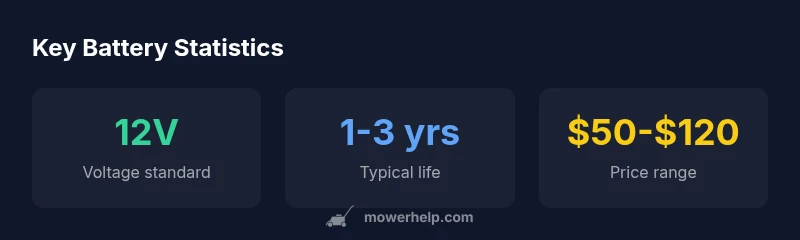
The Home Depot lawn mower battery landscape is centered on 12-volt configurations, with both lead-acid (AGM) and lithium-ion chemistries available. When choosing, verify mower compatibility, voltage, terminal type, and CCA rating from the manual or battery sticker. For most DIY homeowners, start with the common 12V options and ensure the battery type matches your mower’s requirements.
Understanding the Home Depot lawn mower battery landscape
When shopping for a replacement battery at Home Depot, homeowners frequently encounter a core decision: selecting a battery that matches voltage, chemistry, and connector type for their specific mower. For the home, the most common configuration remains 12-volt, with two broad chemistries dominating shelves: flooded/lead-acid variants and newer lithium-ion options. The landscape has shifted in the past few years as Li-ion batteries have become lighter and longer-lasting, but price and availability still influence buying decisions. The Mower Help team notes that most DIY projects start with the simplest, most widely compatible choice: a 12V battery that fits the mower’s manual specifications. When you search for a battery, keep in mind the model number, voltage, and terminal layout. This reduces the risk of buying a unit that won’t fit or won’t work with your charging system. As you compare options at Home Depot, also consider how the battery’s chemistry aligns with your mowing behavior and maintenance routine.
How to verify compatibility before you buy
The most reliable way to avoid a mismatch is a simple pre-purchase checklist. First, locate your mower’s OEM part number and voltage specification in the user manual or on the battery compartment lid. Then compare those numbers to the battery listing on Home Depot’s product page or in-store signage. Pay attention to:
- Voltage and chemistry: Ensure the battery is 12V if your mower requires it, and confirm whether lead-acid or Li-ion is specified for your model.
- Terminal type and polarity: Some models use different terminal shapes or screw-in versus snap-on connectors.
- Reserve capacity and CCA/Ah: Match the capacity to your mowing needs and starting demands, especially in cold weather.
- Physical fit: Measure the battery compartment dimensions and verify that the new battery’s footprint and height fit without interfering with the mower frame.
- Compatibility notes: Some models require OEM batteries or adapters; always cross-check the exact model you own.
If you’re unsure, use Home Depot’s online compatibility filters or ask a store associate to confirm before purchase. Keeping a note of your mower’s age and typical usage (weekly mowing, yard size) helps tailor the choice toward longer-term reliability.
Battery types you’ll encounter at Home Depot
At Home Depot, you’ll encounter mainly two 12V battery families suitable for lawn mowers:
- Lead-acid AGM (sealed): These are the traditional choice—affordable, readily available, and easy to replace. AGM batteries are maintenance-free and less prone to spillage, making them a practical option for most homeowners.
- Lithium-ion (Li-ion): These offer higher energy density, lighter weight, and often better deep-discharge performance. Li-ion models can be a good fit for electric or hybrid mowers and for users who value longer run times and easier handling, though the upfront cost is higher.
Pros and cons:
- AGM lead-acid: Pros include lower upfront cost and broad compatibility; cons are heavier weight and more frequent maintenance checks for electrolyte levels in traditional flooded types (not for AGM, which is sealed).
- Li-ion: Pros include weight savings and potentially longer service life; cons include higher initial price and sometimes stricter compatibility requirements with chargers or vehicle electronics.
In any case, confirm that the battery you pick matches your mower’s voltage and terminal layout. If you’re switching chemistries (for example, from lead-acid to Li-ion), verify it won’t conflict with your charging system or warranty terms.
Maintenance and safety tips for Battery care
Caring for your mower battery extends its life and protects you while operating the mower. Practical tips include:
- Regular inspection: Check terminals for corrosion and clean with a non-abrasive solution if needed.
- Proper charging: Use a charger designed for 12V batteries and avoid overcharging; stop charging when the battery reaches a full state of charge.
- Seasonal storage: If you store the mower seasonally, store the battery in a cool, dry place and keep it charged to avoid sulfation in lead-acid types.
- Avoid deep discharges: Deep cycling reduces capacity; recharge the battery after use rather than letting it sit flat.
- Safe removal and disposal: When it’s time to replace, recycle the old battery at Home Depot or an approved recycler; never discard in household waste.
These practices help maximize performance and minimize hazards, aligning with the guidance found in the Mower Help Analysis from 2026.
Budget-friendly buying guide: price ranges, warranties, and returns
Budget considerations matter when choosing a Home Depot lawn mower battery. Prices for 12V batteries generally fall within a broad range, influenced by chemistry, capacity, and brand. A practical rule of thumb is to compare base options (lead-acid AGM) with Li-ion equivalents, then factor warranty and expected lifespan.
- Warranty: Expect a 1–2 year warranty on many 12V mower batteries. A longer warranty often correlates with higher upfront cost but may offer peace of mind for high-use yards.
- Returns and exchange policy: Review the store’s return window for batteries, particularly if you purchase online and have it shipped. Some stores require the receipt and the unused battery for returns.
- Total cost of ownership: Consider the cumulative cost of replacement over a typical mowing season versus the convenience or performance gains of Li-ion options.
To maximize value, pair a compatible battery with a reputable charger and store it in a cool, dry place. The Mower Help analysis indicates that a balanced decision—factoring price, warranty, and usability—yields the best long-term satisfaction.
Installation, replacement steps, and disposal guidance
Replacing a lawn mower battery is a straightforward but safety-critical task. Follow these steps for a smooth swap:
- Turn off the mower and remove the key or disconnect power if applicable. 2) Open the battery compartment and disconnect the negative terminal first, then the positive. 3) Remove the old battery and inspect the terminals for corrosion. 4) Clean the connectors and install the new battery, ensuring the terminals are attached in the correct order (negative first, then positive). 5) Reconnect and test the mower to confirm starting performance. 6) Dispose of the old battery at a proper recycling facility or Home Depot battery recycling bin.
If you’re upgrading to Li-ion, ensure your charger supports Li-ion chemistry and that the system’s electrical load is compatible. For disposal and recycling, follow local guidelines and use approved channels. These steps reflect standard maintenance practices highlighted by Mower Help Team in 2026 guidance.
Common lawn mower battery types and quick-fit notes
| Battery Type | Voltage | Compatibility Notes |
|---|---|---|
| Lead-Acid AGM | 12V | Common, affordable, maintenance-free (sealed) |
| Lithium-ion | 12V | Lightweight, high energy density; electric/hybrid mowers |
| Compatibility check | Varies by model | Always verify OEM part number and terminal layout before purchase |
Got Questions?
What battery types are sold at Home Depot for lawn mowers?
Home Depot typically carries lead-acid AGM and lithium-ion 12V batteries that suit most lawn mowers. Always verify compatibility with your model’s manual before buying.
HD carries 12V AGM and Li-ion options; always check model compatibility first.
How do I know if a 12V battery will fit my mower?
Check the mower’s OEM part number and voltage in the manual, compare with the new battery’s specs, and confirm the terminal layout matches.
Look up the model number and voltage, then compare terminals.
Can I use a Lithium-ion battery in a gas mower?
Only if your mower supports Li-ion chemistry and the battery’s voltage and connectors are compatible with the system and charger.
Only if the mower supports Li-ion and parts match.
What is the typical warranty on Home Depot lawn mower batteries?
Most 12V mower batteries carry a 1–2 year warranty; check the specific product page for exact terms and coverage.
Most come with a 1–2 year warranty.
How should I dispose of an old lawn mower battery?
Recycle at Home Depot or a local recycling center; many stores offer battery recycling programs and will dispose of old units safely.
Recycle the old battery at a store or local recycling center.
Are there differences between AGM and flooded batteries?
AGM is sealed and maintenance-free, safer for DIY handling, while flooded types require electrolyte management. Most modern mowers use AGM or Li-ion.
AGM is sealed and safer; flooded needs more maintenance.
“The right battery starts with matching voltage and connector type to your mower, then selecting the chemistry that fits your usage and budget.”
The Essentials
- Verify voltage and compatibility before purchasing.
- Prefer 12V options first for broad compatibility.
- Check warranty duration and returns policy.
- Consider Li-ion for electric/hybrid mowers when compatible.
- Recycle old batteries responsibly and follow local guidelines.