How Much Is a Push Lawn Mower? A Practical Price Guide
Explore cost ranges for push lawn mowers, compare manual reels to gas and electric models, and learn strategies to save without sacrificing reliability.


Push lawn mowers span a broad price range. Manual reel mowers typically start around $60–$150, while basic gas- or electric-powered push mowers usually run $200–$350. Higher-end models with larger cut widths, advanced transmission, and mulching blades can push prices toward $400–$500. Prices vary by brand, build quality, and local sales, so shoppers often compare several options before buying.
How much is a push lawn mower? What determines price
Prices for push lawn mowers are influenced by a mix of type, materials, features, and brand reputation. In addition to the core option—manual reel, corded electric, battery-powered, or gas-powered—buyers should consider the deck material (steel vs. plastic), cut width, weight, and ease of storage. Higher durability often accompanies heavier builds and broader warranty coverage, while compact, lightweight models target smaller yards with modest budgets. Local demand and seasonality also play a role: retailers frequently adjust prices around spring rankings and end-of-season clearances. For homeowners trying to balance upfront cost with long-term value, the right mower is the one that minimizes total effort and maintenance over its lifespan.
When evaluating price, think about what you’ll actually use. If you have a small lawn with flat terrain, a manual reel mower may deliver the best long-term value. For medium to large yards or uneven ground, a gas-powered or battery mower that cuts wider and handles tall grass can reduce mowing time, which lowers indirect costs like fuel and wear on your body.
Price ranges by mower type
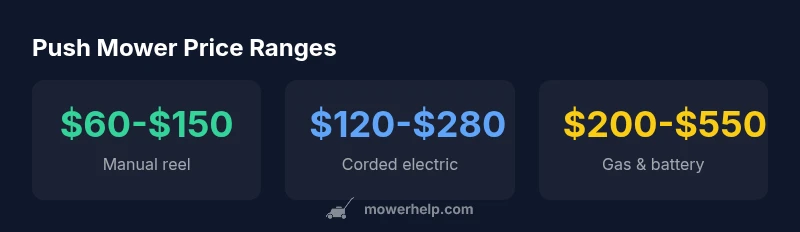
The simplest way to interpret sticker prices is to group mowers into four major categories and understand their typical price bands. Manual reel mowers are the most affordable, followed by corded electric models, then battery-powered units, with gas-powered push mowers occupying the upper end of the spectrum. The exact price within these bands depends on features, brand, and build quality. Here are representative ranges to guide budgeting:
- Manual reel: roughly $60–$150
- Corded electric: roughly $120–$280
- Battery-powered (cordless): roughly $200–$450
- Gas push: roughly $250–$550
Keep in mind that larger cut widths, mulching blades, bags, and self-propelled options generally push prices higher, while compact designs and fewer frills keep costs down.
Beyond the sticker price: total cost of ownership
Price is only part of the equation. Total cost of ownership includes maintenance, consumables, repair needs, and longer-term energy or fuel costs. Gas mowers incur ongoing fuel and oil expenses, spark plug replacements, and potential carburetor service. Electric models require battery health management, charger availability, and occasional blade sharpening, though they typically involve lower ongoing fuel costs. Manual reels have minimal maintenance but may require more manual effort and occasional blade nudging. When assessing value, ask retailers for inclusive warranty terms and availability of replacement parts for your chosen model. A slightly higher upfront price can be justified by longer service intervals and easier maintenance schedules.
Where to buy and how pricing varies by retailer
Pricing can vary significantly between retailers, especially when comparing big-box stores, local hardware shops, and online marketplaces. Seasonal promotions, bundle deals, and trade-in offers can shift price by 10–30% or more. Always check multiple sources and consider retailer-specific perks like extended warranties, free blade sharpening, or delivery options. In addition, local repair shops sometimes offer component replacements at lower costs than manufacturer-specific service centers. If you’re budget-conscious, monitor sales cycles and plan buys around major holiday weekends or end-of-season clearances.
How yard size and terrain affect value
Yard size and terrain should drive your price and model selection. For compact plots with level ground, a small, low-weight reel mower or a compact corded electric unit may be ideal and economical. Larger yards or uneven terrain with tall grass benefit from deeper cutting power and broader decks found in gas or higher-end battery mowers. If you frequently mow dense or damp grass, select a model with durable blades, a robust drive system, and dependable traction to prevent fatigue and provide consistent results. Remember, the upfront price should be weighed against time saved and the physical ease of mowing.
Feature impact on price
Certain features push the price considerably. Larger deck widths (which cover more ground per pass), mulching blades that recycle clippings, bagging systems, adjustable handles, and reinforced wheels all add cost. On the other hand, simpler configurations with fewer frills tend to be cheaper. If your goal is to minimize purchases over time, prioritize reliability and blade accessibility over cosmetic accessories. A well-chosen mower with easy blade replacement and widely available parts can save money in the long run, even if the initial cost is modestly higher.
Maintenance costs that influence long-term value
Maintenance matters more than you might think. Gas mowers require routine oil changes, air-filter checks, spark plug inspection, and occasional carburetor cleaning. Electric and manual models demand less ongoing maintenance, though batteries have a finite life and will eventually require replacement. Budget for occasional blade sharpening or replacement, as a dull blade reduces cutting efficiency and increases mowing time. Regular maintenance extends the mower’s life and preserves resale value, so consider a maintenance plan when budgeting for a new mower.
Buying tips and money-saving strategies
To maximize value, start with a clear assessment of your lawn size and typical cutting needs. Look for end-of-season clearance events, compare across retailers, and consider refurbished or open-box options from reputable sellers. Always verify warranty terms and check for readily available replacement parts. If feasible, buy a model that offers easy blade replacement and common spare parts, which can reduce downtime and repair costs. Finally, factor in potential delivery fees if you’re buying online; some retailers offer free or discounted shipping for larger purchases.
Final buying checklist
Before finalizing a purchase, run through this quick checklist:
- Confirm your yard size and grass type to match the mower type and power needs
- Compare price ranges across at least three retailers
- Check warranty length and included maintenance services
- Inspect blade quality, deck material, and overall build for durability
- Verify availability of replacement parts and local service options
- Ask about seasonal promotions and bundled deals
- Consider the total cost of ownership, including maintenance and fuel or battery replacements
Push mower price ranges by type
| Mower Type | Typical Price Range | Key Considerations |
|---|---|---|
| manual reel | $60-$150 | Low maintenance; eco-friendly; best for small, flat lawns |
| cordless electric | $120-$280 | No cord; moderate weight; check battery life and charge times |
| battery-powered push | $200-$450 | Higher upfront, longer run times; care for battery health |
| gas push | $250-$550 | Most power; louder; ongoing fuel and maintenance costs |
| combination discounts | varies widely | Look for bundles with blades, bags, or covers |
Got Questions?
Are manual reel mowers cheaper in the long run than gas mowers?
Manual reel mowers have very low ongoing costs due to minimal maintenance and no fuel needs. Upfront prices are typically lower, but their performance can lag on tall grass or uneven terrain. Overall value depends on yard size and mowing frequency.
Manual reels are cheap to run, but they may require more effort and work for tall grass. If you mow often, factor in your physical comfort and space needs.
Do electric push mowers require a lot of maintenance?
Electric push mowers generally require less maintenance than gas mowers. You’ll mainly manage blade sharpness and battery health. Batteries have a limited lifespan, so plan for eventual replacement when evaluating total cost.
Electric mowers need less upkeep, but watch battery life and blade sharpness; batteries wear out over time.
Is it worth buying a used push mower?
Used mowers can save money if you inspect the unit for rust, blade condition, and overall wear. Ensure safety features work and that parts are readily available. If a warranty is important, a used model may not fit your needs.
Used mowers can save money, but check safety features and parts availability before buying.
What features should I prioritize to get the best value?
Prioritize deck width, blade quality, and ease of blade replacement. For larger yards, a wider deck and durable wheels save time. If you want lower upkeep, a model with simple maintenance and widely available parts is ideal.
Look for a wide deck, durable blades, and easy parts access for best value.
How often should I replace mower blades?
Check blade sharpness regularly—dull blades reduce efficiency and can stress the motor. Replace or sharpen blades as needed, typically every mowing season, or sooner for dense growth.
Sharp blades cut better; inspect them each season and replace when dull.
Do seasonal sales affect push mower prices?
Yes, seasonal promotions and open-box deals can reduce upfront costs by 10–30% or more. Shopping during off-peak times and tracking retailer catalogs can maximize savings.
Prices often drop during off-peak times; look for seasonal sales and deals.
“Push mowers deliver solid value when you align the mower type with your yard size and maintenance capability. The key is balancing upfront cost with ongoing ease of use and serviceability.”
The Essentials
- Identify yard size to pick the right mower type
- Expect broad price bands by power source
- Factor in maintenance when budgeting
- Shop across retailers for seasonal savings
- Prioritize reliability and parts availability