How Much Is a Self-Propelled Lawn Mower? A Practical Price Guide
Explore realistic price ranges for self-propelled lawn mowers, compare gas vs electric, deck sizes, drive types, and budgeting tips with Mower Help.


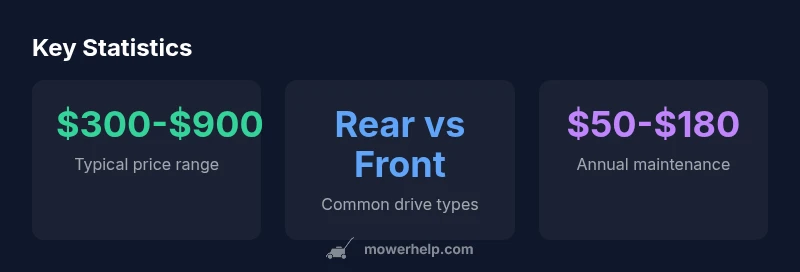
The typical price range for a new self-propelled lawn mower is roughly $300 to $900, depending on drive type, engine size, and features. In general, rear-wheel-drive models with larger decks sit at the higher end, while basic gas or electric models fall toward the lower end. For budget-minded buyers, occasional sales can bring costs down.
Understanding the price drivers for self-propelled lawn mowers
If you're shopping for a mower, it's helpful to understand what pushes the price up or down. How much is a self propelled lawn mower depends on drive system, engine or motor horsepower, cutting width, and build quality. According to Mower Help, price bands are influenced by drive type (rear-wheel vs front-wheel), the size of the cutter deck, and whether the mower includes features like bagging, mulching, or a blade brake clutch. A wider deck means more metal and a larger cutting path, which drives up cost. Larger gas engines provide more torque for tougher lawns, but consume more fuel and may require more maintenance, raising the long-term cost of ownership. Electric models with higher voltage batteries can be more expensive upfront but save on ongoing fuel costs. Also, design details like steel vs plastic decks, sealed transmissions, and ergonomic handlebars affect pricing. For many homeowners, the right price point balances upfront cost with expected longevity and performance in their yard conditions.
Price ranges by drive type and deck size
Self-propelled mowers come in a few common configurations, and those choices map directly to price. A small-deck model (roughly 20–22 inches) with front-wheel drive is typically on the lower end of the spectrum, while rear-wheel-drive systems with larger decks tend to land at the higher end. Among electric options, corded models generally start lower than cordless battery-powered units. When you add features like mulching, bagging, or a blade-brake clutch, expect to see further price bumps. Realistic ranges for new units in 2026 include: corded electric: roughly mid-$300s to mid-$500s; cordless electric: mid-$400s to about $750; gas-powered with modest decks: roughly $450 to $700; gas-powered with larger decks and robust drive: roughly $650 to $900. These ranges reflect typical market pricing and can vary by brand and retailer.
Gas vs electric: how the price differs
Gas-powered self-propelled mowers typically cost more upfront than their electric counterparts, due to engine hardware, heavier construction, and more complex drive systems. Electric models offer quieter operation and lower ongoing fuel costs, but you may pay a premium for higher-voltage batteries and longer run times. Corded electric units usually sit at the lower end of the price range, while cordless battery-powered models span a middle-to-high range depending on battery chemistry and warranty. If you have a large yard, the extra power of a gas engine may justify the higher upfront price; if your yard is small and you value low maintenance, an electric model can be a smart choice.
Features that add cost
Several features add noticeable price to self-propelled mowers:
- Drive type (rear-wheel vs front-wheel) and transmission quality
- Cutting width and deck material (steel vs plastic)
- Engine displacement or motor voltage and run-time
- Bagging, mulching, and side-discharge options
- Blade brake clutch (BBC) and ergonomics such as comfortable handlebars
- Warranty length and the retailer's service network
Each feature improves convenience or performance but increases initial cost. If you can live without premium features, you can dramatically reduce the upfront price while still getting a capable machine for most suburban lawns.
Where to buy, deals, and warranties
Big-box retailers, local hardware stores, and online marketplaces all carry self-propelled mowers. Compare prices across at least three outlets and watch for seasonal promotions, end-of-season clearance, or bundled warranty offers. Warranty coverage typically ranges from 2 to 5 years for consumer models, with longer coverage often available for commercial-grade units or premium brands. Before purchasing, verify that the retailer offers service options in your region and check return policies. Reading user reviews and testing the unit in-store can help confirm value beyond headline price.
Maintenance costs after purchase
Annual maintenance costs for a self-propelled mower vary with usage, climate, and model type. Plan for routine items such as blade sharpening, air filter and oil changes (gas engines), spark plug replacements, and battery care for electric models. For electric units, factor battery replacement or battery-pack refresh cycles into your long-term budget, as these can be the most expensive component to replace. For gas mowers, expect to budget for fuel, oil, and routine tune-ups to maintain peak performance. Keeping up with maintenance can extend the life of your mower and reduce the total cost of ownership.
Quick budgeting checklist
Use this 6-step checklist to budget accurately:
- Determine yard size and terrain to guide deck size and drive choice
- Choose gasoline or electric based on run-time needs and noise tolerance
- Select essential features (mulching, bagging, BBC) and weigh the cost premium
- Compare three reputable retailers and track sale cycles
- Add a conservative maintenance annual to your plan
- Check warranty and service network in your region
This checklist helps you avoid paying for features you won't use while ensuring you buy a mower that lasts.
Final buying considerations for 2026
Price is important, but value comes from total cost of ownership. When evaluating a self-propelled mower, weigh upfront price, long-term maintenance, and the quality of parts and service. For most homeowners, a mid-range gas model with a durable deck and reliable drive offers a solid balance between performance and price. If quiet operation and very low ongoing fuel costs are priorities, a cordless electric option with a strong battery warranty can be the better long-term buy. Remember that the best mower for your yard is the one you will use consistently and maintain well, not simply the lowest sticker price.
Pricing and drive options for self-propelled mowers
| Model Type | Typical Price Range | Fuel Type | Drive Mechanism | Pros |
|---|---|---|---|---|
| Gas-powered, self-propelled | $450-$900 | Gasoline | Rear-wheel drive | Strong power, versatile for hills |
| Gas-powered, compact self-propelled | $350-$650 | Gasoline | Front-wheel drive | Lightweight and easy to maneuver |
| Electric/self-propelled | $400-$800 | Electric | Front-wheel drive | Low emissions and quiet operation |
Got Questions?
How much is a self-propelled lawn mower?
A typical range for new models is roughly $300 to $900, depending on drive type, deck size, and features. Higher-end configurations with advanced drive systems and added options can push toward the top end. Shop around and watch for seasonal promotions.
Most self-propelled mowers fall between $300 and $900, depending on features and drive type. Look for deals during off-peak seasons.
Are self-propelled mowers more expensive than push mowers?
Yes, self-propelled models are typically pricier than push mowers because of the added drive system and motor. The difference is usually several hundred dollars, depending on brand and features.
Self-propelled models generally cost more due to the drive system and engine. Expect a few hundred dollars more on average.
What features drive price increases the most?
Key price drivers include deck size, engine or motor power, drive type, and premium features like bagging, mulching, blade brake clutch, and extended warranties.
Deck size, power, drive, and extra features are the main price drivers.
Should I buy a used self-propelled mower to save money?
Used can save money, but inspect the engine, drive system, battery (if electric), and safety features. Worn components can lead to higher repair costs later.
Used mowers can be cheaper, but check the drive and engine carefully before buying.
Do electric self-propelled mowers exist and how do they compare to gas?
Electric self-propelled mowers exist and tend to be cheaper upfront and quieter, with lower ongoing fuel costs. Battery-powered models require battery maintenance and eventual replacement.
Yes, electric versions exist—quieter and cheaper to run, but watch battery life and replacement costs.
What maintenance costs should I budget for after purchase?
Budget for routine items like blade sharpening, oil changes, spark plugs, and air filters for gas models, plus battery care or replacement for electric models. These costs accumulate over time but help prevent bigger repairs.
Expect regular maintenance costs for fuel engines or batteries to keep it running well.
“Value comes from balancing upfront price with reliability and maintenance costs over time. Focus on deck size, drive type, and warranty to optimize long-term performance.”
The Essentials
- Define yard size to choose the right deck width.
- Balance drive type with price for best value.
- Gas vs electric: power and running costs trade-offs.
- Look for sales and warranties to maximize ROI.