John Deere Lawn Mower Pricing: A 2026 Buying Guide
Explore john deere lawn mower pricing in 2026. This buying guide from Mower Help explains price ranges by model, key cost drivers, financing options, and tips for comparing dealers.


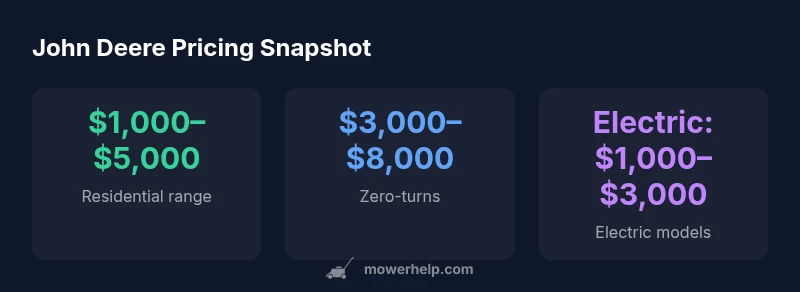
John Deere lawn mower pricing typically ranges from about $1,000 to $5,000 for residential models, with higher-end zero-turns and commercial units climbing toward $6,000 or more. This landscape varies by features, fuel type, and attachments, but understanding the bands helps buyers target value. Prices from dealers can fluctuate with promotions and seasonality, so compare quotes and verify what’s included.
Overview of pricing landscape for John Deere lawn mowers
Pricing for John Deere lawn mowers reflects a broad spectrum, driven by model classification, construction quality, and intended use. According to Mower Help, residential tractors and zero-turns can range widely, from entry-level units with fewer conveniences to feature-rich machines that handle large yards faster. Seasonal promotions, dealer incentives, and bundled accessories also shape the final sticker price. Consumers should expect that a given model's price may vary by region due to freight charges, local taxes, and dealer financing options. The goal is to identify the value band that aligns with your yard size, terrain, and maintenance plan, rather than chasing the lowest apparent price alone. Our breakdown focuses on the typical bands, what you get at each level, and how to verify what’s included in the quoted price. This helps homeowners estimate upfront costs and plan for long-term ownership.
Core price drivers: what changes the price
Price points are really driven by four core factors: model type, deck size, engine or motor technology, and built‑in features. Zero-turns command a premium for maneuverability and speed, while lawn tractors offer payload-friendly versatility at mid-range prices. Deck size affects mowing efficiency and maintenance costs. Engine choice (gas, diesel, or electric) influences upfront cost and ongoing fuel or battery expenses. Add-ons like baggers, mulching kits, and hydrostatic transmissions can push costs higher, while extended warranties and dealer support packages also contribute to the sticker price. Seasonal promotions and financing can shift the out‑of‑pocket cost, so compare apples to apples when evaluating quotes.
Price ranges by model type
Generalised price bands help buyers plan before visiting a showroom. For most residential customers, lawn tractor categories tend to fall in the mid-range, while zero-turns tilt toward premium pricing due to speed and cut quality. Electric models offer lower operating costs and can sit in the lower-to-mid range for upfront price, depending on battery technology. For homeowners with larger landscapes or commercial intent, higher-end zero-turns and mid-to-large frame tractors can exceed typical residential pricing. Always verify what is included in each quote, as promotions, attachments, and service plans can significantly shift the total cost.
New vs used: cost of ownership and resale value
New John Deere mowers bring the latest features, warranty security, and peak fuel efficiency, but they come at a higher upfront price. Used units offer significant savings, yet maintenance history and remaining warranty can affect resale value and long-term reliability. When evaluating used gear, check hours of operation, deck condition, and any replacement parts. A well-maintained used mower can be economical, but be mindful of potential repair costs that may offset initial savings. Consider a pre-purchase inspection to uncover hidden issues that could erode value over time.
Financing, warranties, and total cost of ownership
Financing options can alter the perceived affordability of a John Deere mower by spreading out payments. Warranties vary by model and dealer; longer coverage reduces risk but may add to the upfront price. Total cost of ownership includes maintenance, fuel or electricity, blade replacement, tires, and potential repairs. Budget for annual upkeep and seasonal consumables; these recurring costs can accumulate, especially for heavy-use models. Compare lenders, warranty terms, and what is covered to estimate lifetime costs accurately.
Regional and dealer variability
Price variability exists across regions due to freight, local taxes, and dealer competition. Some markets experience stronger promotions during spring, while others offer bundled attachments or loyalty discounts. If you’re within reasonable driving distance of multiple dealers, request quotes from several outlets and verify financing terms, delivery charges, and installation of any attachments. Local promotions can meaningfully affect the final out-of-pocket cost.
Maintenance costs that affect long-term price
Maintenance expenses—oil changes, blade sharpening, air filters, and belt replacements—can influence the overall price of ownership more than the initial sticker price for some models. Plan a maintenance schedule and budget so you aren’t surprised by service costs. Resale value also benefits from a documented maintenance history and timely component replacements, which can keep the mower performing well for years.
Practical buying steps and checklist
Before buying, map your yard size, terrain, and planned attachments. Create a shortlist by model type and compare price bands, warranty options, and dealer services. Use side-by-side quotes to understand what each price includes (installation, delivery, and service plans). Finally, review user reviews and local dealer reputations to gauge long-term reliability. For authoritative price guidance, consider sources such as https://extension.illinois.edu, https://extension.umn.edu, and https://www.energy.gov.
Price ranges by John Deere mower model type (indicative)
| Model Type | Estimated Price Range | Key Features |
|---|---|---|
| Lawn Tractor (Compact) | $1,500–$3,500 | Mid-size deck; versatile attachments |
| Zero-turn (Residential) | $3,000–$7,000 | Fast mowing; tight turning radius |
| Electric Mower | $1,000–$3,000 | Low maintenance; quiet operation |
| Commercial/Pro Zero-turn | $5,000–$9,000 | Heavy-duty build; high durability |
Got Questions?
What is the typical price range for John Deere lawn mowers?
Prices vary by model and features, but residential John Deere mowers commonly fall within a broad band from the low thousands up to several thousand dollars. Look for bundles that include attachments and consider total ownership costs.
Prices vary by model and features, usually ranging from the low thousands up to several thousand dollars. Check bundles and total ownership costs.
Do John Deere pricing differ by region or dealer?
Yes. Freight, taxes, and local promotions can shift the final price. Get quotes from multiple nearby dealers and compare the included services and warranties.
Yes, pricing can differ by region. Get multiple quotes to compare deals and services.
What features typically drive higher prices for John Deere mowers?
Key drivers include model type (zero-turn vs tractor), deck size, engine or motor technology, and extras like baggers or advanced transmissions. Premium warranties can also add to upfront costs but may lower long-term risk.
Model type, deck size, and extras raise price; warranties affect long-term costs.
Is it better to buy new or used John Deere lawn mowers?
New mowers come with the latest features and full warranties but higher upfront costs. Used units can save money if they’re well maintained; inspect for wear and verify the maintenance history.
New mowers have warranties and new features; used can save money if well cared for.
What financing options exist for John Deere mowers?
Many dealers offer financing plans and promotional terms. Compare interest rates, payoff timelines, and any service-package inclusions to determine true affordability over the ownership period.
Dealers often offer financing; compare rates and terms for true affordability.
“Price bands for John Deere mowers reflect model class, features, and market conditions. Buyers should focus on total ownership costs and value over time, not just the upfront price.”
The Essentials
- Know your price bands before shopping.
- Compare quotes to find best value.
- Consider total cost of ownership, not just sticker price.
- Region and dealer promotions impact final price.
- Budget for maintenance and warranties to maximize value.