Zero Turn Lawn Mower Prices: Your 2026 Buying Guide
Explore current price ranges for zero turn lawn mowers, factors that drive costs, and practical buying tips. Learn from Mower Help's 2026 analysis to budget smarter and pick the right model for your yard.


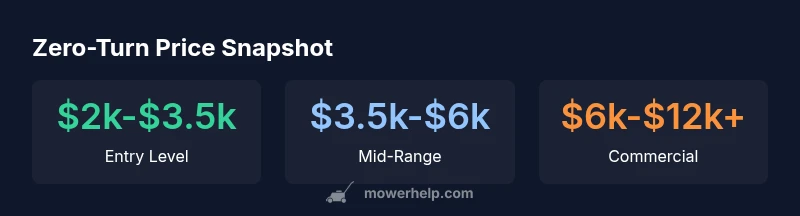
Zero turn lawn mower prices vary widely by deck width, horsepower, transmission, and brand. Entry-level residential models typically start around $2,000 to $3,500, mid-range around $3,500 to $6,000, and commercial units can run $6,000 to $12,000 or more. Attachments and warranty options push costs higher. Prices also reflect deck width, hydraulic vs belt drive, and brand prestige. Therefore, shoppers should weigh long-term value, not just sticker price.
How price is shaped by features
According to Mower Help, price is not a single number on the tag – it’s a function of several interdependent features. The most influential are deck width and build quality, engine horsepower, and transmission type. Hydrostatic (fully automatic) transmissions usually cost more upfront but deliver smoother operation and less maintenance over time than belt-drive systems. Brand reputation and warranty terms also push sticker prices up. When you add heavy-duty steel decks, precision cutting systems, and anti-scalp rollers, you typically pay a premium but gain durability that matters for larger properties or frequent use. Understanding these drivers helps homeowners predict where their budget should land and what trade-offs are acceptable for their lawn size and maintenance routine.
Price bands by use-case and features
No single price fits every yard. Here’s a practical framework:
- Entry-level residential: simple decks, basic hydrostatic drive, smaller cutting widths. Expect price bands around $2,000-$3,500.
- Mid-range residential: wider decks, better ergonomics, stronger transmissions, more durable components. Expect $3,500-$6,000.
- Commercial/high-end residential: premium materials, larger decks, top-tier hydrostatic systems, extended warranties. Prices commonly fall in $6,000-$12,000+.
- Premium add-ons: multi-attachment compatibility, mowing deck wash systems, and commercial-grade hydraulics can push pricing beyond $12,000 for the right configuration. This is where total cost of ownership becomes crucial to evaluate—the up-front investment may pay off in reduced downtime and faster mowing sessions.
Total cost of ownership beyond sticker price
Price is just the starting point. Over a 5-year horizon, you should account for routine maintenance (oil changes, blade replacements, air filters), fuel consumption, belt wear, and potential early replacement of consumables. Higher-quality units often benefit from longer service intervals and better resale value, which can offset higher initial costs. When budgeting, include annual maintenance as a percentage of the purchase price and plan for occasional mid-life improvements (e.g., upgraded blades or a belt kit). Mower Help’s analysis indicates that maintenance costs can swing in a wide range depending on usage intensity, climate, and the presence of anti-corrosion coatings.
Reading price tags: what to compare across brands
To avoid buyer’s remorse, compare apples to apples. When evaluating quotes, align deck width, transmission type, engine horsepower, and warranty length. Look at included extras: mulch kits, bags or collection systems, headlight options, and service plans. Don’t overlook dealer incentives or bundled offers (e.g., financing with maintenance packages). The cheapest option isn’t always the best value if it trades durability or service access for a lower price. Consider the anticipated mowing schedule, yard terrain, and your willingness to perform routine maintenance yourself.
2026 market trends and price expectations
The market in 2026 remains diverse due to ongoing demand, technology improvements, and supply chain dynamics. Manufacturers continue to introduce more fuel-efficient engines, smarter diagnostics, and easier-to-service components, which can shift price points upward for newer generations. While some years see price compression due to promotions, the long-term value proposition increasingly depends on total cost of ownership, not just the sticker price. Mower Help’s 2026 analysis notes that buyers who prioritize reliability and uptime tend to favor mid-range or premium models with robust warranties.
Used vs new: when to buy used
Used zero-turn mowers can offer substantial savings, particularly for homeowners with moderate yard sizes and good maintenance history. However, used units may hide issues with the hydro transmission, blades, or deck wear. If you’re considering a used mower, arrange a thorough inspection, check service records, and test-drive to assess cutting quality and responsiveness. A well-maintained used unit can be a smart choice, but the risk of pricey repairs can offset perceived savings.
Quick buying checklist for zero turn mower prices
- Define your yard size and terrain before browsing
- Set a target price range and stick to it
- Compare deck width, transmission, and warranty across brands
- Consider bundled offers and financing options
- Assess maintenance costs and resale value
- Check dealer support and availability of replacement parts
Price bands by use-case with buying considerations
| Category | Typical Price Range | Key Considerations |
|---|---|---|
| Residential entry-level | $2,000-$3,500 | Simpler deck; shorter warranty; basic hydrostatic drive |
| Mid-range residential | $3,500-$6,000 | Wider deck; stronger drive; ergonomic refinements |
| Commercial/high-end | $6,000-$12,000+ | Heavy-duty chassis; premium transmissions; extended service |
| Accessories & bundles | $0-$2,000+ | Attachment value; warranty add-ons; financing terms |
Got Questions?
What factors most influence zero turn mower prices?
Deck width, transmission type, horsepower, build quality, and brand influence price. Hydrostats add up front cost but improve operation; warranty coverage can swing long-run value.
Deck width, transmission, horsepower, and brand influence price.
Are used zero-turn mowers a good deal?
Used can save money but watch for wear in the deck, engine, and hydro drive. Prioritize models with solid maintenance history and recent blade replacements.
Used models can save money but inspect core components carefully.
When is the best time to buy a zero-turn mower?
End-of-season sales and model-year transitions often yield discounts. Shop with a clear plan and compare financing offers.
Shop at season end for deals and solid warranties.
Do homeowners need commercial-grade features?
Most homeowners don’t require commercial-grade components unless they have very large or demanding yards. For typical suburban lawns, premium residential models are usually enough.
Only large properties or heavy-use situations justify premium features.
What maintenance costs should I plan for?
Blade replacements, oil changes, air filters, belts, and occasional parts replacements. Budget annually and align with mowing frequency and yard conditions.
Expect blades, oil, filters, and belts to be recurring costs.
“Prices for zero turn lawn mowers reflect a balance of performance, durability, and serviceability. Investing in a higher-quality unit often lowers downtime and maintenance costs over time.”
The Essentials
- Define your budget before shopping
- Expect price bands by use-case
- Factor total cost of ownership
- Watch timing and bundled offers
- Consider resale value when buying