Used Zero-Turn Lawn Mowers: A 2026 Buyer's Guidebook
Learn how to buy a used zero-turn lawn mower with confidence. This guide covers inspection, price ranges, maintenance history, warranties, and buying strategies for homeowners and DIY enthusiasts.


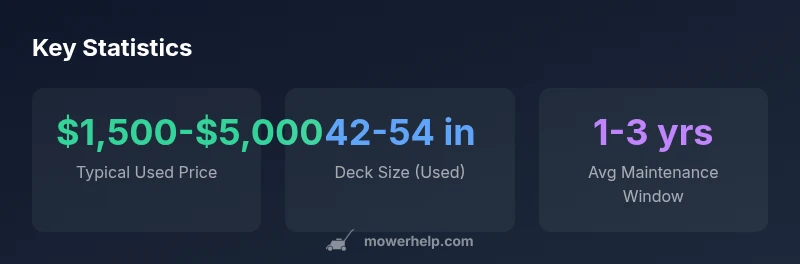
According to Mower Help, buying a used zero-turn lawn mower requires a careful checklist and proof of maintenance. Expect price ranges between roughly $1,500 and $5,000 depending on deck size, horsepower, and overall condition; prioritize models with documented service histories. This guide walks you through the selection, inspection, and negotiation process for a reliable, long-lasting unit.
Why a Used Zero-Turn Mower Makes Sense for Your Yard
According to Mower Help, a used zero-turn mower can offer exceptional maneuverability for tight spaces and large yards at a fraction of the price of a new model. Homeowners with hilly terrain or lawns that require precise cuts often find a used unit to be a practical compromise. The key is to match the machine’s capabilities to your property and to verify the core components before purchasing. A well-chosen used zero-turn can deliver years of service if you avoid models with obvious neglect. In this section, we explore who benefits most from a used zero-turn, and when it might not be the right fit, especially for very small lawns or frequent edge trimming tasks where a smaller mower could be more cost-effective. This perspective helps you set realistic expectations from day one.
Critical features to verify before purchase
When evaluating a used zero-turn mower, the deck height, engine hours, transmission type, and overall frame integrity are top indicators of value. Look for a deck without excessive rust or cracks, intact spindle mounts, and clean belts. Confirm the engine runs smoothly across RPM ranges and doesn’t smoke or emit unusual noises. Check the hydrostatic transmission for smooth operation during a test turn and listen for grinding sounds near the wheels. Tires should be wear-resistant but not dangerously bald. If you see obvious rust forming on the frame or hydraulic hoses, treat this as a warning sign and negotiate accordingly.
In addition, inspect the wheels and drive tires for uneven wear, as that can indicate misalignment or a failing differential. Examine the seat, safety switches, and operator controls to ensure everything is accessible and functional. If possible, run the mower on a small slope and listen for transmission slippage or hesitation. Ask the seller for a service history detailing recent oil changes, air filter replacements, blade sharpening, and deck belt changes. Finally, verify that all safety features—such as blade-stop switches and parking brakes—operate correctly. This thorough assessment helps you avoid hidden costs after purchase.
How to inspect the engine, transmission, and deck during a test-drive
A thorough test-drive should cover starting the machine from neutral, listening for any knocking or ticking sounds, and ensuring the PTO engages cleanly. Drive on flat ground and then test on a gentle incline to observe traction and steering response. While running, inspect the exhaust for smoke and check for oil leaks around the engine—minor seepage can be normal in older units, but fresh drips suggest real maintenance costs ahead. Inspect the deck height, belt wear, and blade condition, and ensure the mower can raise and lower the deck smoothly. Take notes or photos of any concerns for later negotiation. If possible, bring a trusted mechanic or a knowledgeable friend for an extra pair of eyes during the test-drive. After the run, recheck fluid levels and verify that the battery holds a charge if the unit uses an electric start.
Red flags and price negotiation strategies
Red flags include excessive blade wear, cracked deck, oil leaks, greasy residue around the engine, soft or spongy controls, and an inconsistent maintenance history. If you notice multiple red flags, use them to negotiate a lower price or request a dealer or seller to cover certain repairs. Prepare to walk away from deals that lack verifiable service records or a credible maintenance log. When negotiating, reference comparable listings in your area and consider structuring a price with contingencies for needed repairs. In addition, discuss potential costs for parts like belts, blades, spindles, and the hydraulic filter, so you have a clearer sense of the total ownership cost. If a seller refuses reasonable repairs, move on to a better option.
The role of maintenance history and service records
Service records provide a window into how the unit has been cared for, confirming whether critical components were serviced or replaced. Ask for receipts for recent belt changes, battery replacements, air and fuel filter changes, and oil changes. A mower that has received timely maintenance is typically more reliable and easier to resell. If records are sparse, approximate the likely maintenance costs you’d incur in the first year and factor that into your offer. Also check model year and production changes that may influence availability of replacement parts. A clear history reduces uncertainty and helps you estimate future service costs.
Buying channels: dealers, auctions, and private sales
Dealers may offer recommended inspection services and limited warranties, though prices can be higher. Auctions can be a way to find bargains, but purchases require careful diligence and a plan to transport and service the mower after purchase. Private sales often present the best price but come with increased risk. Regardless of channel, insist on a test-drive, a clear history, and a pre-purchase inspection if possible. Using a checklist helps you stay objective and avoid emotional decisions. For added protection, consider a simple bill of sale and request the seller to acknowledge known issues. This approach minimizes disputes after the purchase.
Post-purchase care to maximize lifespan
After purchase, implement a basic maintenance routine: clean the deck, replace worn belts, check and lubricate moving joints, and store the mower properly in dry conditions. Keeping the hydrostatic fluid clean and the air filter fresh helps protect the engine and transmission. Schedule professional service periodically and follow manufacturer guidelines for blade sharpening and oil changes. With consistent care, a used zero-turn can remain efficient and effective for many seasons. Consider upgrading worn components gradually, such as belts or HS seals, rather than waiting for a catastrophic failure. A proactive maintenance plan also makes resale easier should you decide to upgrade in the future.
Used vs New: Quick reference
| Aspect | Used (typical) | New (approx.) |
|---|---|---|
| Typical price range | $1,500-$5,000 | $4,000-$12,000 |
| Deck size | 42-54 inches | 54-60 inches |
| Engine/HP | 20-26 HP gasoline | 25-40 HP gasoline |
| Key wear indicators | Belts, spindles, tires | Belts, spindles, tires (often newer) |
| Warranty status | Often none or limited | Full manufacturer warranty |
| Maintenance history | Receipts common | Comprehensive service history |
Got Questions?
What is a zero-turn mower and why buy used?
A zero-turn mower is designed for high maneuverability around obstacles using independent wheel drives. Buying used can save money, but you must verify engine, transmission, and deck health to avoid costly repairs.
A zero-turn mower turns on a dime, great for tight spaces. Make sure you check the engine, transmission, and deck when buying used.
What should I check first when inspecting a used zero-turn?
Start with the engine, transmission, and deck. Look for oil leaks, unusual noises, and deck wear. Confirm hours or usage indicators and verify maintenance receipts.
Check the engine, transmission, and deck first, and ask for maintenance receipts.
Are there red flags that imply a bad buy?
Yes. Cracked decks, leaks, excessive blade wear, or missing maintenance records are major red flags. Consider price reductions or walking away if multiple issues exist.
Cracked decks or missing service records are big red flags; negotiate or walk away.
How should I negotiate price on a used mower?
Base your offer on verified condition, with a cushion for needed repairs. Compare local listings and factor in service history for credibility.
Negotiate based on condition and maintenance history, using local listings as benchmarks.
Should I buy from a dealer or private seller?
Dealers can offer basic checks and warranties, private sellers usually offer lower prices but with higher risk. Choose based on risk tolerance and need for a test-drive.
Dealers add security with checks and warranties; private sellers can be cheaper but riskier.
What post-purchase care helps extend lifespan?
Regular cleaning, belt and blade maintenance, and scheduled professional service keep the mower performing well for years.
Keep it clean, change belts when worn, and schedule regular service.
“A well-documented maintenance history is the strongest predictor of a used zero-turn’s future performance.”
The Essentials
- Inspect engine hours and deck condition before offering
- Test-drive on varied terrain to gauge traction
- Ask for full maintenance history and receipts
- Budget for potential repairs after purchase
- Compare listings to benchmark a fair price