Zero Turn Mower Pricing: A 2026 Homeowner Guide
Get realistic price ranges for new and used zero-turn lawn mowers, plus ownership costs and buying tips for 2026. A practical guide from Mower Help.


The typical upfront price for a new consumer-grade zero-turn lawn mower ranges roughly from $2,000 to $4,500, with higher-end models reaching closer to $6,000. This quick snapshot helps homeowners compare entry-level options to premium machines, while accounting for features, deck size, and build quality. For 2026, expect price bands to widen with tech and warranties.
What drives zero-turn mower price
Pricing is driven by a handful of core factors, and understanding how much is a zero turn lawn mower costs can help you compare options intelligently. Deck width, engine power, and drive system are the obvious levers, but build quality and materials also matter. Wider decks enable faster job completion but add material costs. More horsepower translates to higher manufacturing costs and heavier frames. Hydraulics or advanced hydrostatic transmissions increase smoothness and durability but also raise price. Frame materials (steel vs premium alloys) and reinforced cutting decks add to upfront costs. Brand reputation, warranty length, and dealer support can carry a premium too.
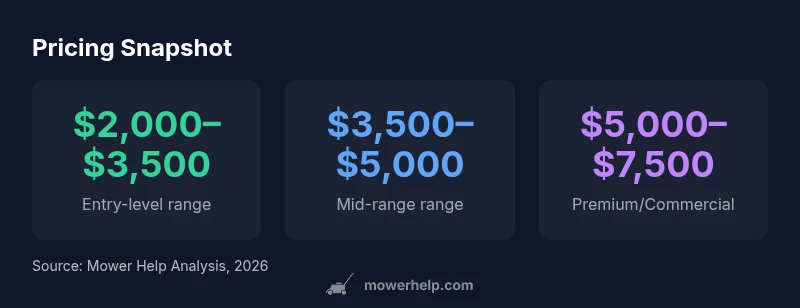
According to Mower Help analysis, the price band you see reflects these choices. Entry-level models tend to compromise on features to keep the price accessible, while mid-range units add durability and convenience features. High-end and commercial-grade machines push price higher due to longer service intervals and robust components. When evaluating options, balance upfront price against expected uptime, fuel or electricity use, and maintenance needs over the life of the mower.
Price bands by class and feature set
Price bands for zero-turn mowers generally fall into three broad classes, though exact figures vary by brand and region. Entry-level gas models with compact decks (around 42–48 inches) typically sit in the low-to-mid thousands. Mid-range models with wider decks (48–54 inches) and stronger engines land in the mid-range, offering smoother mowing and longer life. Premium or commercial-grade units with larger decks (54 inches and up), stronger transmissions, and commercial-grade components push into the higher end of the spectrum. Electric zero-turns, while increasingly capable, tend to sit at the top of the upfront range due to battery packs and charging systems. For 2026, you’ll also see optional add-ons like improved sun shade, better anti-scalp wheels, and advanced controls, all of which raise the price.
As you compare options, map features to needs: a small yard may be happy with 42-inch decks; larger lawns benefit from 54–60 inch decks and faster drive systems. Feature choices flow directly into the price, so separate must-have features from nice-to-haves to compute true value.
Total cost of ownership: maintenance, fuel, and uptime
Upfront price is only part of the story. Ongoing costs—maintenance, fuel or electricity, oil and filter changes, tire wear, and potential repairs—often determine the real affordability of a zero-turn mower. Gas-powered models incur fuel costs and periodic tune-ups; electric models add battery replacement considerations and charging costs. Typical annual maintenance may range from a few hundred dollars, depending on usage, service intervals, and whether you perform DIY upkeep or rely on a dealer. Regular cleaning, blade sharpening, and air filter changes protect performance and can extend lifespan.
To make the numbers concrete, track hours of operation, mowing frequency, and local fuel or electricity prices. A well-maintained mower with a larger deck may reduce mowing time and yield lower per-hour operating costs, even if the initial price is higher. As always, plan for downtime—repair wait times can affect project schedules and costs.
Financing, warranties, and optional add-ons
Financing can smooth the upfront cost of a zero-turn mower, especially for larger units. Look for options with reasonable interest rates, clear loan terms, and a payoff schedule that fits your budget. Warranties for consumer-grade zero-turns typically range from two to five years, with some brands offering longer durations on specific components. Read the fine print to understand what is covered (engine, transmission, deck) and what isn’t (wear items, routine service).
Add-ons such as extended warranties, maintenance plans, and bundled accessories can affect overall value. If you anticipate frequent service needs, an extended plan may save money in the long run. Compare total cost of ownership across models, not just sticker price, and consider how long you plan to keep the mower before the warranty expires.
Smart shopping strategies to save money
Effective shopping tactics help you land a fair price without sacrificing reliability. Shop off-season (late fall to early winter) when dealers clear inventory and offer promotions. Compare multiple local and online dealers to leverage price contrasts and delivery options. Consider buying the previous year’s model when new features are incremental, or look for certified pre-owned units that have been inspected and serviced. Don’t forget to factor in delivery charges, assembly fees, and potential rebates.
Finally, build a short list of must-have features and a separate list of nice-to-haves. Use price alerts and negotiate with dealers on bundled accessories. With a clear plan, you can maximize value while staying within your budget.
Seasons and timing: when to buy for best value
Timing can matter as much as model choice. End-of-season promotions, holiday sales, and dealer clearance events are common in the lawn care market. If you can delay purchasing until a seasonal sale, you may see meaningful savings, especially on popular 42–54 inch models. Consider seasonal maintenance cycles that align with your mowing schedule to avoid buying at a peak price period. Finally, read customer reviews and check dealer reputation to avoid overpaying for add-ons or forced-upgrades.
Typical price bands by class (new models)
| Class | Typical price range | Notes |
|---|---|---|
| Entry-level gas (compact deck) | $2,000–$3,500 | Lower horsepower, basic features |
| Mid-range gas (54" deck) | $3,500–$5,000 | Better engines, wider deck, smoother cut |
| Commercial-grade / premium (60" deck+) | $5,000–$7,500 | Heavy-duty components, longest service intervals |
Got Questions?
What factors drive zero-turn mower price?
Price is driven by deck width, engine or motor power, drive system, and build quality. Features like hydraulic transmissions, reinforced decks, and warranty duration also push prices higher. Electric models may cost more upfront due to battery packs, but they can reduce ongoing fuel costs.
Price is driven by deck width, power, drive system, and build quality; warranties and battery costs for electric models also influence the total.
Are electric zero-turns cheaper over time than gas?
Electric zero-turns often have higher upfront costs, but lower fuel and maintenance expenses over time. Battery replacement and charging efficiency are key factors in total cost of ownership. In small to medium yards, electric models can be cost-effective after a few years of use.
Electric models can save on fuel and maintenance, but battery and charging costs matter for long-term ownership.
What warranty should I expect?
Most consumer-grade zero-turns offer warranties in the range of two to five years, with longer coverage on specific components. Always verify coverage for the engine, transmission, and cutting deck, and note which wear items are excluded or require regular maintenance.
Warranties typically cover major components for a few years; check details for engine and transmission.
Is financing common for zero-turn mowers?
Yes. Dealers and manufacturers frequently offer financing with varying terms and APRs. Compare total cost of financing, not just monthly payments, and look for promotions or bundled maintenance offers to maximize value.
Financing is common and can help spread the cost; compare terms and total cost.
Where can I buy to save money?
Shop around at multiple dealers, including both local stores and reputable online retailers. Look for seasonal promotions, bundled accessories, and certified pre-owned options where available. Don’t overlook delivery and setup fees when calculating total price.
Shop around and watch for promotions; consider bundles and delivery costs.
“Upfront price is only part of the story; the true cost of ownership for a zero-turn mower is driven by maintenance, uptime, and fuel efficiency.”
The Essentials
- Identify your deck width needs to map price to yard size
- Factor maintenance into total ownership cost, not just upfront price
- Use financing to spread upfront costs without sacrificing reliability
- Compare warranties and bundled add-ons to maximize value