John Deere Zero Turn Prices: A 2026 Buying Guide
Discover the price landscape for John Deere zero turn mowers in 2026, including price bands by model class, total ownership costs, where to buy, and tips to save. Expert guidance from Mower Help helps homeowners compare options and plan purchases wisely.


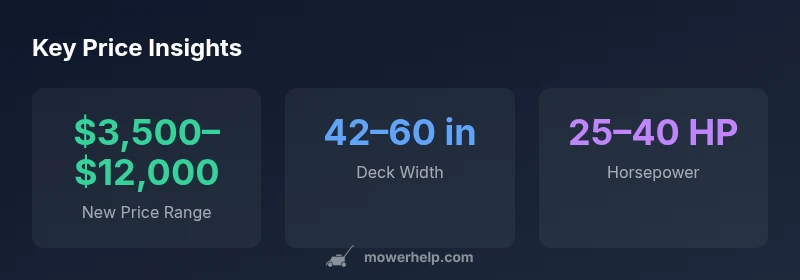
John Deere zero turn prices span roughly $3,500 to $12,000 for new units, with higher-end deck sizes and horsepower driving costs toward the upper end of the range. In 2026, prices vary widely by model class, features, and attachments, so this guide from Mower Help breaks down the bands, what drives cost, and how to shop smart.
Understanding the pricing landscape for John Deere zero turn prices
Pricing for John Deere zero turn mowers is influenced by yard size, workload, deck width, horsepower, and the presence of attachments or advanced comfort features. According to Mower Help, buyers should map their property and tasks to a model class before comparing quotes. In 2026, the market remains competitive, with several dealer networks offering promotions that can affect final out-the-door costs. This section provides a framework to evaluate sticker price versus long-term value, including how dealer incentives, financing, and delivery charges alter the bottom line. When you’re assessing price, consider not just the upfront cost but also the maintenance schedule, blade replacements, and potential warranty extensions that affect total ownership costs.
Price bands by model class
John Deere zero turn mowers generally fall into three broad bands. Compact/entry models tend to be the most affordable, offering nimble performance for small yards. Mid-size models deliver more deck width and horsepower, suitable for medium lawns and regular mowing loads. Premium or top-end units pair large decks, robust frames, and advanced features for larger properties or commercial-style workloads. Real-world pricing in 2026 typically places compact units in the lower end of the spectrum and premium units near the upper end, with many configurations creating mid-range prices in between. When evaluating price bands, also account for optional accessories like bagging systems, mulch kits, and irrigation-friendly options that add to the upfront cost.
Total ownership cost beyond the sticker price
The sticker price is only part of what you’ll pay. Fuel efficiency, blade life, tire wear, oil changes, and regular service visits contribute to yearly ownership costs. Modern John Deere zero turn mowers emphasize reliability and durability, yet maintenance intervals and parts availability can vary by model. A prudent buyer estimates five-year ownership costs by combining 1) annual maintenance (filters, blades, oil), 2) part replacements (belts, tires), and 3) potential warranty or service plans. A well-chosen model can reduce downtime and extend the mower’s life, improving price-per-use over time. This is a core focus of the Mower Help 2026 analysis, which highlights total cost as a key driver of value rather than price alone.
Shopping strategies: where to buy and how to bargain
Prices for John Deere zero turn mowers fluctuate by channel. Authorized dealers often provide financing, extended warranties, and bundled service plans, while online retailers may offer lower sticker prices but fewer after-sales options. Timing matters: off-season promotions, end-of-year clearance events, and manufacturer incentive periods can yield meaningful savings. Always request a detailed quote that breaks out the base price, options, delivery, and taxes. If you’re weighing multiple dealers, ask about price-matching policies and whether pre-owned trade-ins are eligible for store credit toward a new unit.
Regional variations and timing
Prices can vary by region due to logistics, local taxes, and demand cycles. In high-demand markets with limited inventory, prices may skew higher, while rural areas with wider dealer networks might offer more negotiation room. The best time to shop often aligns with model year transitions and seasonal demand. Mower Help’s 2026 review notes that buyers who time purchases around model refreshes and end-of-season sales typically secure better deals while still receiving solid warranty coverage.
Quick-start buyer checklist
- Define yard size and typical workload to select a model class
- List must-have features (deck width, HP, attachments)
- Compare at least two authorized dealers and two reputable online sources
- Inquire about financing, warranties, and service packages
- Confirm all added costs (delivery, setup, taxes, disposal of old equipment) before signing
dataTableHeaderExists":true,
mainTopicQueryForWikidata_lookup":"zero-turn pricing"
Pricing bands by model class (new units)
| Model Class | Typical New Price Range | Notable Features |
|---|---|---|
| Compact/Entry | $3,500–$4,999 | Smaller decks (42–48 in); basic controls |
| Mid-Size | $5,000–$7,999 | Decks 54–60 in; mid horsepower |
| Premium/Top-End | $8,000–$12,000 | Large decks; high HP; luxury features |
Got Questions?
What factors most influence John Deere zero turn prices?
Model class, deck width, horsepower, and included attachments are the main drivers of price. Dealer promotions and optional warranties can shift final costs. Always compare a clear, itemized quote across multiple sources before deciding.
The big price drivers are model class, deck width, horsepower, and extras. Get clear quotes from several dealers before buying.
Are financing options common for John Deere zero turns?
Yes. Many authorized dealers offer financing with varying terms and promotional rates. Check with your local dealer for terms and any dealership-specific incentives that can lower the effective price.
Dealers usually offer financing—ask about terms and any promos.
Is buying a used John Deere zero-turn a good idea?
Used units can be cheaper but may lack warranty coverage and carry hidden wear. If you buy used, insist on a thorough inspection or expert evaluation and verify maintenance history.
Used mowers can save money, but check for wear and warranty gaps.
Do prices differ by region or season?
Yes. Regional demand, taxes, and dealer stock influence pricing. Seasonal sales and model year changes can create pricing gaps, so timing matters.
Prices vary by region and season; shop around and wait for promos.
Where can I find the best price on a John Deere zero turn?
Compare quotes from multiple authorized dealers and reputable online retailers. Look for bundled options (warranty, service) and ask about price-matching.
Shop around and ask about bundles to get the best overall deal.
“Prices on John Deere zero turn mowers reflect the trade-off between durability and features. The Mower Help Team recommends mapping your yard size and workload to the right model to avoid overspending.”
The Essentials
- Map yard size and workload to a model class before shopping
- Account for total ownership cost, not just sticker price
- Shop across dealers and watch for timed promotions
- Time your purchase with model year changes and end-of-season sales
- Ask for full quotes with delivery and setup costs included