Lawn Mower 190cc vs 160cc: Choosing the Right Engine Size
Compare lawn mower engines 190cc and 160cc to understand torque, weight, fuel use, maintenance, and price. Learn which engine size suits your yard and budget with a balanced, analytical view.


For most homeowners with flat or gently rolling lawns, a 160cc lawn mower provides excellent value, lighter handling, and lower upfront cost. If your yard includes hills, thick grass, or frequent heavy-duty cutting, a 190cc engine offers stronger torque and better performance at the cost of weight and price. In the lawn mower 190cc vs 160cc decision, match engine displacement to terrain, grass density, and tolerance for higher purchase and running costs.
Engine displacement and its practical meaning for mowing
Engine displacement, measured in cubic centimeters (cc), is a proxy for the total air and fuel that can be burned in an engine per cycle. In lawn mowers, a larger displacement like 190cc generally translates to higher torque and sustained power, especially when the blade encounters resistance from thick grass, wet conditions, or uneven terrain. When you compare the lawn mower 190cc vs 160cc directly, the difference isn’t only about brisk acceleration; it’s about how the engine responds under load, how long it can maintain that response, and how those dynamics affect operator fatigue over a full mowing session. For homeowners, the choice between 190cc and 160cc should be anchored in the yard profile: slope angle, density of turf, moisture, and typical cutting height. A 190cc engine is more forgiving in tough mowing conditions, while a 160cc engine excels in light-to-moderate duties and on flat ground. In this guide, we’ll unpack those factors with practical scenarios and decision criteria to help with the key question: which engine size is best for your lawn care routine?
Why engine displacement matters for the longer term
The practical impact of displacement shows up in how comfortably the mower can sustain power without bogging down. For homeowners who mow weekly on a typical suburban lawn, the 160cc option often delivers reliable performance with less stress on the engine, possibly translating to longer components life and lower maintenance concerns. Conversely, if you’re tackling tall grasses, weed patches, or slopes, the 190cc option offers a buffer against stalling and excessive strain, enabling more consistent clippings and a steadier cut. The trade-off, of course, is weight, size, and fuel consumption. The key is to map your yard’s needs and your tolerance for heavier equipment.
Practical takeaways for newcomers to engine displacement decisions
- If you maintain a small to medium, mostly flat lawn, a 160cc mower is typically sufficient.
- If you face hills or challenging turf density, a 190cc mower can deliver better performance with less effort.
- Weight matters: heavier models can cause more fatigue over long sessions, especially for users with limited strength or mobility.
- Price isn’t just sticker value; higher displacement often correlates with higher fuel consumption and potentially higher maintenance costs over time.
Real-world yard terms and expectations
In daily mowing, you’ll notice the 190cc engine delivering quicker RPM recovery after encounters with thick grass or damp turf. The 160cc engine tends to maintain a steady pace in normal conditions, and you may reach your acceptable cut quality with less engine stress. When evaluating your yard, consider the typical grass height, moisture level, and how steep your terrain is. A simple yard calculator can help estimate whether you’ll benefit from higher torque at the point of load or whether a lighter machine is more comfortable for routine care. The takeaway: engine displacement is a meaningful factor, but it should be weighed alongside weight, blade efficiency, and ergonomics.
Maintenance considerations and long-term costs
Maintenance demands don’t rise sharply with displacement alone, but fuel consumption often follows the same trend. A 190cc engine may burn more fuel under identical mowing loads and could require more frequent checks for fuel delivery components on heavier duty models. Both sizes share basic upkeep like air filter replacement, spark plug changes, and blade sharpening. When cost is a constraint, a 160cc mower can reduce ongoing expenses without sacrificing essential performance for many home mowing tasks.
Authority sources and independent testing context
Industry testing and university extension programs emphasize that engine displacement is one of several levers affecting mowing performance. In practice, you should also consider blade quality, chassis design, wheel size, and vibration control. Users should consult multiple sources and compare test results across brands to avoid overreliance on engine size alone. For further context, see the cited authority sources at the end of this article.
Summary guidance for the decision
The best choice depends on yard characteristics and personal tolerance for weight and cost. If your mowing tasks include steep slopes or dense turf, prioritize torque and reliability by selecting 190cc. For flat, small to medium yards with regular maintenance routines, 160cc often provides excellent value while keeping handling comfortable and costs predictable.
Comparison
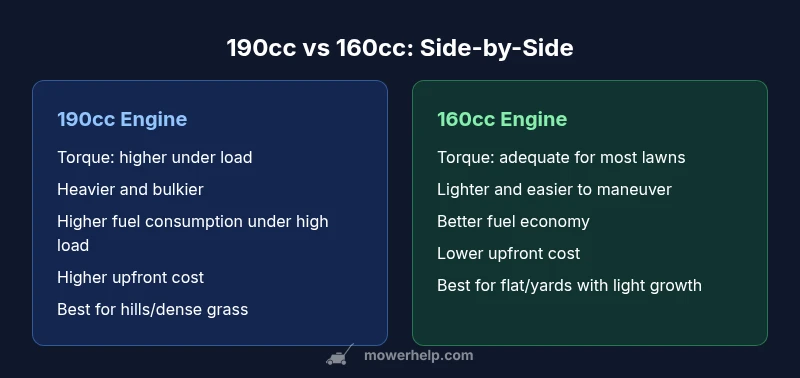
| Feature | 190cc engine | 160cc engine |
|---|---|---|
| Power/torque | Higher torque for load when cutting dense turf | Sufficient for average lawns with regular maintenance |
| Weight/ergonomics | Heavier; more mass to maneuver and carry | Lighter; typically easier to push and maneuver |
| Fuel efficiency | Generally higher fuel consumption under heavy load | Typically better fuel economy for regular flat mowing |
| Maintenance considerations | Potentially higher wear on components due to load; may run hotter under stress | Equivalent basic maintenance with slightly less stress under light loads |
| Price range | Higher upfront cost; premium models with displacement advantage | Lower upfront cost; more models in budget segment |
| Best for | Hilly terrain, dense or tall grass, demanding seasons | Flat yards, small to medium areas, budget-conscious buyers |
Benefits
- 190cc offers strong performance on challenging terrain and dense growth
- 160cc is lighter and more affordable upfront
- Both sizes share standard maintenance and part availability
- 160cc models often have easier maneuverability for novice users
Cons
- 190cc can be heavier, more fatiguing on long sessions
- 160cc may struggle on hills or dense growth
- Higher displacement can lead to more fuel consumption in heavy-duty use
- Price and weight differences can influence resale value and transportability
190cc is better for tough yards; 160cc wins on cost and ease of use
Choose 190cc if you mow steep hills or thick turf; opt for 160cc if your yard is flat, small, or you prioritize price and handling.
Got Questions?
What is the practical difference between 190cc and 160cc engines in lawn mowers?
The 190cc engine typically delivers higher torque and sustained power under load, helpful for steep slopes and dense grass. The 160cc engine offers adequate performance for many flat, well-kept lawns and is lighter to maneuver. The choice depends on terrain, grass density, and how you value weight versus power.
A 190cc engine gives you more power on tough turf, while a 160cc engine is lighter and sufficient for many flat lawns.
Is 190cc worth the extra cost for a small yard?
For a small yard with minimal slopes and average grass, 190cc may not offer enough practical benefit to justify the extra cost and weight. If you anticipate occasional heavy cutting or hilly areas, the 190cc option could be worth it. In many cases, the 160cc size delivers the best value for typical suburban lawns.
For most small, flat yards, 160cc is the better value; 190cc is worth it if you have hills or tough growth.
Which engine size is better for hills and rough terrain?
In hilly or rough terrain, 190cc provides better torque and responsiveness, reducing the chance of stalling and fatigue. It helps maintain a consistent cut across uneven ground, though you’ll contend with extra weight and slightly higher fuel use.
Use 190cc for hills and rough ground; it handles load better but is heavier.
Do 190cc and 160cc engines require different maintenance?
Maintenance basics—air filters, spark plugs, blade sharpening—are similar for both sizes. The 190cc engine may see slightly higher fuel consumption under heavy load and could run hotter, but routine servicing remains the same. Always follow the manufacturer’s schedule for your model.
Maintenance is similar for both sizes, with slight fuel and heat considerations for 190cc under heavy use.
How should I interpret price differences between 190cc and 160cc models?
Price differences reflect displacement, materials, and features more than just the engine size. In general, 190cc models sit higher in price and may offer stronger durability or premium features, while 160cc models stay more affordable and lighter. Consider total cost of ownership including fuel and maintenance when deciding.
Higher displacement usually means higher initial cost, but you may get more durability and power; factor fuel and upkeep too.
The Essentials
- Assess yard hills and grass density first
- Weigh engine displacement against weight and ergonomics
- Consider total cost of ownership, not just upfront price
- Check maintenance access and service networks for your chosen size
- Test drive models if possible to judge feel and torque response