Used Lawn Mower for Sale Near Me: Practical Guide
Learn how to find a reliable used lawn mower near you, what to inspect, realistic price ranges, and ownership costs. A data-driven guide from Mower Help to help homeowners buy smart.


Locating a lawn mower for sale near me used is easiest through local classifieds, online marketplaces, and community groups. Start with Craigslist, Facebook Marketplace, and neighborhood apps, then expand to pawn shops and yard sales. Expect a wide range of prices and conditions; always verify engine health, blade condition, and fuel system before purchasing, per Mower Help.
Why buying a used lawn mower near you makes sense
According to Mower Help, buying a used mower can deliver substantial cost savings while meeting daily yard needs—especially if you’re a DIYer who enjoys maintenance projects. The current market for used mowers reflects broad price ranges, varying from entry-level models to higher-end units with documented service history. For homeowners and hobbyists, the upside is clear: significant upfront savings and the chance to upgrade features like cutting width and deck design without paying new-mower premiums. The key is to balance purchase price with upcoming maintenance costs and to confirm that the unit has been cared for. In practice, begin with a clear plan for the mower’s next few years—what you’ll use it for, how often you’ll mow, and whether you’re comfortable performing routine upkeep. This mindset helps you separate good deals from money pits and aligns decisions with long-term yard goals.
For context, the phrase lawn mower for sale near me used captures a broad slice of options—from bargain finds in local markets to modestly priced, well-maintained units in dealer trade-ins. The essential step is to assess the overall condition and confirm that the mower will meet your yard’s needs without hidden repair costs. A careful approach reduces waste, supports responsible buying, and ensures you get value out of your purchase.
Key factors to inspect when buying a used mower
When evaluating a used mower, focus on how it will perform in your yard, not just its current appearance. Start with the motor and blades: blade sharpness, uncracked blade tips, and consistent engine sound during a test run. Check the engine compression, oil condition, and whether there are any oil leaks. Inspect the air filter, spark plug, and fuel lines for wear or signs of old fuel residue. Verify deck integrity—look for rust pockets, bent edges, or heavy dents that can affect cutting performance. For wheels, check for wobble and bearing wear. Finally, test safety features: ensure blade brake clutch (BBC) or other shutoff mechanisms operate smoothly and that the mower stops promptly when safety levers are released. A thorough field test helps avoid surprises after purchase.
In practice, you should also examine the mower’s serial number to confirm model year and verify that parts remain available. If a listing lacks photos or precise details, request more information or pass on the deal until you can inspect in person. This diligence aligns with Mower Help’s maintenance-first philosophy and protects you from buyers’ remorse.
How to verify seller credibility and listing quality
Credible sellers usually provide clear photos, a detailed description, and a service history if available. Look for listings that note recent maintenance, blade sharpening, oil changes, and blade depth settings. Check for consistent contact information and a willingness to allow an in-person inspection, preferably in daylight. Be wary of listings with vague descriptions, stock stock photos, or inconsistent information about model year, hours, or maintenance records. When meeting a seller, bring a checklist of questions about previous uses, storage conditions, and any known problems. If a deal seems too good to be true, it probably is. A trustworthy seller will accommodate a test run and offer a reasonable return option or a short warranty period on major components.
As part of your due diligence, compare multiple listings to gauge market pricing and condition. This practice helps you distinguish genuine value from inflated claims. By approaching listings with a critical eye, you minimize the risk of costly mistakes and maximize the odds of finding a mower that fits your yard and budget.
Price ranges, bargaining, and total ownership costs
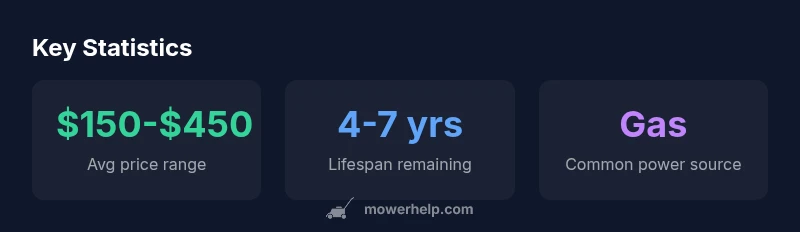
Prices for used mowers span a broad spectrum. Start with a baseline of $150 for very basic, older models and rise to around $450 for solid, well-maintained examples with decent cutting decks. If you’re shopping premium brands or feature-rich electric models, expect higher prices but balanced by lower fuel costs and fewer maintenance headaches over time. In every case, estimate total ownership costs: ongoing maintenance, occasional blade replacements, fuel or battery charging, and potential parts or service. Having a budget buffer (roughly 10-20% of the purchase price) can cover immediate needs such as oil changes, air filter replacements, or blade sharpening. Remember that a mower with a strong service history is often worth a higher upfront price because it reduces the risk of sudden repairs. Mower Help emphasizes balancing short-term savings with long-term reliability when evaluating deals.
If you find a listing that seems compelling, request a maintenance record or a note on recent service. When possible, perform a test run to confirm that the engine runs smoothly, there are no odd noises, and the drive system operates without slippage. These practical checks help you determine whether the price is fair and whether future maintenance will fit your budget.
Practical shopping channels and a quick-start checklist
Your search should span multiple channels to ensure you’re not missing a good deal. Start with local classifieds and community groups, then move to major online marketplaces and dealer trade-ins. Don’t overlook pawn shops and yard sales, particularly in areas with active DIY communities. Create a simple buying checklist to stay organized: verify model and year, inspect for rust or damage, test the mower, confirm safety features, ask for maintenance history, negotiate the price, and confirm return options. In many neighborhoods, you’ll discover surprise bargains from neighbors who have upgraded their equipment. Persistence pays off when you combine diligence with a wide net. In short, the best strategy blends careful inspection, multiple sources, and a clear understanding of what is a fair price for your yard.
Safety and maintenance basics after purchase
After you buy, safety becomes a priority. Read the owner's manual and review safety practices such as disconnecting spark plugs before maintenance, never lifting the mower by the blade, and wearing eye protection during testing. Immediately address any obvious issues: replace damaged blades, clean clogged deck vents, and change the oil if needed. Schedule a routine maintenance plan: oil change intervals, air filter checks, blade sharpening every season, and proper fuel stabilization for longer storage. Keeping an organized maintenance log helps you anticipate wear patterns and plan replacements before problems arise. A well-maintained used mower not only performs better but also lasts longer, delivering reliable service for your yard chores.
Overview of typical used mower characteristics
| Aspect | Used mower range | Notes |
|---|---|---|
| Price range | $150-$450 | Typical price for 6–10 year old unit in good condition |
| Lifespan remaining | 4-7 years | Assumes regular maintenance and typical wear |
| Power source | Gas | Most common in the used market; electric options increasing |
| Brand examples | Honda, Toro, Ryobi | Common brands in used market |
Got Questions?
Is buying a used lawn mower worth it?
Yes, when you target units with a documented maintenance history and perform thorough inspections. Used mowers can offer substantial cost savings with proper diligence.
Yes, with careful checks and clear maintenance history, used mowers can be a smart buy.
What should I inspect first on a used mower?
Begin with the blade sharpness, engine compression, oil condition, and safety features. Follow with fuel system checks and a test run.
Check the blade, engine, and safety features first, then test run.
How can I verify safety features on a used mower?
Confirm blade brake clutch and emergency shutoffs function correctly. Test stopping distance and engage/deactivate controls in a controlled area.
Test safety features and ensure they work properly in a safe area.
Are there warranties on used mowers?
Warranties on used mowers are rare; look for seller-provided return options or third-party warranties where available.
Warranties are uncommon, but some sellers offer short return windows.
Where can I find the best deals near me?
Check local classifieds, marketplace groups, and reputable dealer trade-ins. Compare price, condition, and service history across multiple listings.
Shop around across sources to compare price, condition, and service history.
“A well-vetted used mower can save substantial upfront cost, but it requires a methodical inspection and a test run to confirm reliability.”
The Essentials
- Check credible listings first to avoid scams
- Inspect the engine, blades, and fuel system thoroughly
- Expect broad price ranges; negotiate calmly
- Compute total ownership costs before purchasing
- Prefer brands with readily available parts