Lawn Mower Quotes: Compare, Negotiate, Save Now
Learn how to read and compare lawn mower quotes, negotiate smarter, and pick the best value mower for your yard, with practical tips from Mower Help.


Lawn mower quotes let you compare price, specs, and service across brands. To get the best deal, gather at least three itemized quotes and verify inclusions like delivery, taxes, warranties, and maintenance. This approach helps you make apples-to-apples comparisons and negotiate smarter, with guidance from Mower Help.
Why lawn mower quotes matter
Understanding lawn mower quotes is essential for any homeowner shopping for a new mower. Quotes provide apples-to-apples pricing and help you compare model specs, service inclusions, and long-term costs across brands. According to Mower Help, collecting multiple lawn mower quotes makes it easier to spot hidden fees, delivery charges, or add-ons that inflate the sticker price. A clear quote should itemize the mower model, power type (gas, electric, or battery), deck width, drive system, warranty terms, delivery/setup, and ongoing maintenance costs. Without a detailed quote, you risk overpaying or buying a unit with higher lifetime costs. This guide explains how to read quotes, what to look for, and how to negotiate effectively while preserving quality. Remember that quotes can reflect regional pricing differences and seasonal promotions, so compare like-for-like configurations to get the best value for your yard.
Key variables that affect quotes
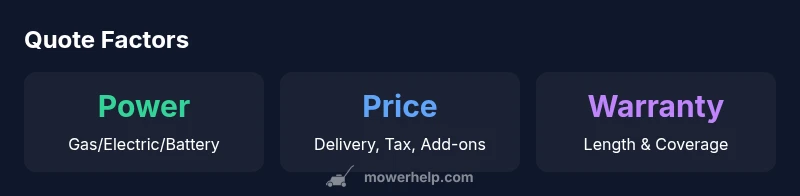
Quotes are not one-size-fits-all. The main factors that push prices up or down include the mower type (gas, electric, or battery), horsepower or torque, deck width, transmission and drive system, and whether the seller includes accessories like mulch kits, baggers, or attachments. Power source tends to dominate initial price: gas mowers are often cheaper upfront than high-end electric or battery models, but long-term maintenance costs can shift the balance. Brand reputation, warranty length, and service plans also shape quotes, especially when delivery, setup, and disposal are bundled. Location and seasonality matter too—promotions, freight, and taxes vary by region and quarter. As noted by the Mower Help team, a quote with a longer warranty and a robust service plan may appear pricier but can reduce ownership costs over time.
How to collect apples-to-apples quotes
Start by listing your yard size, terrain, and mowing frequency. Then request itemized quotes from at least three sources: local dealers, big-box retailers, and reputable online marketplaces. Ask for the same configuration across quotes: same deck width, power type, transmission, and warranty terms. Request a side-by-side comparison with line items for the mower, delivery, setup, taxes, disposal of old equipment, and any maintenance packages. Use a standardized template or spreadsheet to track inclusions and exclusions. When quotes arrive, note any gaps—like missing tax details, unclear warranty coverage, or omitted delivery costs—and ask for quick revisions. This discipline makes apples-to-apples comparison feasible and reduces bargaining friction later.
What to look for in a quote
A good quote should be precise and complete. Look for model number, exact mower features, deck width, power source, and drive type. Confirm the warranty duration and what it covers (parts, labor, on-site service). Check whether delivery, setup, and haul-away of the old mower are included, and whether taxes are itemized. Inspect the included accessories (mulch kits, baggers, lifts) and any recommended maintenance plans. Clarify if trade-in value or recycling of the old mower applies. Finally, verify the quoted price against the current promotions and any seasonal rebates offered by the dealer or brand. Clear line items prevent future price shocks.
Negotiation tactics that actually work
Approach quotes as a collaborative price negotiation rather than a hard sell. Start with three quotes and identify the best inclusions. Ask for a price-match or promo bundles (e.g., free delivery, extended warranty). Leverage seasonal promotions, end-of-quarter clearance events, or bundled maintenance plans to improve the total value. Consider offering to split purchases or accept a slightly older model with a longer warranty. Request written price guarantees and a formal quote revision after negotiation. Finally, document all offers, including expiration dates, to avoid last-minute changes.
Common quote pitfalls and red flags
Red flags include vague itemization, missing taxes, unclear warranty terms, and delivery charges hidden in the fine print. Beware quoted prices that seem too good to be true—they often exclude essential features or have limited warranty coverage. Watch for pushy upsells like unnecessary attachments or service plans with little value. If a dealer refuses to provide an itemized quote or cannot confirm model numbers, walk away and request a formal written quote from a different source.
Using quotes for long-term maintenance planning
Quotes influence more than upfront purchase prices. When comparing quotes, consider maintenance costs, availability of replacement parts, and access to authorized service centers. A mower with a solid warranty and a broad service network can save you money and downtime over a decade. Use quotes to estimate ongoing maintenance frequencies (oil changes, blade sharpening, bag replacements) and create a 3- to 5-year ownership plan that captures calibrations, parts replacement, and service visits. A thoughtful approach helps you select a mower that remains reliable and cost-effective as yard demands change.
Case examples: small yards vs large properties
For a small yard with flat terrain, a compact electric mower with a reliable battery and short charging time may deliver the best value, especially with a shipping-friendly quote. For larger properties with uneven ground, a gas-powered mower with a robust deck and vibration-reducing features might cost more upfront but save labor hours and maintenance in the long run. In both cases, obtaining multiple quotes and comparing service terms is essential to determine the best total package, not just the lowest price.
Final checklist before signing a quote
Before signing, verify every item in the quote: model exactness, power source, deck width, drive type, warranty coverage, and included maintenance or service. Confirm delivery timing, tax details, disposal of the old mower, and any return policies. Ensure there is an itemized list of add-ons with clear prices and expiration dates for offers. Lastly, ask for a signed price quote with a validity period and keep a copy for your records.
Examples of quote sources and typical influences on price
| Source | Typical Range | Notes |
|---|---|---|
| Local dealer | varies by model and region | Delivery and tax may apply |
| Big-box retailer | varies by promotion | Check included service plans |
| Online marketplace | varies by seller | Verify warranty & return policy |
Got Questions?
What’s in a lawn mower quote?
A good quote itemizes the mower model, power type, deck width, drive, warranty terms, delivery/setup, and any maintenance or add-ons. It should also show taxes and any disposal fees.
A quote should list the model, power, and what comes with it, plus any delivery or tax details.
Should I get multiple quotes?
Yes. Multiple quotes help you compare features, inclusions, and overall cost across dealers and brands.
Yes—get several quotes to compare features and price.
How do I compare quotes from brands?
Focus on engine or motor performance, deck width, warranty length, service plans, and total cost of ownership.
Look at the motor, deck width, warranty, and total ownership cost.
What if a quote seems high?
Ask for price matching, promotions, or bundled maintenance. Consider a slightly older model with a longer warranty.
Ask for price match or a bundled deal; consider alternatives.
How long is a quote valid?
Most quotes stay valid for 30–60 days, but always confirm with the seller.
Quotes usually stay valid for a month or two.
Are online quotes trustworthy?
Online quotes can be trustworthy when bought from reputable sellers; verify warranty and return policies.
Yes, but verify seller reputation and warranty terms.
“Quotes are only as reliable as the line-items and warranties attached. Our goal at Mower Help is to ensure every buyer has clear, actionable details before signing.”
The Essentials
- Compare quotes side-by-side with a checklist
- Avoid hidden fees by verifying inclusions
- Prioritize total cost of ownership, not upfront price
- Negotiate with knowledge of promotions and price-matching
- Verify warranty and service coverage before purchase