Lawn Mower Tractor Supply Buying Guide
Your guide to lawn mower tractors from Tractor Supply and similar retailers. Learn how yard size, terrain, and maintenance influence model choice, with practical comparisons.


If you’re shopping for a lawn mower tractor at Tractor Supply or similar retailers, expect a broad spectrum from compact garden tractors to full-size riding mowers. According to Mower Help, the best fit depends on yard size, terrain, and maintenance willingness; prioritize models with solid dealer support and easy access to replacement parts.
Why Tractor Supply Stores Are a Go-To for Lawn Mower Tractors
In today’s market, Tractor Supply and similar home and farm retailers offer a wide range of lawn mower tractors to suit different yards and budgets. For many homeowners, these stores provide convenient access to in-stock models, on-site advice from staff, and a straightforward return policy. According to Mower Help, shopping at large retailers can simplify warranty and parts access, especially for basic to mid-range models. For first-time buyers, the ability to compare multiple brands side-by-side in one trip is a meaningful time saver. The Mower Help team found that most buyers appreciate store-based demonstrations and the opportunity to test-mull comfort, ride quality, and handling before purchase.
- In-store demos help you gauge comfort and accessibility of controls.
- Local availability often means faster parts service and better retailer-backed warranties.
- Brand variety at Tractor Supply can cover entry-level through mid-range tractors.
How to Read the Specs: Power, Transmission, and Deck Size
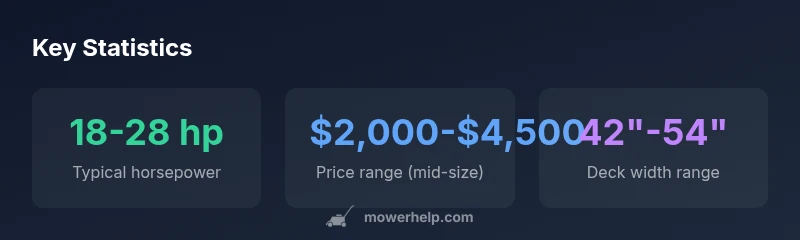
Power, transmission, and deck size are the core specs you will encounter when evaluating lawn mower tractors. Horsepower (hp) gives you an indicator of cutting power and hill-climbing ability, but it’s not the whole story—torque, RPM, and gear ratios matter too. Transmission types range from hydrostatic to manual; hydrostatic transmissions offer smooth, maintenance-light operation, which is popular for larger, variable terrain. Deck width impacts cutting efficiency and time; larger decks cover more ground but require more storage space. When shopping at Tractor Supply, compare models with consistent power ranges (18–28 hp for mid-size to large yards), transmission type you prefer, and deck width that suits your lawn’s mowing patterns. It’s also worth noting fuel capacity and oil type, which influence long-term maintenance.
- Prioritize a hydrostatic transmission for ease of use on uneven terrain.
- Choose deck width based on lawn size and storage space.
- Confirm compatible filters and parts availability at your local retailer.
Choosing Between Riding, Sub-Compact, and Front-Engine Tractors
Lawn mower tractors come in several configurations tailored to different yard profiles. A riding lawn mower (often called a compact tractor) is ideal for large, flat properties with bulky mowing tasks, offering faster coverage and lifted operator comfort. Sub-compact and front-engine tractors balance maneuverability with power, suited to moderately sized parcels and irregular terrain. Front-engine units are lighter and easier to maneuver in tight spaces, but they may lack the punch needed for tall grass or uneven ground. When selecting among these, consider yard size, terrain, storage capacity, and how frequently you’ll perform basic maintenance tasks. The Mower Help team notes that many homeowners overestimate their needs and end up with too much machine for a small yard, or too little for hilly terrain.
- For small lots, a sub-compact can be ideal.
- For large properties with slopes, a riding tractor often delivers efficiency.
- Priority should be ease of maintenance and dealer support, not only initial price.
Budgeting and Total Cost of Ownership
Price is only part of the equation. Total Cost of Ownership (TCO) includes purchase price, fuel, maintenance, parts, and potential depreciation. At Tractor Supply, you may find models near the lower end of mid-range price bands, but maintenance costs can accumulate if you choose a model with complex transmissions or frequent parts wear. A practical approach is to map out your annual mowing hours and estimate fuel consumption, oil changes, and filter replacements. The Mower Help analysis suggests budgeting a contingency for unexpected repairs and seasonal maintenance. While you may find cheaper options, investing in a reliable model with good dealer support can reduce downtime and long-term headaches. Compare warranties and labor coverage, and confirm what parts are readily available locally.
- Estimate annual maintenance costs and parts availability.
- Favor models with broad dealer networks for easy service.
- Consider a longer warranty if it covers common wear items.
Dealer Support, Warranties, and Parts Availability
Dealer support is a critical, often underrated, factor when buying a lawn mower tractor. A strong retailer network can shorten downtime, simplify parts ordering, and provide service advice during the life of the machine. Warranties vary by model and retailer, and some manufacturers offer better coverage for certain components (engine, transmission, deck). When comparing Tractor Supply purchases, verify what the local store can handle in terms of parts stock and service appointments. The Mower Help team emphasizes that reputable dealers should be able to supply common wear parts (air filters, oil filters, spark plugs, belts) within a few days and offer basic maintenance guidance.
- Check parts stock at your local store for quick repairs.
- Read the warranty terms carefully, including exclusions.
- Ask about service appointment availability and loaner equipment if needed.
Maintenance Essentials That Save You Money
Routine maintenance extends the life of a lawn mower tractor and keeps performance consistent. Key tasks include checking and changing engine oil, replacing air and fuel filters, and inspecting belts and blades. A sharp blade improves cutting efficiency while reducing engine strain. Regular cleaning of the under-deck area prevents grass buildup that can lead to rust or clogging. The Mower Help analysis highlights that consistent maintenance reduces unexpected breakdowns and extends the machine’s life, especially if you mow frequently or on varied terrain. Create a simple maintenance schedule aligned with the manufacturer’s recommendations and your mowing frequency.
- Develop a simple yearly maintenance routine.
- Keep a blade-sharpening or replacement plan in place.
- Store the mower in a dry, shaded area to reduce corrosion.
Practical Shopping Checklist for In-Store and Online Purchases
A solid buying checklist helps you compare options without missing critical details. Start with yard size, terrain type, and preferred transmission style. Then note deck width, horsepower, fuel capacity, and required maintenance. Check the retailer’s availability, support options, and warranty terms. If possible, test drive the unit to feel tractor balance, seat comfort, and control accessibility. Read customer reviews from other homeowners with similar yards. The aim is to find a balance between capability, reliability, and cost. The Mower Help team recommends creating a short list of 3–5 candidates and ranking them against your primary needs, storage space, and expected maintenance effort.
The Final Call: When to Buy and What to Avoid
Timing can influence price and availability. End-of-season promotions can yield favorable deals, but you may have to wait for delivery or ship-in. Avoid models with features you don’t need, as extras often come with higher maintenance and parts costs. Focus on core functions that match your yard, terrain, and climate. Don’t assume higher horsepower will automatically translate to better results on a small, flat lawn. Instead, prioritize transmission type, dealer support, and ease of maintenance. The right model should feel comfortable to operate and quantity-stable in your climate and region.
Comparison of common mower tractor types
| Model Type | Key Strength | Common Pitfalls |
|---|---|---|
| Front-Engine Tractor | Good power; straightforward maintenance | Bulky; storage demands |
| Compact Sub-Compact Tractor | Maneuverable; affordable entry | Limited power; smaller deck |
| Riding Lawn Mower (Zero-Turn) | Fast mowing; tight turns | Space requirements; maintenance needs |
Got Questions?
What is the first thing I should consider when buying a lawn mower tractor?
Start with yard size, terrain, and storage space. Then evaluate transmission preferences and deck width. This helps you shortlist models that truly fit your landscape and maintenance plans.
Begin with yard size and terrain, then check transmission and deck width to narrow down your options.
Is a hydrostatic transmission worth it for a beginner?
Yes for most beginners, as it offers smooth operation and easier control on uneven ground. It often reduces fatigue and makes mowing under varied conditions more comfortable.
Hydrostatic transmissions are easier to use and reduce fatigue on uneven ground.
How large should the engine be for a 1-acre property?
For about an acre with hills or thick turf, aim for 20–28 hp. On flat, easy terrain, 18–22 hp may be sufficient. Match horsepower to terrain and deck width for efficiency.
For about an acre, expect 20–28 hp for hills; 18–22 hp for flat ground.
Should I buy from Tractor Supply or a dedicated dealer?
Consider dealer proximity, parts availability, and service options. Dealers often have better after-sales support, while retailers may offer convenient pickup and returns.
Dealers usually provide better after-sales support; retailers can be convenient for parts and returns.
What maintenance tasks are essential after purchase?
Regular oil changes, air and fuel filter checks, blade sharpening, and belt inspections are essential. Follow the manufacturer’s schedule and keep a simple log.
Do regular oil changes, clean filters, sharpen blades, and check belts.
Are used lawn mower tractors a good idea?
Used units can save money but may hide wear. Inspect for oil leaks, blade condition, and transmission health. Prefer models with available parts and documented maintenance history.
Used mowers can save money, but inspect condition and parts availability carefully.
“Choosing the right lawn mower tractor isn’t only about price; it’s about fit for your yard, terrain, and maintenance capacity. A reliable dealer and easy access to parts can save you headaches over years of use.”
The Essentials
- Choose by yard size and terrain, not price alone
- Dealer support matters as much as the list price
- Maintenance plans save time and money over the life of the mower
- Test drive essential features like seat comfort and controls
- Read warranties carefully and verify parts availability