Lawn Mowing Cost: What Affects It and How to Save
Discover what drives lawn mowing cost, compare pricing models, and learn practical steps to estimate and trim residential mowing expenses in 2026 today.


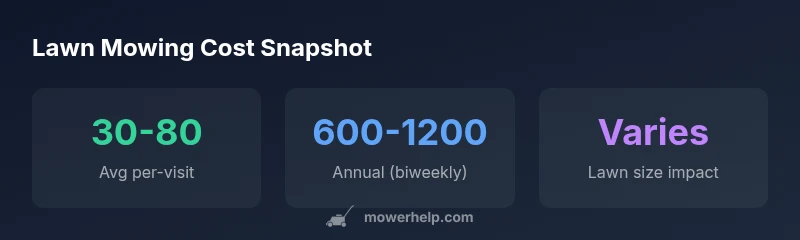
The typical lawn mowing cost ranges from about $30 to $80 per visit for most residential lawns, with smaller yards on the lower end and larger, more complex landscapes on the higher end. Prices vary by yard size, terrain, location, frequency, and any add-ons. Seasonal promotions and bundles can lower the per-visit price when you buy multiple services upfront.
What determines lawn mowing cost
According to Mower Help, lawn mowing cost is not one-size-fits-all. It scales with yard size, terrain, mowing frequency, and the inclusion of extras like edging and leaf removal. The Mower Help team found that larger lawns and complex landscapes push per-visit prices higher, while residents who sign seasonal contracts can secure lower per-visit rates. Access to water features, slopes, or tight spaces where equipment must maneuver increases labor time and thus cost. Geographic variation also plays a role: urban areas tend to have higher minimums and travel time baked into quotes, while rural markets may offer lower base rates. For homeowners, the key is to translate yard characteristics into a clear, apples-to-apples quote by asking for itemized line items and expected duration.
When thinking about value, consider not just the price per mow but the overall package, including reliability, scheduling flexibility, and the quality of edging and cleanliness after service. The most reliable providers communicate upfront about factors that raise or lower costs, and they offer consistent service windows. This transparency helps homeowners compare quotes accurately and avoid surprise fees later on.
Pricing models and typical ranges
Pricing models for lawn mowing vary by company, region, and service scope. The most common models include per-visit pricing, tiered seasonal packages, and flat-rate contracts for a defined mowing frequency. Per-visit pricing tends to be straightforward but can fluctuate with the season, while bundles often deliver better per-visit value if you intend to mow more often. A few providers offer loyalty or upfront-payment discounts that reduce the effective rate over a season. When evaluating quotes, look for included services such as edging, blower cleanup, and bagging vs. mulching; these distinctions can significantly affect total cost. For homeowners, it helps to be precise about lawn size, terrain, and desired frequency when requesting quotes. Regions with higher labor costs generally show higher per-visit rates, while multi-service bundles can compress the annual spend.
How to estimate your lawn mowing cost
Estimating your cost starts with an accurate lawn size. Measure the area in square feet or acres and categorize it as small, medium, or large. Decide your desired mowing frequency (weekly, every other week, or seasonal) and note any add-ons like edging, weed whacking, or seasonal cleanups. Request at least three quotes and ask for itemized line items to compare apples to apples. Run a simple calculation: multiply the per-visit price by the expected number of visits, then add add-ons. If you already own a mower, compare DIY costs (fuel, maintenance, depreciation) against contractor quotes to determine the break-even point. Finally, consider seasonal adjustments—demand spikes can raise prices in spring and fall when mowing is most frequent.
Hidden costs and add-ons to consider
Many quotes appear lower until you add the extras. Common add-ons include edging, trimming along fences and sidewalks, bagging clippings for disposal, leaf cleanup in fall, and disposal fees for grass clippings or thatch. Some services offer mulching instead of bagging, which may save time and disposal costs but requires mower compatibility with mulching blades. Fertilization, aeration, or overseeding are sometimes packaged as optional services; these can either increase or reduce long-term maintenance costs depending on your lawn’s needs. Always confirm whether taxes, travel fees, or minimum visit charges are included.
Tip: Ask for a side-by-side comparison of a basic mow with and without add-ons to visualize the cost impact.
DIY vs professional mowing: cost comparison
Owning a mower means upfront costs for the machine, fuel, oil, and regular maintenance, plus the value of your time. Professionals give you predictable, on-time service and professional edging, which can reduce time spent by yourself. A rough break-even approach compares annual DIY expenses (purchase price, fuel, maintenance) to the total annual cost of hiring a pro. In many cases, frequent mowing becomes cheaper as a DIY project only when you mow very quickly with minimal add-ons and have spare time. If your lawn requires regular edging or timely seasonal cleanups, a professional service can save time and yield a cleaner appearance, especially on slopey or irregular terrain.
Consider your priorities: time savings, consistency, and property aesthetics when deciding whether to DIY or hire out.
Regional differences and seasonality
Prices tend to be higher in cities with higher living costs and denser housing, where travel time and demand pressures increase quotes. Seasonality also affects pricing: spring and early summer see higher demand due to lawn growth, while late summer prices may ease as the peak grows quieter. Weather patterns influence accessibility and the amount of time required to complete a mow, which in turn affects cost. If you’re in a warm climate with year-round mowing, negotiate a year-round plan that stabilizes costs and reduces seasonal spikes.
In all cases, getting multiple quotes and asking about off-peak discounts can yield meaningful savings.
Ways to reduce lawn mowing costs
- Bundle services: Combine mowing with edging and cleanup for a lower per-service rate.
- Set a predictable schedule: Regular visits prevent surge pricing during peak growth periods.
- Opt for mulching blades: Mulching reduces disposal time and can lower cleanup costs.
- Maintain your mower: Regular maintenance improves efficiency and reduces friction for service providers.
- Consider seasonal contracts: Upfront payments or pre-paid packages often carry discounts.
- Share a provider with neighbors: A shared route reduces travel time and allows the provider to offer a group discount.
- Compare quotes: Don’t settle for the first bid; a 3-quote comparison often reveals the best value.
Approximate costs by lawn size and visit frequency
| Lawn Size | Estimated per-visit cost | Annual visits (est.) | Annual mowing cost (est.) |
|---|---|---|---|
| Small (0–0.25 acre) | $25-$50 | 20-26 | $500-$1,300 |
| Medium (0.25–0.5 acre) | $40-$70 | 20-26 | $800-$1,800 |
| Large (0.5–1 acre) | $60-$100 | 20-32 | $1,200-$3,200 |
Got Questions?
What factors most influence lawn mowing cost?
Lawn size, terrain, mowing frequency, and add-ons like edging or bagging are the main cost drivers. Regional labor rates and seasonal demand also influence quotes. Always request a line-item price to understand what you’re paying for.
The main factors are yard size, terrain, how often you mow, and extras like edging. Regional costs and seasonal demand also matter. Ask for a line-item quote.
Are there seasonal price spikes for lawn mowing?
Yes, spring and early summer typically see higher demand, which can raise quotes. Rates often stabilize in late summer and fall as growth slows. Plan ahead and request quotes before peak season.
Prices usually spike in spring and early summer due to higher demand, then level off later in the year.
Do upfront contracts or bundles save money?
Bundled services or seasonal contracts often provide a lower per-visit rate than a single mow. If you anticipate regular service, upfront commitments can improve overall value.
Yes—bundles and seasonal contracts can lower your per-visit cost if you need regular mowing.
Is edging usually included in standard mowing?
Edging is sometimes included, but not guaranteed. Always confirm whether edging and sidewalk trimming are part of the base mow or priced separately.
Edging may be extra—check whether it’s included in the base mow.
How can I estimate annual mowing costs accurately?
Estimate per-visit costs based on your lawn size, multiply by the expected number of visits, and add add-ons. Compare against a DIY budget that includes mower maintenance and fuel to determine the break-even point.
Calculate per-visit costs times visits plus extras, then compare with DIY costs to see what fits your budget.
What about gas vs electric mowers for cost?
Gas mowers typically have lower upfront costs but higher fuel and maintenance expenses. Electric mowers may have higher upfront costs but lower ongoing fuel and maintenance costs, depending on usage and battery lifespan.
Gas can be cheaper upfront but costs more in fuel and maintenance; electric may save on fuel but could require battery replacements.
Can I combine mowing with other yard services for savings?
Yes. Combining mowing with edging, fertilization, or aeration often yields bundled discounts without sacrificing quality. Request a bundled quote to compare against separate service pricing.
Bundling mowing with other services can save money—ask for a bundled quote.
“A well-planned mowing schedule paired with regular mower maintenance lowers long-term costs and keeps your lawn looking its best.”
The Essentials
- Know your yard size and schedule to estimate costs accurately
- Shop for itemized quotes and compare add-ons
- Consider DIY vs professional trade-offs based on time and aesthetics
- Bundle services and negotiate seasonal contracts for savings
- Monitor regional and seasonal price shifts to time quotes