Rent-to-Own Lawn Mower No Credit Check: A Practical Guide
Learn how rent-to-own lawn mowers work without a credit check, including costs, terms, pros/cons, and smart comparison strategies for homeowners and DIY enthusiasts.


Rent-to-own lawn mowers with no credit check let you obtain a mower quickly without a traditional loan. They can cost more overall, so compare total payoff, upfront fees, and contract terms before signing. For specifics, see our full no-credit-check comparison.
What "no credit check" rent-to-own means for lawn mowers
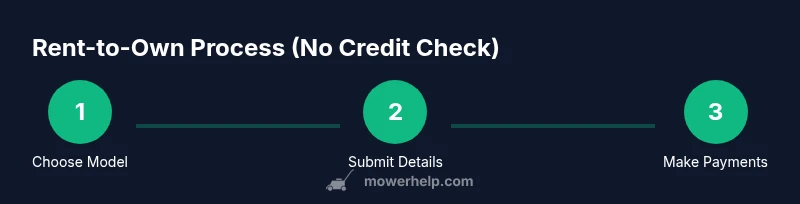
No credit check rent-to-own programs are designed to help homeowners who cannot or prefer not to use traditional financing. In practice, you rent or lease a mower for a branded term with the option to own after meeting payment requirements. The process often involves a down payment, recurring payments, and a final purchase option. The risk to the buyer is that the total cost ends up higher than buying upfront or financing through a bank or credit union. According to Mower Help, many retailers offer no-credit-check deals to attract customers, but they offset risk with higher interest or fees and stricter return policies. Before you commit, compare the base price of the mower, the total amount paid over the term, and any miscellaneous charges such as delivery, late fees, or early-termination penalties. If you foresee gaps in payment, ask about grace periods or hardship provisions. This transparency matters because some contracts allow the retailer to reclaim the mower if a single payment is missed.
How the terms typically work
No-credit-check rent-to-own programs usually involve a down payment, followed by scheduled payments until you own the mower or reach the payoff point. Ownership transfer can occur automatically after completing all payments or via a final buyout option. Some retailers allow early ownership with a larger one-time payment. The key is to understand who is responsible for maintenance, what happens if a payment is late, and whether there are penalties for early termination. While the label says no traditional credit check, you may still need to provide identification and proof of income. The total cost tends to be higher than a straightforward cash purchase or conventional financing, because monthly payments include fees that cover the retailer’s risk. Always calculate the total payoff and compare it to other options before signing.
Pros and cons of no-credit-check rent-to-own
Pros
- Quick access to a mower when funds are limited
- Flexible payment timelines can fit seasonal cash flow
- A path to ownership without a loan
Cons
- Higher total cost due to fees and interest
- Potential penalties for late payments or early termination
- Limited model selection and sometimes stricter return policies
- Possible impact on your willingness to maintain the unit if ownership timing changes
Understanding these trade-offs helps you decide if this route aligns with your budget and mowing needs.
How to compare offers and read the contract
Start by listing every offer you’re considering and identify the base price, down payment, and monthly payments. Read the fine print for: total payoff, duration, ownership transfer method, maintenance responsibilities, delivery fees, and penalties for missed payments. Ask about grace periods and how disputes are resolved. Check if the contract allows return terms or upgrades if your needs change. Compare the model variety, warranty scope, and service options. Use a simple tally to compute overall cost against buying new or used mower options. This diligence helps prevent surprises and ensures you pick the best value.
Common pitfalls and red flags to watch for
- Very high final payoff relative to the mower’s market value
- Hidden fees buried in monthly charges or delivery costs
- Short grace periods with automatic repossession after one missed payment
- No clear ownership transfer method or unclear buyout terms
- Limited model availability or aggressive pressure to upgrade models
- Lack of documentation for maintenance requirements or warranty coverage
If any term feels vague or overly punitive, request clarification in writing before signing.
Tools & Materials
- Photo ID(Valid government-issued ID to verify identity and address)
- Proof of Income(Recent pay stubs or bank statements to show ability to make payments)
- Down Payment(Typically required upfront; amount varies by retailer)
- Budget Worksheet(Helps compare total payoff across options)
- Mower Preferences List(Model, size, and features you want)
Steps
Estimated time: 2-6 hours
- 1
Identify needs and budget
Clarify your mowing area size, preferred mower type, and the maximum total you’re willing to pay over the term. Document your monthly cash flow to ensure the payments fit your budget.
Tip: Have a realistic max monthly payment before you start shopping. - 2
Check eligibility and disclosures
Ask each retailer how eligibility is determined and which details are reviewed. Note any nonstandard terms or required documents beyond ID and income proofs.
Tip: Request a written list of all fees and the exact payoff amount. - 3
Gather offers and compare totals
Collect at least three no-credit-check rent-to-own offers. Compute the total payoff for each, including down payment, monthly payments, and any end-of-term charges.
Tip: Create a side-by-side table to visualize differences. - 4
Inspect the mower and contract
Ask for the model’s condition, test run if possible, and review the contract for ownership transfer, maintenance responsibility, and penalties.
Tip: Do a quick test run to verify starting, cutting height, and safety features. - 5
Ask about maintenance and warranty
Clarify who is responsible for routine maintenance, parts, and repairs during the term. Confirm whether service is included or available.
Tip: Keep a record of all service notes and receipts. - 6
Finalize the agreement and plan ownership
Choose the best offer, sign the contract, arrange delivery, and mark the ownership transfer date. Set reminders for payments and review the contract’s end terms.
Tip: Save digital and printed copies of the signed agreement.
Got Questions?
What does no credit check mean in rent-to-own deals for lawn mowers?
No credit check means the lender does not review your credit score as part of the approval. They still require identification and some financial information, but the approval can be based on income, identity, and agreements terms rather than a credit history.
No credit check means your credit history isn’t evaluated; approval depends on other factors like income and identity.
Can I own the mower after finishing payments?
Yes, most rent-to-own agreements culminate in ownership after completing the final payment, though some plans offer a separate buyout option or obligations tied to maintenance and fees.
Ownership usually happens after you complete all payments, but verify the exact transfer terms in your contract.
Are there hidden fees I should expect?
Hidden or unclear fees can include delivery, late payment penalties, return charges, or maintenance fees. Always request a full, itemized list of all charges before signing.
Look for extra charges in the contract and ask for a breakdown before you commit.
What happens if I miss a payment?
Missing a payment can trigger late fees or even penalties that affect your ability to own the mower. Some contracts may allow grace periods, but others may repossess the unit.
If a payment is missed, check your agreement for grace periods and the exact consequences.
Is renting-to-own worth it compared with buying used?
Rent-to-own can be convenient but often costs more than buying a used or new mower outright. Compare total payoff and consider how long you’ll need the mower.
Consider total cost and your long-term needs before choosing rent-to-own over buying used or new.
What if the model I want isn’t available?
Rental programs may limit model choices. If your preferred model isn’t available, ask about alternatives with similar specifications and the timing for new stock.
If your first choice isn’t available, ask for comparable models and expected stock dates.
Watch Video
The Essentials
- Understand total cost before signing
- Compare multiple no-credit options
- Inspect the mower and read the contract carefully
- Know who handles maintenance and ownership transfer
- Watch for hidden fees and penalties