What size lawn mower for 4 acres: A practical buying guide
Discover the right mower size for 4 acres with deck width guidance, mower type comparisons, and practical buying tips to boost speed, reduce fatigue, and save time.


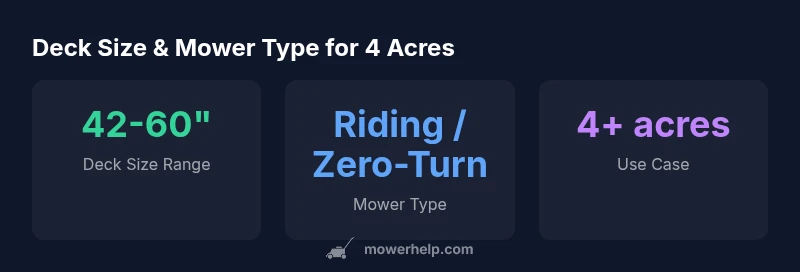
For 4 acres, most homeowners get the best balance with a riding mower or a wide-deck mower in the 42–60 inch range. A 60-inch deck can cut faster but requires more space to maneuver and may cost more upfront. If you have uneven terrain or tight boundaries, a 42–46 inch deck paired with a rider or step-through frame offers better control while finishing the job efficiently.
Why the mower size matters on a 4-acre property
Mowing a property that spans multiple acres introduces considerations that don’t appear on small urbanos. The size of your mower’s cutting deck directly affects how quickly you cover ground, how comfortable you are while mowing, and how often you’ll need to refuel or recharge. When people ask, “what size lawn mower for 4 acres,” the first step is to balance deck width with maneuverability to minimize fatigue and maximize efficiency. The right size reduces back-and-forth passes, reduces time spent on edging, and helps you maintain a consistent cut across uneven terrain. According to Mower Help, homeowners who select a deck in the 42–60 inch range tend to achieve a good middle ground between speed and precision on moderate landscapes. This doesn’t mean one size fits all; it’s about matching your yard’s layout to a mower that offers enough width to cut efficiently while remaining nimble enough to handle fences, trees, and slopes.
Assessing terrain, boundaries, and workload before buying
Before committing to a size, map your four-acre lot. Note the number of obstacles like trees and flower beds, hilly sections, and whether you have long straightaways or a maze of tight corners. A flat, open field typically benefits from wider decks (54–60 inches) and a riding mower or zero-turn for greater speed. In contrast, dense borders, narrow mowing strips, or steep grades may justify a narrower deck (42–46 inches) paired with precise steering or a step-through frame for safer edge trimming. As you plan, consider boundary trimming and potential attachment needs, such as baggers or mulch kits, which influence the total value of a given deck size. The Mower Help team emphasizes testing maneuverability in a small, representative area to confirm comfort and control before purchase.
Deck size guidelines by mower type for 4 acres
Different mower types pair better with different deck widths. A 42–46 inch deck on a walk-behind or compact rider is typically comfortable for tight turns and edge work around landscaping beds and fences. A 46–54 inch deck on a standard riding mower handles larger, flatter sections with fewer passes. For broad open spaces or professional-grade efficiency, a 60 inch or wider deck on a zero-turn or heavy-duty rider can dramatically cut mowing time. If you frequently encounter hills, slopes, or soft ground, prioritize maneuverability and stability over sheer deck size. Your goal is to minimize overlapping passes and reduce fatigue over long mowing sessions.
Riding mower vs. walk-behind vs. zero-turn for 4 acres
Walk-behind mowers with smaller decks are excellent for tight corners but can be exhausting on four acres. Riding mowers provide a comfortable seat and better stability on uneven ground, especially with a mid-size deck in the 46–54 inch range. Zero-turn mowers excel on large, open spaces thanks to their exceptional turning radius and speed, but they can be more expensive and have steeper learning curves on slopes. For many four-acre properties, starting with a 46–54 inch riding mower offers a balanced blend of speed and control; if your property is mostly open and obstacle-free, a modern zero-turn can be a strong time-saver. In all cases, choose a model with reliable after-sales support and compatible attachments.
Efficiency tips: mowing patterns, speed, and maintenance to save time
Efficient mowing isn’t just about deck width. Terrain dictates speed; on flat ground you can push closer to the deck’s upper speed, whereas hills require a measured pace to maintain traction and blade contact. Plan mowing patterns that minimize turning and backtracking, especially along fence lines. Regular maintenance—blade sharpening, air filter cleaning, and oil changes—keeps the mower cutting cleanly and reduces engine strain. For four acres, a deliberate warm-up routine and regular blade maintenance can save hours over a mowing season. The goal is steady, consistent productivity rather than sprinting through a few long sessions.
Maintenance, costs, and return on investment for large lawns
When budgeting for a four-acre plot, consider the total cost of ownership: purchase price, deck size, fuel or battery efficiency, maintenance, and parts. Larger decks and more capable drive systems have higher upfront costs but can drastically reduce mowing time and labor. Factor in attachments like mulch kits or baggers that complement your yard’s needs. While initial investment matters, the real payoff is time saved and the reduced physical strain. Mower Help’s analysis shows that for many homeowners, a balanced setup—e.g., a 46–54 inch riding mower with essential attachments—delivers the best combination of performance and long-term value. Also, compare predicted yearly maintenance costs to understand the true cost of ownership.
Authoritative sources and practical checklists
This guide integrates practical experience with reliable sources. For readers seeking external validation, consult university extension services and government agricultural resources for mower guidelines and safety practices.
- Authoritative sources:
Authoritative sources
- Extension services: https://extension.illinois.edu
- Extension services: https://extension.umn.edu
- Extension services: https://www.clemson.edu/extension
Deck size by mower type for four-acre lots
| Deck Size (in) | Mower Type | Typical Use Case (acres) |
|---|---|---|
| 42-46 | Push or mid-size rider | 1-2 |
| 46-54 | Riding mower | 2-4 |
| 60+ | Zero-turn / heavy-duty rider | 4+ |
Got Questions?
What size deck should I use for 4 acres?
A 46–54 inch deck on a riding mower is a common starting point for typical 4-acre yards. If you have many tight corners or hills, a 42–46 inch deck on a capable rider offers safer edging and more precise control.
For four acres, start with a 46 to 54 inch deck on a rider; if you have hills or tight edges, go with 42 to 46 inches for better control.
Is a zero-turn mower worth it for 4 acres?
Yes, especially on open spaces where speed matters. Zero-turns cut quickly but have higher costs and steeper learning curves on slopes and uneven ground.
Zero-turns can save time on open areas, but they cost more and are trickier on slopes.
Can I mow 4 acres with a walk-behind mower?
It's possible but time-consuming and physically demanding. For most homeowners, a riding mower or compact rider offers a practical balance of effort and results.
A walk-behind can handle 4 acres, but you’ll likely spend more time and energy doing it.
How long does mowing 4 acres take?
With a rider and flat terrain, estimate 1–3 hours depending on deck size and pattern. Hills or obstacles can extend that time by 30–60 minutes.
Mowing 4 acres with a rider takes roughly 1–3 hours, depending on terrain and deck width.
What maintenance should I perform after mowing 4 acres?
Sharpen blades, clean under decks, check air filters, and perform routine oil changes. Regular maintenance reduces wear and keeps the mower performing at peak efficiency.
Sharpen blades, clean the deck, and check oil and air filters after big mowing sessions.
Should I consider attachments like bagger or mulch kit for 4 acres?
Yes, mulch kits often save cleanup time, while baggers handle clippings where disposal is a concern. Choose attachments that fit your mower and yard layout.
Mulch kits cut cleanup time; baggers are handy if you need grass disposal.
“"Choosing the right mowing setup for 4 acres is about balancing deck width, turning radius, and reliability. A well-matched mower saves hours each mowing season."”
The Essentials
- Match deck width to terrain and obstacles
- For 4 acres, 42–60 inch decks are common starting points
- Riding or zero-turn mowers save time on large open areas
- Consider attachments to maximize efficiency and finish quality
- Balance upfront cost with long-term time savings