What Size Lawn Mower for 1 Acre: A Practical Guide
Discover the ideal mower size for a 1-acre yard. Learn deck widths, mower types, and mowing strategies to cover an acre efficiently with expert guidance from Mower Help.


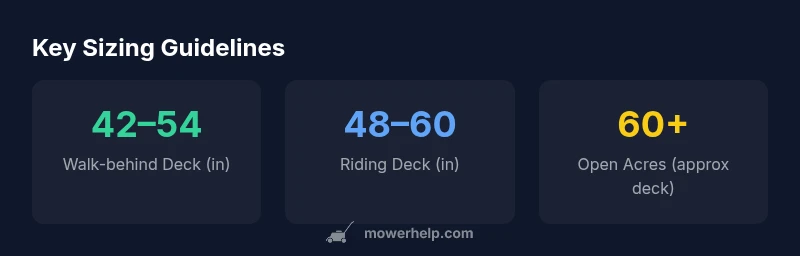
According to Mower Help, for a typical 1-acre yard, the ideal mower deck width is 42 to 54 inches for walk-behind models and 48 to 60 inches for riding mowers. The goal is to balance cutting width with maneuverability and fuel efficiency. Ground speed and turning radius matter more than raw power for efficient coverage, and choosing the right size reduces fatigue while preserving edge quality on varied terrain. In practice, many homeowners finish a 1-acre cut in about one to two hours, depending on obstacles and slope.
Understanding the acre yard and mower sizing
Managing a yard that spans roughly one acre introduces practical constraints when selecting equipment. The yard size influences mower width, drive system needs, and mowing patterns—key factors that determine efficiency and quality of cut. Start with a deck width that lets you cover ground without constant turning, yet remains narrow enough to pass through gates and around edges. For irregular lots, wooded sections, or slopes, a slightly narrower or more agile machine can significantly reduce fatigue. Mower weight distribution, traction, and ease of maintenance also play big roles when you work on hills or damp turf. Weather and seasonal growth further influence the choice, as faster-growing periods demand quicker coverage. In short, pick a mower size that minimizes back-and-forth passes while fitting your yard layout. This aligns with practical guidance from Mower Help for typical 1-acre yards.
How mower width affects coverage for a 1-acre lot
Deck width directly influences how much ground you can pass with each stroke. Wider decks mean fewer passes and faster completion on open sections of the yard, but they sacrifice maneuverability in tight corners, near obstacles, or through narrow gates. For most 1-acre lots with some landscaping or trees, a 42–54 inch deck on a walk-behind mower strikes a balance between reach and control. Riding mowers in the 48–60 inch range excel on expansive, open areas where speed matters most. The key is matching width to your gate size, turning radius, and confidence handling wide passes safely. Remember that wider decks also require more power and can be harder to transport if you need to navigate multiple properties.
Walk-behind vs riding mowers for 1 acre
Choosing between walk-behind and riding mowers hinges on yard layout and physical preference. Walk-behinds with a 42–54 inch deck are nimble in irregular spaces and cost less upfront, but they demand more time for larger swaths of open lawn. Riding mowers in the 48–60 inch range cover ground quickly and reduce fatigue, especially on slopes or large flat sections. For a mostly open acre with occasional edging tasks, a compact riding mower offers the best balance of speed and comfort. In contrast, a mixed yard with several trees or tight borders may benefit from a narrower walk-behind for edges and a dedicated rider for the bulk cutting.
Estimating mowing time and patterns
If you’re asking what size lawn mower for 1 acre, an efficient approach is to estimate time by combining deck width and ground speed. A wider deck reduces the number of passes, but you’ll also want a machine that maintains consistent speed without bogging down on uneven patches. Plan your pattern to minimize overlaps and avoid backtracking around obstacles. Adopting a mowing sequence—outer perimeter first, then inner sections, then edges—helps ensure even coverage. For most homeowners, scheduling 1–2 mowing sessions per week during peak growth periods keeps the workload manageable and the grass consistent in height.
Terrain, obstacles, and turning radius considerations
Hilly sections, rocks, and trees dramatically affect the ideal size. Turn radius matters more than raw width in tight spaces, so test the mower’s turning tightness before buying. If your acre includes many obstacles, a narrower walking mower near the 42–48 inch range can be advantageous for edge work, while a rider with a wider deck speeds up clear zones. Consider traction: on wet hills or loose soil, a model with good weight distribution and reliable drive traction reduces slippage. If you frequently navigate through garden beds or fences, prioritize a machine with precise steering and good visibility of the blade path. Terrain variety often means owning two machines—a narrow option for edging and a broader rider for bulk mowing.
Maintenance habits that save time on a large lawn
A large lawn amplifies maintenance tasks, so establish a routine that keeps the mower ready to roll. Regular blade sharpening maintains cut quality and reduces strain on the engine. Clean under the deck after heavy mowing to prevent buildup that robs power. Replace air filters and spark plugs on a schedule to preserve efficiency, especially during peak season. Use proper oil changes and fuel stabilizers to minimize downtime. Store equipment in a dry space, and keep spare belts and blades on hand for quick replacements. These habits translate into fewer interruptions and more consistent results across the entire acre.
Buying guide: what to look for and test-drive tips
When shopping, prioritize deck width that aligns with your yard’s gate size and open areas, plus a drive system that matches your strength and soil type. Test-drive conditions similar to your yard: test edge cuts, hill climbs, and wide-pass stability. Check operator ergonomics—seat height, controls, and visibility matter for long sessions. Look for maintenance-friendly features such as easy blade access, clean air filtration, and durable cast-iron components on reputable models. Compare two or three options by running them around a store course or, if possible, a small outdoor mock yard to simulate your real conditions. This hands-on approach helps verify that the mower meets both performance needs and budget constraints.
Cost ranges and maintenance budgeting for 1 acre
Budgeting for a 1-acre lawn means weighing upfront cost against ongoing maintenance. Walk-behind mowers with a 42–54 inch deck typically cost less upfront but may require more time; riding mowers with a 48–60 inch deck command a higher price but reduce physical effort significantly. Expect price ranges that reflect size, brand, and features, with maintenance costs including fuel, oil changes, blades, and tune-ups. Plan for annual expenses in line with usage: more frequent mowing and higher terrain complexity generally increases fuel consumption and part replacements. A balanced approach often involves combining a capable rider for bulk mowing with a narrow edge mower for precision work, optimizing both time and cost over the season.
Quick sizing rules of thumb for 1-acre lawns
A practical quick-reference guide is to start with a 50–60 inch rider for open acre sections and keep a 42–54 inch walk-behind for edges and tight turns. If gates limit width, lean toward narrower models to ensure access. For flatter lawns with few obstacles, a larger deck on a riding mower can shave mowing time; for oddly shaped properties, a narrower mower yields better maneuverability. Always prioritize a machine that feels balanced, stable, and comfortable to operate for extended periods. This approach keeps you productive while maintaining a high-quality cut across the entire acre.
Mower size guidelines table for 1-acre yards
| Mower Type | Deck Width (inches) | Typical Use Case | Notes |
|---|---|---|---|
| Walk-behind | 42-54 | Small to medium yards with obstacles | Balanced width and control for tight spaces |
| Walk-behind (mid-size) | 48-54 | Even terrain, moderate yard size | Good compromise between reach and cost |
| Riding mower (compact) | 48-54 | Medium open yards | Great for fatigue reduction on slopes |
| Riding mower (large) | 60+ | Large, flat or rolling terrain | Max coverage, higher cost |
Got Questions?
What size mower is best for a 1 acre yard with several trees?
For yards with multiple trees, a narrower deck (42–48 inches) offers better maneuverability around obstacles, while a riding mower can handle the open spaces more quickly. Consider pairing both types if budget allows.
For tree-heavy yards, go narrower for edges and consider a rider for the open sections.
Is a 48-inch mower wide enough for a hilly 1-acre lot?
A 48-inch mower is capable on hills if it has good traction and a solid powertrain. If the slope and terrain are severe, a slightly wider deck (50–54 inches) on a riding mower may improve stability and reduce mowing time.
Yes, but test traction on slopes first.
Gas vs electric for a 1-acre mowing workload?
Gas mowers generally offer longer run time and stronger torque for dense grass, making them common for 1-acre yards. Electric options are quieter and easier to maintain but may require battery management for larger properties.
Gas mowers work well on larger yards; electric can be convenient if you have access to charging and moderate growth.
How often should I mow a 1-acre lawn?
Most homeowners mow a 1-acre yard every 5–7 days during peak growing seasons. Adjust frequency based on grass growth, irrigation, and weather.
About weekly during the growing season.
Do I need a tractor-style mower for 1 acre?
Not always. A riding mower with a wide deck can handle 1 acre effectively, while a tractor-style mower is best for very large open areas or professional use. Consider your yard shape and gates.
A riding mower often suffices; a tractor is for larger, open spaces.
“Choosing the right size mower for 1 acre dramatically reduces mowing time while maintaining edge quality and blade safety. Prioritize a balance between deck width, traction, and control.”
The Essentials
- Boost efficiency with deck width and drive performance
- Match mower type to yard layout and obstacles
- Riding mowers save time on open acres
- Test turning radius and gate access before buying
- Budget for ongoing maintenance and fuel throughout the season