What Size Lawn Mower for 5 Acres: A Practical Guide
Discover the right mower size for 5 acres with tips on deck width, mower types, and maintenance. A clear, actionable buying guide for homeowners and DIY enthusiasts.


For five acres, a riding mower or zero-turn is typically the best fit. Aim for a deck width in the 42–54 inch range to balance speed and maneuverability, with adequate horsepower for your terrain. The key is to match deck width to your layout and turning radius, while prioritizing reliability and ease of maintenance.
Why the right mower size matters
Choosing the right mower size for a property as large as five acres impacts comfort, efficiency, and overall results. A mower that’s too small will require more passes, more fuel, and more time, increasing fatigue and the chance of missed spots. Conversely, a mower that’s too large for tight spaces can become difficult to maneuver around trees, fences, and slopes. The Mower Help team emphasizes sizing your mower to your yard layout, not just the total acreage. A well-chosen size reduces the number of passes, improves uniform cutting, and lowers maintenance strain by avoiding overworking the engine or belt system. The goal is a balance between deck width, turning radius, weight, and reliability. When you align these factors, you’ll experience fewer stop-and-go moments and a smoother mowing rhythm across hills, flats, and mixed terrain. This approach also supports safer operation on slopes and in tight spaces around obstacles.
Assessing your 5-acre property
To pick the right mower size, you must understand the ground you’ll cover. Start by mapping your property into zones: flat open areas, sloped sections, and areas with obstacles like trees, gardens, and sheds. Note the average mowing frequency you intend throughout the growing season; more frequent cuts can allow for smaller decks, while less frequent mowing may benefit from wider decks for speed. Consider terrain quality—rocky patches, soft soil, and uneven ground all demand a mower with better weight distribution and ground clearance. Take measurements of field widths, turns, and access points to determine if a wide deck will fit through gates or along fence lines. A handy rule of thumb is to estimate the total area and think about how many passes you’re willing to make in each zone. This planning turns abstract acreage into actionable dimensions for deck width, turning radius, and model choice. Remember: bad planning can lead to overtaxed engines and more frequent maintenance needs.
Deck width and mower type options
Deck width is the primary driver of mowing speed. On five acres, many homeowners choose deck widths in the 42–54 inch range for a good balance of efficiency and maneuverability. A wider deck can cover more ground per pass but may struggle in tight corners or narrow gates. Ride-on mowers in this range include garden tractors and compact tractors, while zero-turn mowers excel in open, flat areas with many obstacles due to their tight turning radius. For irregular layouts or steep slopes, a tractor-style rider with articulated steering can offer superior stability and control. If your yard includes long straightaways and few obstacles, a larger deck in a zero-turn or tractor platform can dramatically cut mowing time. Always consider turning radius, weight distribution, and how easily you can access your storage space when selecting a deck width.
Riding mower vs zero-turn vs tractor
Riding mowers come in several flavors, from garden tractors to compact tractors. Zero-turn mowers shine when you have wide, open sections and a need for tight turns around trees and landscape beds. If your five acres include hilly terrain, a tractor-style rider with a fixed frame and good weight balance can provide stability and consistent cutting height. For pasture-like sections with few obstacles, a wider deck on a zero-turn can dramatically reduce mowing time. When evaluating options, pay attention to: (1) turning radius and steering style, (2) ground clearance and weight, (3) ease of maintenance and parts availability, and (4) safety features on slopes. The best choice often boils down to how your yard is laid out and how much you value speed versus nimble maneuvering.
Calculating mowing time and efficiency with deck width
While exact times vary with terrain and grass conditions, you can think in terms of efficiency: larger decks cover more ground per pass, reducing the number of passes needed. However, the actual time savings depend on layout, gate access, and how easily you can maneuver around obstacles. A practical approach is to test drive models with different deck widths to observe cutting quality and ease of movement in your yard’s most challenging sections. If you routinely encounter tight corners, opt for a mower with a smaller turning radius or consider a vehicle with articulating steering. For flat, expansive areas, a wider deck on a capable riding mower or a zero-turn can significantly shorten the mowing session.
Practical buying guide: sizes, horsepower ranges, and maintenance considerations
When selecting a mower for five acres, look for deck widths in the 42–54 inch range as a baseline. This range generally balances efficiency with the ability to navigate around obstacles. The engine horsepower you need depends on load and terrain; mild to moderate hills and thick grass typically demand more torque, so prioritize models that emphasize low-end torque and reliable cooling. Maintenance considerations are crucial: choose models with accessible service points, standard belts, and widely available replacement parts. Consider mulching capability versus bagging, as well as the availability of accessories like ballast weights for stability on slopes. Finally, evaluate fuel or electric power trade-offs. Gas-powered units are common for large properties, but premium electric options can deliver quiet operation and instant torque in flatter sections. A thoughtful combination of deck width, horsepower, and maintenance accessibility will yield the best long-term value for your five-acre landscape.
Authority sources
For further context on mowing efficiency and equipment selection, see external resources from agricultural extensions and university programs. These sources provide practical guidance on mowing patterns, equipment safety, and yard management strategies. They do not replace a hands-on test drive with a trusted local dealer, but they offer valuable frameworks for decision-making.
Safety and best practices
Safety should guide every buying decision. Large properties demand careful handling of slopes, uneven ground, and heavier equipment. Always follow the manufacturer’s safety instructions, wear appropriate PPE, and test braking and steering in a controlled area. Regular maintenance, including blade care, oil checks, and tire pressure, extends equipment life and keeps mowing sessions safe and efficient.
Tools & Materials
- Tape measure(Essential for mapping yard dimensions and gate widths)
- Yard map or plan(Draw zones (flat, slope, obstacles) and gate access points)
- Notebook or digital note tool(Record measurements and test-drive impressions)
Steps
Estimated time: 60-120 minutes
- 1
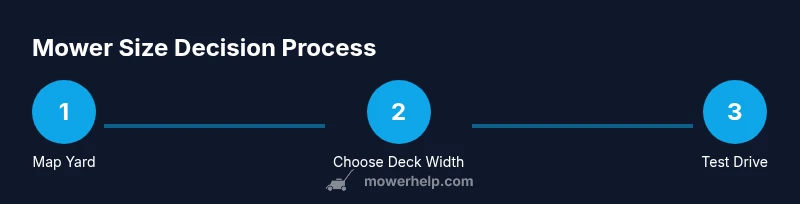
Map your five-acre yard
Measure approximate widths of open spaces, note slopes, and mark obstacles. Create zones for sections that will use different deck widths or turning radii. This foundation informs which mower types will be most efficient.
Tip: Include access points such as gates; a mower that won’t fit through a gate will waste time every session. - 2
Define mowing frequency and target finish time
Decide how often you’ll mow and your preferred weekly maintenance window. Frequent cutting can allow for smaller decks and less power, while infrequent mowing may justify a wider deck and greater stability.
Tip: If you’re balancing other outdoor tasks, a more capable deck width can reduce total mowing time even if upfront cost is higher. - 3
Compare deck widths for your layout
Evaluate models with deck widths in the 42–54 inch range. Test turning radius, gate clearance, and reach in the far corners of your property. Decide if you need a tighter turning radius for tree-dense areas.
Tip: Ask dealers for a test drive around a mock obstacle course to gauge real-world maneuverability. - 4
Choose riding mower vs zero-turn based on terrain
If you have many obstacles and tight spaces, zero-turns excel. For uneven slopes or very soft ground, a tractor-style rider may offer better stability and cutting consistency.
Tip: Slope safety matters: always test braking on gentle slopes and ensure ballast is distributed correctly. - 5
Assess maintenance accessibility and parts availability
Check for easy blade removal, service points, and nearby parts suppliers. A mower with well-supported parts reduces downtime and maintenance frustration.
Tip: Prefer models with standardized belts and widely available replacement parts. - 6
Make a side-by-side model comparison
Create a simple comparison chart that lists deck width, turning radius, weight, recommended terrain, and maintenance features. Use it to decide which model fits your five-acre layout best.
Tip: Rank each feature by importance to your yard to reinforce your final choice.
Got Questions?
What size deck do I need for 5 acres?
A deck in the 42–54 inch range is a common starting point for five acres, balancing coverage and maneuverability. The exact size depends on gate width, obstacles, and turning radius in your yard.
For five acres, start with a 42 to 54 inch deck. Your gates and turns will determine the best fit.
Should I choose riding mower or zero-turn for large acres?
Zero-turn mowers excel in open areas with obstacles, offering tight turning radii. Riding mowers and garden tractors provide stability on slopes and rougher ground. The choice should match your layout, access points, and comfort with maintenance.
Zero-turns are great for open areas with obstacles; riding mowers work well on slopes and uneven ground.
How does terrain affect mower size?
Hilly or uneven terrain benefits from a mower with good weight distribution and stability. Steep slopes may favor tractor-style riders over lighter equipment, while flat, open spaces can leverage wider decks for speed.
Terrain drives your choice: hills call for stability, flats allow wider decks for speed.
What maintenance considerations affect mower size?
Choose models with accessible blades, belts, and filters. Parts availability and service networks matter more on larger properties where downtime is costly.
Maintenance ease matters, especially on large plots where downtime hurts.
Do I need a commercial mower for 5 acres?
Most homeowners manage five acres with consumer-grade riding or zero-turn mowers. A commercial mower is typically reserved for professional use or very heavy, frequent mowing.
Unless mowing is a full-time job, a high-quality consumer rider or zero-turn is usually enough.
Can I use a push mower for 5 acres?
A push mower is impractical for five acres due to time and physical effort. It may be feasible for small, highly detailed areas, but for most of the property, a riding or zero-turn mower is recommended.
Push mowers are not practical for five acres; a riding mower is typically better.
The Essentials
- Define yard zones before choosing a mower.
- Deck width 42–54 inches fits many five-acre layouts.
- Riding and zero-turn options suit different terrain; test in real paths.
- Prioritize maintenance accessibility and parts availability.
- Plan a side-by-side comparison to choose the best fit.