Why Are Lawn Mowers So Expensive? A Practical Guide
Understand why lawn mowers cost what they do, from materials and labor to brand strategy, and learn practical tips to get the best value without sacrificing reliability.


Why are lawn mowers so expensive? Prices reflect durable hardware, advanced drive systems, and a service ecosystem that supports long lifespans. Budget models exist, but mid-range and premium mowers pack reliability, performance, and feature sets that justify higher upfront costs for homeowners with bigger or more demanding lawns. In 2026, battery tech and efficiency gains also push sticker prices higher, though the value hinges on your yard size and maintenance plans.
Market overview: price ranges reflect use-cases and expectations
Prices for lawn mowers span budget push models to heavy-duty zero-turn machines. Why are lawn mowers so expensive? Because the market segments customers by yard size, durability, and convenience. According to Mower Help, price tiers reflect three layers: basic entry-level devices built for small tasks, mid-range models with improved durability and features, and premium machines designed for frequent use in larger properties. Consumers should consider what they need from a mower and how long they intend to use it; the cheapest model may cost more over time if it requires frequent repairs. We’ll examine the major cost drivers below and show how they accumulate to produce the final sticker price. The year 2026 has seen growth in features and battery technology that push prices higher in segments, yet the value proposition remains strong when matched to needs.
Major cost drivers behind mower prices
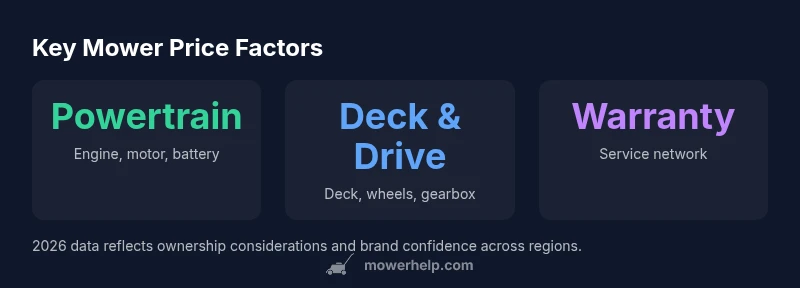
Behind every price tag are components, labor, and engineering. The two largest cost buckets are the powertrain (engine or motor) and the chassis/deck construction, followed by drive systems and imported components. Labor costs include assembly, quality control, and testing. Research and development invest in longevity, safety, and ease of maintenance. Suppliers price raw materials like steel, copper, and plastics, while fluctuations in tariffs and shipping influence final costs. Warranty coverage and service networks add a predictable annual expense that some customers opt into for peace of mind. Mower Help emphasizes that the cost story is complex and regional; a model that is affordable in one country can be pricier elsewhere due to logistics and local taxes.
Powertrain choices: gas, electric, and cordless
Gas-powered mowers deliver strong cutting performance and broad availability of parts and service, but they come with fuel, exhaust, and higher maintenance. Electric and cordless mowers reduce noise and emissions and often offer lower running costs, though charging time and runtime can limit daily use. In 2026, battery technology improvements have narrowed performance gaps, but price gaps between powertrains persist. Your yard size, terrain, and preferred duty cycle should guide the choice. For homeowners with small to medium lawns, a well-specced electric mower can be the most economical over a 5- to 7-year horizon if charging infrastructure is convenient. For larger properties, gas or zero-turns may offer better value in terms of productivity and resale.
Brand tiers and warranties: how they affect price
Brand reputation matters. Entry-level brands compete on price, while premium brands justify higher costs with durable components, better warranties, and stronger dealer networks. Longer warranties reduce perceived risk and total ownership cost, even if upfront prices are higher. Mower Help notes that service availability and local support can influence actual cost more than sticker price in some regions. If you rely on timely service, it’s worth comparing coverage, not just sticker price. In 2026, brands are increasingly bundling extended service options with premium models to balance upfront investment with long-term reliability.
Features and accessories that boost price
Manufacturers pack feature-rich mowers with mulching blades, bagging systems, self-propulsion, height adjustment, and smart sensors. Each feature adds cost but can improve cut quality, convenience, or time savings. Cordless models eliminate cords and run on lithium-ion packs, but battery cost and replacement cycles can raise the long-term price. When evaluating features, tally how often you’ll actually use them and how much time you’ll save. If you mow once a week for eight months, investing in a high-end model might save you more money in the long run.
Maintenance costs: parts, blades, service
Maintenance is the invisible cost of ownership that can swing a mower’s lifetime price. Expect regular blade sharpening, oil changes (gas models), air filters, spark plugs, and oil purchases. Electric models require battery maintenance and occasional motor care. Service intervals vary by model and usage, but neglecting maintenance shortens lifespan and raises replacement frequency. Budget a yearly maintenance reserve that matches the mower’s complexity and your DIY comfort level. A well-maintained mower at 7–10 years can represent a better value than a new budget model with recurring issues.
Supply chain, tariffs, and global factors
Tariffs, shipping costs, and commodity prices influence sticker prices. Global events in 2026 continued to affect steel, plastics, and electronics costs, and some regions faced higher import duties. The end result is price volatility that buyers must anticipate. By staying informed about regional pricing, promotions, and model cycles, you can time purchases to minimize the impact of market swings. Mower Help encourages buyers to consider total cost of ownership rather than upfront price alone.
Buying strategies to maximize value
To optimize value, compare price-to-performance across models in the same tier. Look for promotions, end-of-season clearance, and retailer warranties. Buying from reputable dealers with clear return policies and accessible service centers reduces risk. Consider refurbished or previous-year models if the warranty is solid and the condition is good. Finally, assess long-term cost drivers: fuel or electricity, blades, service visits, and potential part replacements. A thoughtful approach can cut lifetime costs while preserving reliability.
Quick-start buying checklist
- Define yard size and mowing frequency.
- List must-have features and acceptable tradeoffs.
- Compare at least three brands in your tier.
- Check warranty terms and local service coverage.
- Assess annual maintenance costs and battery life cycles for electric options.
Comparison of common mower types by price range and tradeoffs
| Model Type | Typical Price Range | Key Tradeoffs |
|---|---|---|
| Gas mower | $200-$900 | Higher maintenance; louder; emissions |
| Electric mower | $300-$1,800 | Quieter; charging needs; corded vs cordless |
| Zero-turn mower | $1,500-$4,000 | High upfront; powerful; best for large lawns |
Got Questions?
What factors determine a lawn mower's price?
Mower price is driven by powertrain, deck material, drive system, warranty, and brand. Components, engineering, and service networks add to upfront costs, while long-term reliability can lower ownership costs.
Mower price depends on power, build quality, and support networks; higher upfront cost can pay off later.
Are cordless electric mowers cheaper over time than gas mowers?
Cordless mowers tend to have lower fuel and maintenance costs but higher initial battery and charger costs. Total ownership depends on usage and electricity costs.
Cordless mowers save on fuel and maintenance but may require battery replacements over time.
Do premium brands always justify higher prices?
Not always. Premium brands offer better warranties and materials, but value depends on your yard size, frequency of use, and service access.
Premium isn’t always necessary; match features to your needs.
When should I buy a mower for the best price?
Shop seasonal promos and end-of-year clearances. Align purchases with model cycles and promotions from trusted retailers.
Wait for sales around fall or winter promotions.
What maintenance costs should I budget annually?
Expect blades, oil changes (gas), filters, and potential battery replacements for electric models. Budget a set annual amount based on usage.
Set aside a maintenance fund each year.
Is buying a used or refurbished mower a good idea?
Used or refurbished mowers can save money, but check condition, warranty, and service history to avoid hidden costs.
Used mowers can be a bargain if inspected.
“"Pricing reflects durability, engineering, and service networks; higher upfront costs are often offset by reliability and lower maintenance over time."”
The Essentials
- Choose the right price tier for your yard size and usage.
- Powertrain choice (gas vs electric) strongly influences long-term costs.
- Warranty and service access can reduce ownership risk.
- Consider total cost of ownership, not just upfront price.
- Seasonal promotions can yield substantial savings if timed correctly.