How to Get Rid of a Lawn Mower: Safe Disposal & Recycling Guide
Learn safe, legal ways to dispose of an old lawn mower, including recycling, donation, and junk removal options. Covers gas vs electric units, fluids, and local regulations for homeowners.


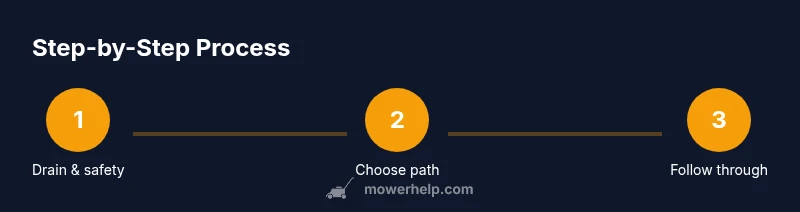
You can safely get rid of a lawn mower by draining fuel, disconnecting the spark plug, and choosing a disposal path: recycling, donation, or junk removal. If the mower is still operable, consider donating or selling; for nonfunctional units, recycle metal and components where possible. Always check local regulations and contact a licensed recycler.
Why disposing a lawn mower matters
Disposing of a lawn mower properly protects the environment and keeps your community clean. Gas-powered units can contain residual fuel and oil, while batteries and plastics require careful handling. The Mower Help team emphasizes that improper disposal can lead to soil and water contamination and may violate local laws. By choosing recycling, donation, or a licensed junk removal service, you support responsible metals recovery and safe waste streams. Understanding your options helps you avoid penalties and ensure your old mower finds a new life where possible.
Options for getting rid of a lawn mower
There are several legitimate pathways to get rid of an old mower. If the unit still runs, donating or selling it can extend its life and help a neighbor or charity. Recycling centers and metal recyclers can reclaim steel, aluminum, and some plastics. Some towns offer household hazardous waste events or drop-offs that accept mowers, fluids, and batteries. Finally, licensed junk removal services will handle the pickup and transport for a fee. According to Mower Help, evaluating operability and local programs first often saves money and reduces environmental impact.
How to prepare a mower for disposal
Before you part with the mower, prepare it for safe handling. Start by emptying and draining all fuels and oils into approved containers, then ventilate and clearly label them. Disconnect the spark plug on gas-powered units or remove the battery on electric models to prevent accidental starts. If you plan to disassemble, keep fasteners in labeled bags and remove the blade with a proper wrench to avoid injury. Finally, photograph the mower and its parts for records and proof of proper disposal.
Safety, legality, and common questions
Different jurisdictions have rules about lawn mower disposal, fuel handling, and battery recycling. Always work outdoors on a non-slip surface and wear PPE—gloves, safety glasses, and closed-toe shoes. Do not pour fuels or oils down drains, sewers, or onto the ground. Check your local government or waste management website for curbside pickup eligibility or drop-off hours. For guidance, consider local extension services and municipal recycling programs, which often publish step-by-step instructions for mowers and other large appliances.
Donating or recycling first: what to expect
If you can donate a mower, look for local charities, community gardens, or schools that may accept working units. Recycling centers typically separate metals, plastics, and batteries for proper processing. Some programs offer pickup for a fee or free if the item meets distance or weight thresholds. When you recycle, request a receipt or certificate of recycling; this helps with accountability and potential tax considerations. For nonfunctional mowers, metal salvage is common, and many centers will take the blades and fasteners separately.
What happens at the recycling facility
At a recycling facility, metal components are melted and reused in new products. Plastics may be separated and recycled into various items, while batteries and fluids are treated as hazardous materials and processed by certified handlers. This minimizes landfill waste and supports a circular economy for garden equipment. Knowing these steps helps you select a recycler that follows environmental standards and provides documentation of proper disposal.
Tools & Materials
- Personal protective equipment (gloves and safety glasses)(Non-slip gloves, eye protection; essential during any disassembly or draining steps)
- Oil drain pan(For catching fuel and oil; use a clearly labeled, sealed container)
- Screwdriver or socket set(For removing covers, blades, or ballast weights)
- Container for drained fuel(Plastic jugs rated for fuel; label clearly and store away from heat)
- Labeling materials(Permanent marker or tape to label fluids and parts)
Steps
Estimated time: 90-120 minutes
- 1
Assess disposal options
Survey operability. Decide whether to donate, recycle, or use a junk-removal service based on condition and local programs. Check if there are curbside options or drop-off events in your area.
Tip: Call ahead to confirm accepted mowers and required preparation. - 2
Drain fuels and oils safely
Move the mower to a well-ventilated outdoor area. Use an approved container to drain gasoline and oil, avoiding spills and ignition sources. Wipe up any small drips promptly.
Tip: Do not drain fluids indoors; keep a fire extinguisher nearby as a precaution. - 3
Disconnect the battery or spark plug
On gas mowers, remove or disconnect the spark plug wire to prevent accidental starting. For electric models, unplug and, if present, remove the battery and terminals.
Tip: Keep the spark plug wire away from metal surfaces while working. - 4
Remove blades and detachable parts
Use the correct wrench to detach the blade and other removable pieces. Store fasteners in labeled bags to prevent loss and injury from sharp edges.
Tip: Handle blades with caution; always point them away from your body when removing. - 5
Choose disposal path and prepare transport
Arrange pickup or drive the mower to the recycler or donation center. Bring model details, proof of ownership, and any receipts for recycling. Photograph the device for records.
Tip: Ask for a disposal receipt or certificate of recycling after drop-off. - 6
Verify disposal and keep records
Ensure you receive a confirmation from the facility or service. Store receipts and any documentation for future reference or tax records if applicable.
Tip: File the disposal receipts in the same folder as other household appliance documents.
Got Questions?
What should I do with old lawn mower fluids before disposal?
Drain gasoline and oil into approved containers, then recycle or dispose of them as hazardous waste per local rules. Do not pour fluids on soil or down drains.
Drain fluids into approved containers and recycle them according to local guidelines.
Can I donate a non-working lawn mower?
Some charities and repair shops accept non-working units for parts or refurbishing. Call ahead to confirm acceptance and transportation options.
Yes, you might donate a non-working mower to salvage parts or repair programs; call ahead.
Where can I recycle my lawn mower?
Check with local metal recyclers, household hazardous waste programs, and municipal recycling centers for guidance and pickup options.
Recycle at a metal recycler or a local HHW program; ask about pickup.
Is it safe to dismantle the mower myself?
Yes, with proper PPE and careful handling of blades. Avoid direct contact with sharp edges and store parts safely.
Yes, if you wear PPE and stay careful with sharp blades.
Should I drain the fuel before disposal?
Yes. Drain fuel into an approved container and transport it separately to avoid fire risk.
Yes, always drain fuel safely before disposal.
How long does disposal typically take?
Disposal time varies by location but can be quick if you have drop-off ready or pickup scheduled.
Timing depends on the facility or service; plan for same-day or next-day pickup.
The Essentials
- Plan disposal options before starting work.
- Safely manage all fuels and fluids to prevent spills.
- Donate or recycle when feasible to support the environment.
- The Mower Help team recommends following local rules and obtaining receipts.