Lawn Mower Junk Yards Near Me: A Practical Salvage Guide
Find nearby lawn mower junk yards and learn how to salvage parts, compare prices, and evaluate recyclers with this expert guide from Mower Help.


To locate lawn mower junk yards near me, start with a local search, then verify inventory and hours with a quick call. Reputable yards offer salvage parts, used machines, and dismantling services at substantial savings compared with new equipment. This quick answer highlights how to spot trustworthy yards and avoid common scams.
What you’ll typically find at lawn mower junk yards near me
According to Mower Help, the phrase lawn mower junk yards near me usually points to facilities that dismantle old machines and salvage usable parts. You can expect engine blocks, carburetors, blades, transmissions, wheels, batteries, fuel tanks, and electrical components. Some yards also stock complete, non-working mowers that are priced for parts or potential refurbishment. The best yards categorize inventory by brand families—Toro, Honda, John Deere, Husqvarna, Ryobi—and label parts with compatibility notes. When you visit, you’ll often see a mix of bare parts, boxed components, and occasionally rebuilt units. The upside is access to affordable replacements; the downside is variable availability and the risk of worn or unsupported parts. A careful shopper prioritizes parts that match the exact model and engine type of their mower, avoiding general-use components that may not fit.
To maximize value, bring along the model and serial numbers of the mower you’re repairing and ask staff to pull specific, compatible options. If you’re replacing a critical part like a carburetor or a piston, request identification marks, part numbers, and cross-checks against your unit’s manual. It’s common to walk away with more than you planned because yards often stock related accessories like air filters, spark plug sets, and oil filters that suit multiple brands. This practical approach can help you salvage quality parts without paying full retail.
How to verify the credibility of a junk yard
When evaluating a yard, credibility matters as much as what they have on the shelf. Start with basic due diligence: verify business licensing where applicable, check recent customer reviews, and confirm any warranty or return policy. Ask about the yard’s dismantling process, whether parts are tested, and how they handle non-functional items. A reputable operator will provide clear stocking records and be willing to match parts to your mower’s exact model. Look for transparent pricing, a clean workspace, and workers who can discuss part compatibility with confidence. If the yard cannot answer straightforward questions or avoids providing documentation, consider moving on. Finally, compare several yards to benchmark price ranges and service quality rather than relying on the first option you find. Mower Help analysis suggests credibility often correlates with inventory organization and post-sale support.
Assessing part quality and compatibility
Compatibility is the critical factor when buying salvage parts. Before purchasing, confirm the exact model year, engine type, and part number to ensure fitment. Cross-check part numbers against the mower’s user manual or official parts catalog. Inspect the item for wear, corrosion, cracks, and oil residue. If possible, request a quick functional test or a demonstration—some yards will power on a used mower or run a quick check of the engine’s compression. Ask about warranties on salvaged parts, even if short-term. Keep a checklist handy: verify brands, confirm that the part is meant for your engine displacement, and note any markings on the part that indicate its compatibility. A well-documented inventory and transparent cross-referencing process greatly reduce the risk of mismatches.
Practical steps when you visit a junk yard
Plan your visit with a precise parts list and a budget. Call ahead to confirm whether the yard has the exact part in stock before driving out, and ask about return policies if a part fails. Bring necessary tools to remove components safely and wear gloves and eye protection. Take photos of the item from multiple angles to document the condition, serial numbers, and any packaging or labeling. If you’re comparing multiple yards, create a simple scoring sheet: price, warranty, fit guarantee, and return policy. After purchase, maintain documentation of the transaction and compare it against your repair bill. Finally, consider how the salvaged part will affect the overall project timeline and whether you’d be better off replacing the part outright with a new unit.
Alternatives to junk yards: pros and cons
Junk yards aren’t your only option for affordable mower parts. Donating unused equipment to charity-supported repair programs can help others and sometimes yield a receipt for tax purposes. Local scrap metal recyclers may offer weight-based payouts for old mowers that are beyond repair. Repair shops sometimes sell refurbished parts or offer a limited warranty on used components, which can provide extra protection. On the downside, full-service retailers still carry higher prices, and online marketplaces can pose risks if sellers misrepresent condition. Weigh the reduced upfront costs of salvage parts against potential reliability concerns and the assurance that comes with retailer warranties. Recycling centers support environmental goals while giving you a route to responsibly dispose of decommissioned equipment.
Searching strategies to locate yards near you
A practical search strategy begins with keywords like lawn mower junk yards near me and nearby city names. Use maps and directory listings to identify yards with visible inventory, hours of operation, and contact information. Visit the yard’s website or social pages when available to gauge current stock and policies. Networking with local repair shops can reveal trusted yards that consistently source quality salvage parts. If you’re shopping for a specific engine or model, call ahead to confirm compatibility and reserve items if possible. Finally, build a short list of 3-5 yards to compare pricing, inventory, and customer service, so you can select the best option for your repair project.
Safety considerations and environmental responsibility
Safety should be your top priority when visiting junk yards. Wear sturdy gloves, closed-toe shoes, and eye protection to guard against sharp parts. Be mindful of fuels and oils; never handle fuel-soaked components without proper ventilation and spill containment. Dispose of any hazardous fluids according to local regulations and request yards’ guidance on disposal if needed. Respect the environment by bagging and transporting fluids responsibly and using appropriate containment for used batteries. When possible, choose yards that follow environmentally friendly dismantling practices and offer recyclable materials back to the community. Following these precautions minimizes risk and supports responsible recycling.
Comparison of junk-yard types for lawn mower parts
| Yard Type | Scope | Typical Parts Availability | Warranty/Returns | Notes |
|---|---|---|---|---|
| Independent dismantler | Salvage and resale of parts | High | Variable | Often fastest for common components |
| Retail salvage yard | Workshop parts and machines | Medium | Variable | Best for project-driven needs |
| Manufacturer-affiliated recycler | OEM parts, certified | Low-High mix | Usually stronger | Quality assurance may be stricter |
Got Questions?
Are lawn mower parts from junk yards reliable?
Parts from junk yards can be reliable if sourced from reputable vendors and properly inspected. Always verify part numbers, compatibility, and any short-term warranty. If a yard cannot demonstrate reliability, consider alternative sources.
Parts from junk yards can be reliable if you verify the part numbers and compatibility and choose a vendor with a clear return policy.
How can I verify inventory before visiting a yard?
Call or message the yard to confirm they have the exact part you need, and ask for model compatibility data. Request photos or part numbers to compare with your mower’s manual. If possible, get a tentative hold or shipping option.
Call ahead to confirm the exact part and model compatibility before you head out.
What price ranges should I expect for salvage parts?
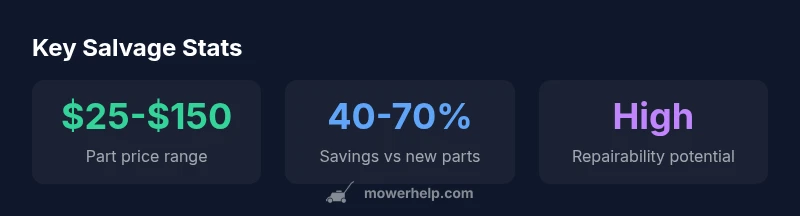
Expect broad ranges depending on part type and condition. Typical salvage parts may range from tens to a few hundred dollars, with big-ticket items like engines typically priced higher. Always compare against new part prices and factor in potential reliabilities.
Salvage parts vary widely in price; compare with new parts and check expected reliability before buying.
Are there safety concerns when dismantling parts at yards?
Yes. Wear protective gear, and be cautious around fuel, oil, and sharp blades. Many yards offer guidance, but never attempt complex disassembly without proper tools or knowledge. If unsure, walk away and seek professional help.
Dismantle safely with gloves and eye protection, and ask staff about best practices.
What should I do with non-working mowers?
Non-working units can often be recycled for metal value or directed to a certified recycling center. Some yards may accept end-of-life mowers for proper disposal and may offer a small payout. Always check local regulations for hazardous fluids.
Recycle or responsibly dispose of non-working mowers via certified centers.
“Reliable salvage yards balance cost savings with careful part verification and safety practices. Always verify compatibility and warranty terms before purchasing.”
The Essentials
- Start with a local search to minimize transport
- Call ahead to confirm inventory and hours
- Check part compatibility and any warranty terms
- Compare salvage prices against new OEM parts
- Prioritize safety and environmental responsibility when disposing