How to Start a Lawn Mower with Electric Start
Learn how to start a lawn mower with electric start safely and efficiently. This guide covers safety checks, battery readiness, step-by-step operation, troubleshooting, and maintenance to keep your mower reliable for every mowing session.


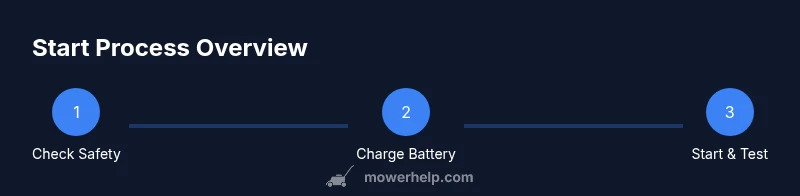
With an electric-start lawn mower, the goal is to safely energize the starter and fire the engine. This quick answer covers safety checks, battery readiness, and the start button procedure, plus a quick troubleshoot path for common faults. Follow these steps to minimize crank attempts, protect the battery, and get reliable starts every time.
Safety First: Electric Start Basics
Electric-start systems give you a simple button or key to energize the starter motor and crank the engine. They reduce the physical effort compared to pull-start models, but they still require careful safety practices. Before touching anything, ensure the mowing area is clear of people, pets, and debris. Wear eye protection and gloves, and verify the battery or power connection is free of corrosion. According to Mower Help, electric-start systems can dramatically improve reliability for homeowners, but neglecting safety can lead to shocks or kickback. In short, safety comes first, not last.
Pre-Start Checks and Tools You'll Need
A thorough pre-start routine minimizes surprises on the first pull. Check that the battery is fully charged and the terminals are clean and tight. Inspect the safety interlocks to ensure they allow starting only when conditions are safe. Gather essential tools and consumables: a charged battery, a charger, a fire-safe area, work gloves, eye protection, a clean rag, and a small set of wrenches. The Mower Help team found that a ready battery and clear safety interlocks dramatically improve start reliability and prevent unnecessary dimming or arcing.
Understanding Your Electric-Start System and Variations
Electric-start mowers vary by model, but most use a 12-volt starter motor connected to a battery or an integrated battery pack. Some models feature a key switch, others a push-button, and a few rely on a soft-start solenoid. Regardless of design, the goal is to provide a momentary electrical engagement to crank the engine. Familiarize yourself with your owner's manual to identify the exact sequence and safety interlocks for your mower. The Mower Help Team notes that knowing your specific model's layout reduces confusion during cold starts and prevents accidental cranking with the blade engaged.
Troubleshooting Common Start Issues
If the engine refuses to start, work backwards from the easiest possible cause. Begin with battery health and connections: clean any corrosion, reseat the terminals, and measure the voltage with a multimeter. Next, verify the safety interlocks (seat switch on riding mowers or brake/clutch engagement on push mowers) are functioning correctly. Check the spark plug and air filter for fouling or clogs. For some models, a weak battery or a faulty switch is enough to stop the starter from engaging. The troubleshooting approach should be systematic and calm to avoid accidental pulls or shocks.
Maintenance Tips to Extend Electric Start Life
To keep electric start reliable, perform regular maintenance on the battery and electrical connections. Clean terminals, apply dielectric grease to prevent oxidation, and test voltage every season. Store the mower in a dry, cool place to protect the battery from sulfation and discharge. Periodically inspect wiring for signs of wear, replace worn connectors, and follow the manufacturer’s service intervals for battery health and replacements. The Mower Help team recommends routine checks, especially after storage, to prevent hard starts and cranking delays.
Quick Troubleshooting Table and Next Steps
- If the mower starts but dies quickly, it could be fuel or air delivery issues rather than the starter. Check the fuel level, fuel quality, and air filter. - If the engine clicks but does not crank, the starter motor may be failing or the battery too weak to engage. Consider charging or replacing the battery and inspecting the starter circuit. - If the battery holds charge but won’t engage, inspect safety interlocks, fuses, and wiring for signs of damage. - If you can't diagnose the issue, consult the manual's troubleshooting section or contact a qualified technician. This section helps you narrow down issues quickly without attempting risky repairs.
Tools & Materials
- Owner’s manual for your mower model(Always consult model-specific steps)
- Fully charged 12V battery (if applicable)(Check for proper charge using a multimeter)
- Battery charger or charging cable(Have on-hand if battery voltage is low)
- Safety gloves(Protect hands when handling battery and cables)
- Safety glasses/eye protection(Prevent debris from injuring eyes)
- Flat-head screwdriver or small wrench(For terminal connections and adjustments)
- Rag or brush for cleaning terminals(Use to remove corrosion if present)
- Digital multimeter(Useful for measuring battery voltage)
Steps
Estimated time: 15-25 minutes
- 1
Inspect the area and safety controls
Before starting, walk the mowing path to remove objects that could jam the blade. Confirm all safety interlocks are in place (seat, brake, blade engagement switch) and ensure the area is well-ventilated if you’re checking electrical components near gas lines.
Tip: Always start outdoors in a clear space to avoid accidental contact with people or pets. - 2
Check battery status and connections
Open the battery compartment, inspect terminals for corrosion, and ensure the battery is fully charged. If needed, disconnect and reconnect the battery, making sure the clamps are tight and clean before reattaching.
Tip: Use a clean rag to wipe corrosion from terminals; apply a thin layer of dielectric grease afterwards. - 3
Familiarize yourself with the start control
Identify whether your mower uses a push button or a ignition key. If there is a choke control, set it to the START position if required by your model. Read the manual for any model-specific steps before engaging the starter.
Tip: If your model has a safety key, keep it in a consistent pocket so you don’t forget it. - 4
Engage the starter and wait briefly
Press and hold the electric start button or turn the key as instructed by the manual. If the engine doesn’t catch within 2-3 seconds, release and wait 5-10 seconds before trying again to avoid overheating the starter.
Tip: Avoid cranking continuously for more than 15 seconds at a time to prevent starter damage. - 5
Tune throttle and choke for start
If your model uses a choke, switch it to START or half-choke until the engine starts, then gradually return to normal operation. If there’s no choke, simply ensure the throttle is in the idle or run position after start.
Tip: Don’t over-fuel a cold engine by staying in choke longer than needed. - 6
Test run and finalize safety
Once the engine runs, let it warm for a minute, then disengage the choke (if present) and check that the blades engage correctly. Move the throttle to normal mowing speed and check for any unusual noises.
Tip: Always disengage safety interlocks when performing maintenance away from the start switch.
Got Questions?
Why won't my electric-start mower start even with a charged battery?
A non-start can be caused by weak battery connections, a faulty start switch, or an obstructed safety interlock. Check the battery voltage, clean all terminals, and test the interlock with the safety switches according to the manual.
Check the battery connections and safety interlocks; if it still won't start, inspect the starter switch for faults and refer to your manual for model-specific tests.
Is it safe to start an electric-start mower indoors?
No. Always start outdoors in a well-ventilated area and away from buildings or vehicles to avoid carbon monoxide buildup and fire hazards.
Always start outdoors in an open area with good ventilation.
Can I modify the electric-start system on my mower?
Modifying electrical components can void warranty and create safety risks. If you suspect a fault, consult the manual or contact a service technician.
Avoid modifying electrical components; consult the manual or a pro for repairs.
What maintenance helps prevent starting problems?
Keep battery terminals clean, replace worn cables, and test the battery health seasonally. Regularly check safety interlocks and filters for clogged pathways that affect starting performance.
Clean terminals, inspect cables, and test the battery health regularly.
How often should I replace the starting battery?
Follow the manufacturer’s guidelines in the manual; replacement intervals vary by usage and model. If the battery no longer holds charge, consider replacement.
Refer to your model’s manual for replacement intervals and signs of failure.
Do electric-start mowers require special safety interlocks?
Yes. Interlocks ensure the engine cannot start unless conditions are safe (e.g., blade disengaged, brake applied). If an interlock fails, do not operate the mower.
Interlocks keep you safe; if one fails, service it before use.
Watch Video
The Essentials
- Verify safety interlocks before starting.
- Fully charge the battery and clean terminals.
- Follow the step-by-step procedure for reliable starts.
- Regularly maintain battery and wiring.
- Store mower properly to protect the electrical system.