how to start lawn mower without starter
Learn safe, step-by-step methods to start a lawn mower without a functional starter. This guide covers engine types, troubleshooting, tools, and maintenance to prevent future failures for DIY homeowners.


Goal: start a lawn mower when the starter is nonfunctional. For most gas mowers with a pull rope, prime the carburetor, set the choke, and pull steadily with feet planted. Do not attempt unsafe bypasses on electric-start systems. If unsure, stop and consult this guide before proceeding.
how to start lawn mower without starter
Starting a lawn mower without a working starter can feel daunting, but with the right approach, many engines will power up using manual methods. The key is to identify the engine type, respect safety protocols, and follow proven starting techniques that align with your mower’s design. According to Mower Help Team analysis, the majority of non-start issues tend to stem from fuel and ignition problems rather than the starter itself. This section sets the foundation by explaining why proper technique matters, how to avoid common safety mistakes, and what to check first before applying any starting method. By understanding the root cause and applying the right method, you’ll avoid creating new problems or injuring yourself. The goal of this guide is not to bypass safety features but to use legitimate manual start methods responsibly. Readers should note that attempting unconventional bypasses can risk injury or engine damage, so proceed with caution and use the information here as a structured, safety-first plan.
Engine types and what to know before you begin
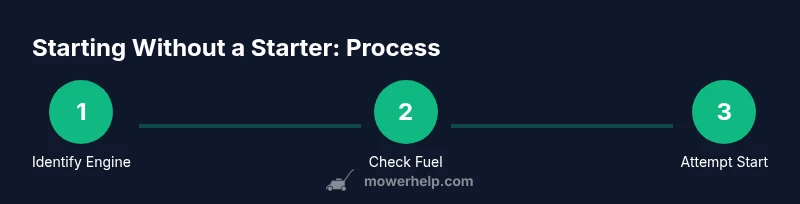
Lawn mowers come in several flavors, and the starting approach depends on the engine design. The most common are recoil-pull start carbureted engines and electric-start models with a dead or ambiguous starter mechanism. In a carbureted model, the classic pull rope is your primary starting tool. In electric-start units, a nonfunctional starter button or bad battery changes the game: you may need to reset safety interlocks, check the battery charge, or revert to manual starting methods allowed by the manufacturer. For safety and accuracy, always consult your mower’s manual and component labels. The Mower Help Team emphasizes starting methods should be compatible with the engine type to avoid fuel flooding, ignition misfires, or kickback. This section also covers how to recognize your engine type quickly, so you select the correct starting approach from the outset.
Common non-starter causes to check before you start
Before attempting to start a mower without a starter, perform quick checks to identify why it won’t start. Common culprits include stale fuel or ethanol-blended fuel that’s lost octane, a clogged air filter, a dirty or fouled spark plug, or a flooded carburetor from improper starting attempts. A carburetor that floods will push excess fuel into the intake, making it hard to ignite. Ignition issues—such as a loose wire, faulty spark plug boot, or corroded connection—can also mimic starter failure. Additionally, safety interlocks designed to prevent starting with blade engaged or in gear can misbehave if a switch is worn or misadjusted. If you discover one of these issues, address it first using manufacturer-approved steps; attempting to bypass interlocks is unsafe and not recommended by Mower Help.
Safety first: critical precautions before attempting any start
Your first priority is personal safety and eye protection, then engine protection. Wear gloves and sturdy shoes; work on a flat, stable surface away from bystanders. Disconnect the spark plug wire or remove the ignition key if applicable to prevent accidental starts while you inspect components. Never crank the engine if fuel is leaking or if you smell strong fumes; ventilate the workspace and avoid ignition sources. Keep hands, loose clothing, and hair away from moving parts. Finally, never attempt to start with the blade engaged or in gear, and never hot-wire a mower or bypass safety features; these actions can cause serious injury and/or engine damage. These precautions align with general safety guidance from Mower Help Team.
Practical manual starting methods: gas engines only
With carbureted gas engines, the most reliable manual starting method is a controlled pull-start combined with correct choke operation. Ensure the air filter is clean, fuel is fresh, and the choke is engaged when starting from cold. For flooded carburetors, clearing the choke and letting a small amount of air pass through before attempting another start is recommended. Some models require you to prime the carburetor with the primer bulb a specific number of times; follow the number recommended in your manual. If your mower uses a primer and you’re unsure how many pulls to perform, start with two to three and adjust after observing the engine’s response. Remember to maintain a firm stance and use your legs, not your back, when pulling.
Troubleshooting signs that require professional help
If despite following manual start steps the mower still refuses to start, stop and reassess. Signs that you should seek professional help include persistent backfiring, smoke from the exhaust, continuous fuel leaks, or a spark plug showing unusual wear after repeated testing. A failing ignition coil, reed valve, or carb seal may be beyond DIY scope and require a qualified technician. The goal is to prevent further damage and ensure safety. In such cases, the Mower Help Team recommends scheduling a service appointment rather than continuing ad-hoc attempts.
Maintenance to prevent future starter failures
Prevention reduces the need for emergency starting methods. Regularly replace old fuel with fresh gasoline, store fuel with stabilizer, and run the engine periodically to keep components from seizing. Clean or replace the air filter at recommended intervals, and inspect the spark plug for wear or fouling; replace it if necessary. Check the pull rope for fraying, ensure the recoil mechanism retracts smoothly, and lubricate moving parts per the manual. By sticking to a maintenance schedule, you’ll minimize the likelihood of needing alternative starting methods in the future. The Mower Help Team highlights that simple upkeep often resolves the majority of non-starter issues.
Authority sources and further reading
For safety standards and maintenance practices, refer to recognized resources such as official safety and extension services. These sources provide detailed guidelines that complement the guidance here and help you perform tasks safely and effectively. The following are authoritative references to consult as you work on mower maintenance and operation:
- https://www.osha.gov
- https://extension.illinois.edu
- https://extension.oregonstate.edu
Tools & Materials
- Spark plug wrench(Essential for inspecting/removing the spark plug and testing ignition)
- Flat-head screwdriver(Useful for adjusting carburetor screws or venturi parts on some models)
- Clean rag(Wipe away fuel spills and clean components)
- Fresh gasoline(Use clean fuel; old gas reduces starting reliability)
- Fuel stabilizer(Helpful for storage and preserving fuel quality)
- Safety gloves(Protects hands when handling fuel and hot parts)
- Eye protection(Keeps debris and fuel spray away from eyes)
Steps
Estimated time: 30-60 minutes
- 1
Prepare safely and disconnect ignition
Place the mower on a flat surface, turn off the engine if it’s running, and unplug or disconnect the spark plug boot to prevent accidental starts. This ensures you can inspect components without risk while you diagnose the non-starter issue.
Tip: A firm stance and a controlled approach reduce strain on your back when pulling the rope. - 2
Check fuel and air system
Confirm that the fuel is fresh and the air filter is clean. A clogged air intake or stale fuel is a common reason engines fail to start. If the fuel smells sour or old, drain and replace with fresh gasoline and stabilized fuel for storage.
Tip: A quick sniff test can reveal stale fuel; if in doubt, drain and replace. - 3
Set choke and prime appropriately
For cold starts on carbureted engines, engage the choke. If your mower has a primer bulb, press it two to three times, then try starting with a smooth, steady pull. Do not rush the pull; abrupt starts can clog the carb or cause kickback.
Tip: Start with the minimum required priming and adjust if you sense a lean or rich burn. - 4
Pull the starter rope correctly
Adopt a stable stance, place one foot on the deck for balance, and pull the rope with a smooth, consistent motion. Keep the rope aligned, and avoid yanking with torque that could injure your shoulder. If it doesn’t catch after several pulls, stop and recheck the spark plug and carburetor.
Tip: If you get a pop but no sustained start, recheck the spark plug gap and fuel flow. - 5
Diagnose ignition and air flow
Reinstall the spark plug boot and attempt a controlled start. If you still can’t start, inspect the spark plug for fouling or wear and test for a spark with a simple trick: ground the plug against the engine while cranking. Also listen for air leaks around the carb throat which can sap starting power.
Tip: A weak spark often indicates worn ignition components; plan replacement if needed. - 6
Test run and termination
Once the engine catches, let it run for a few minutes to warm up and check for unusual sounds, smoke, or fuel leaks. If starting remains unreliable, stop the test and consider professional service to prevent damage.
Tip: Always allow the engine to warm up before engaging load to prevent stalling.
Got Questions?
Can you start a lawn mower without a starter?
Yes, for some gas mowers you can use manual starting methods if the engine type supports it. Always follow the manufacturer’s guidance and perform safety checks before attempting any start.
Yes, manual starting can work for certain engines, but follow safety guidelines first.
Is it safe to bypass a faulty starter?
No. Bypassing a starter or safety interlock is dangerous and can cause injuries or engine damage. Use manufacturer-approved manual starting methods instead and seek repair if the starter itself is malfunctioning.
No, bypassing safety features is unsafe; use approved manual starts and get the starter repaired.
What tools do I need for manual starting?
Basic tools include a spark plug wrench, a clean rag, fresh fuel, and access to the mower’s choke and primer. Depending on the model, you may also need a screwdriver for carburetor adjustments.
Spark plug wrench, clean rag, fresh fuel, and proper choke/primer controls are the essentials.
What are signs of a flooded carburetor?
A flooded carburetor often causes gas odor, black smoke or white smoke, and hard starting with repeated pulls. Lean, fast pulls without fuel flow can also indicate flooding.
Gas smell with hard starting and sputtering can mean flooding; don’t keep cranking.
When should I replace the starter?
Replace a starter if it fails to engage after checking connections, or if there are obvious signs of wear or damage. A professional evaluation can confirm whether the issue is electrical or mechanical.
If the starter won’t engage after checks, replacement is usually the right move.
Watch Video
The Essentials
- Identify engine type before attempting starts.
- Check fuel, air, and ignition first to resolve most non-starter issues.
- Always prioritize safety and avoid bypassing safety features.
- Regular maintenance reduces future starter problems.