How to Start a Lawn Mower Without Pull Cord: Step-by-Step Guide
Learn safe, practical methods to start a lawn mower without a pull cord. This step-by-step guide covers essential tools, safety checks, and maintenance tips for homeowners and DIY enthusiasts.


Want to learn how to start lawn mower without pull cord? This guide explains safe alternatives using electric start, key ignition, or other legitimate methods compatible with most walk-behind mowers. You’ll learn pre-start checks, battery and fuel considerations, and a clear step-by-step process to avoid damage. Follow these steps to stay safe and preserve engine longevity.
Why Many Home Mowers Don't Rely on Pull Cords
For many homeowners, the pull cord is a reliability headache: it frays, breaks, or simply gets snagged in the mower deck. In modern walk-behind mowers, manufacturers increasingly favor electric starts, keyed ignition, or soft-start systems. If you’re wondering how to start lawn mower without pull cord, you’re not alone. The key is to understand your model’s starting system and use a method that aligns with safety guidelines. According to Mower Help, a damaged or missing pull cord is a signal that maintenance should shift toward the ignition and fuel system rather than chasing a worn rope. When you’re troubleshooting, begin with the simplest, safest option first: verify the available starting mechanism, perform basic safety checks, and proceed to a controlled start in a clear space. By evaluating whether your mower has an electric start, a backup ignition, or a priming system, you can pick the most reliable route without risking damage to the engine or deck. The objective is a smooth, controlled start that preserves engine longevity and reduces the chance of injury during cranking.
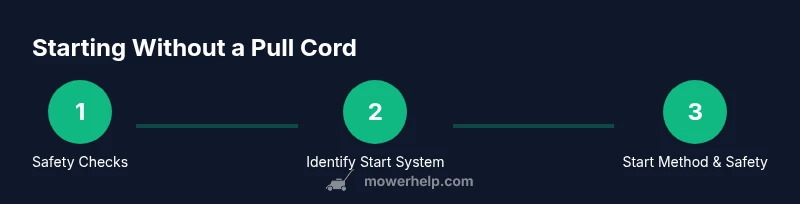
Pre-Start Safety Checks
Before you attempt to start without the pull cord, complete safety checks. Start by disconnecting the spark plug wire to prevent accidental ignition while you work. Clear the area of stones, sticks, or debris, set the mower on level ground, and ensure no one is near the operating zone. Check the blade brake/clutch and throttle settings, and verify the battery is charged if your model uses electric start. Wear gloves and eye protection, and keep a fire extinguisher or water source nearby as a precaution. These checks are essential for any startup, but they are particularly important when a cord is unavailable, as you’ll rely on safer, controlled methods. This approach minimizes risk to you and protects cranking components from accidental damage.
Determine Your Start Method
Most modern mowers fall into one of three groups: electric-start with a key or button, a primer-assisted ignition, or older recoil systems that still rely on manual ignition. Look at the handle, ignition switch, battery, and any primer bulbs. If your model offers an electrical starter motor, you can connect the battery and use the switch. If not, you’ll rely on another safe method such as a primer-based start or a built-in ignition. Reading the owner’s manual is the fastest way to confirm which method to use. The goal is to identify a method that your mower is designed to support, ensuring you won’t force a mechanism designed for a different starting system.
Electric Start Startup Method
If your mower supports an electric start, begin with a fully charged battery. Insert the ignition key or press the start button, and ensure the throttle is in the mid-range for a smooth pickup. If the model has a choke, set it according to the manual (some require a warm-up without immediate high RPM). Once you engage the starter, listen for a steady cranking sound, then release the key or button once the engine runs on its own. Allow the engine to run for a few minutes in a steady state before increasing blade engagement. If the engine falters, check battery connections, fuses, and the wiring harness for loose contacts. Regularly inspect the battery and charging system to keep electric start reliable.
Manual Ignition Alternatives (Ignition Switch & Primer)
Some mowers include a primer bulb or a secondary ignition switch that can start the engine without pulling the cord. If your model has a primer bulb, press it several times (as directed by the manual) to draw fuel into the carburetor. Set the choke to the recommended position for cold starts, then turn the ignition switch or press the start button. If the engine turns over but doesn’t start, pause briefly and try again with a slightly richer mixture. The key is to follow the manufacturer’s sequence—don’t force the system, and avoid excessive priming, which can flood the carburetor and stall the startup.
Fuel, Oil, and Spark: Quick Checks
A reliable start without a pull cord still depends on good fuel, clean oil, and a healthy spark. Ensure fuel is fresh and properly mixed if your mower uses a two-stroke engine, or that the gasoline is appropriate for your four-stroke engine. Check oil level and quality, replacing if necessary. Inspect the spark plug for wear or fouling; clean or replace as needed and reconnect the wire. A clogged air filter can also choke starting performance, so remove and inspect it if you’re not getting a clean idle. These checks are critical because even the best starting method won’t work if fuel, oil, or spark are compromised. When you maintain these basics, you’ll reduce future issues and improve overall starting reliability.
Troubleshooting Common Startup Issues
If the engine won’t start after trying an electric or primer-based method, diagnose common culprits. Verify the kill switch is in the RUN position, and ensure the carburetor isn’t flooded. Check for spark at the plug by removing it and grounding the metal part against the engine while cranking. If no spark is observed, inspect the ignition coil or safety interlock wiring. For fuel delivery problems, drain a small amount of fuel to test for water or contamination and replace with fresh fuel. Inconsistent starting can also stem from a dirty air filter or a blocked carburetor. Addressing these issues promptly helps maintain reliable starting without the pull cord and reduces the risk of damage caused by repeated cranking.
Maintenance to Prevent Future Pull Cord Failures
Preventing the pull cord failure altogether means regular maintenance and proactive checks. Inspect the pull cord housing for wear and replace damaged cords before they break. Clean the air filter, inspect the blade, and ensure the deck is free of debris. Schedule routine spark plug checks and carburetor cleanings if your model requires it. Keeping the ignition system and fuel lines in good condition reduces the likelihood that you’ll need to improvise a start. For models with an electric start, keep the battery charged and connections clean. Proactive maintenance is the best defense against unexpected startup problems and preserves the life of your mower.
Authority sources
- Cornell University Extension: https://extension.illinois.edu/lawn-care
- University of Maryland Extension: https://extension.umd.edu/hgic/topics/lawn-mowing
- U.S. Occupational Safety and Health Administration: https://www.osha.gov
Tools & Materials
- Owner's manual for your mower(Consult model-specific instructions and safety features.)
- Flat-head screwdriver(For panel screws and access panels.)
- Charged battery or portable jump pack(Essential for electric-start models.)
- Fuel stabilizer and clean fuel(Use fresh gasoline appropriate for your engine.)
- Spark plug wrench or socket(Replace if worn or fouled.)
- Gloves and eye protection(Personal safety equipment.)
Steps
Estimated time: 60-90 minutes
- 1
Inspect safety features and area
Power off the mower and inspect all safety interlocks, including the ignition type and blade brake. Clear the area of debris, remove the spark plug cap, and confirm level ground. This initial check prevents accidental startups and protects you from injuries.
Tip: Always start in a clear, flat area with a current safety check before proceeding. - 2
Identify the starting system for your model
Determine whether your mower uses electric start, an ignition switch, or a primer-assisted method. Read the manual to confirm the correct sequence for your specific model. Knowing the starting system avoids trying incompatible methods.
Tip: If in doubt, contact the manufacturer or consult the extension office for model-specific guidance. - 3
Gather required tools and prep the battery
If your mower has an electric start, ensure the battery is fully charged and that terminals are clean and connected. For non-electric starts, prepare any primers or ignition switches per the manual. Have gloves on and protect your hands when handling fuel or electrical components.
Tip: Do not crank without the battery connected if the system requires power. - 4
Check fuel and oil levels
Verify you have fresh fuel and adequate oil. Top off if needed, but avoid overfilling. Clean any fuel or oil spills promptly to prevent slippery surfaces and fire hazards.
Tip: Poor fuel quality or low oil can cause startup failures even with alternative starts. - 5
Configure choke and throttle (as applicable)
Set choke to the position recommended for your model's cold-start or warm-start procedure. Adjust throttle if the manual instructs it to a mid-range position for a stable idle during startup.
Tip: A correct choke setting reduces cranking resistance and helps the engine catch. - 6
Attempt electric start or ignition
Engage the electric start or ignition switch. If a button is present, press it firmly and hold for a moment while listening for cranking. If your model uses a primer, perform the priming steps as outlined by the manual before trying to start.
Tip: If the engine doesn’t catch on the first attempt, wait 15–30 seconds and try again to avoid flooding the carburetor. - 7
Troubleshoot if the engine won’t start
Check for spark, fuel flow, and air supply. If there’s no spark, inspect ignition components; if fuel isn’t reaching the carburetor, check lines and primer bulb. Do not force-start by bypassing safety interlocks.
Tip: Document observed symptoms to guide future repairs or professional service. - 8
Finish safely and cool down
Let the engine run in a safe area for a few minutes to stabilize. Re-enable any safety interlocks and recheck for leaks or abnormal sounds. Store tools and recover the area.
Tip: Always let a recently started engine reach a stable idle before mowing. - 9
Post-start maintenance and notes
Record any issues and schedule maintenance items like plug replacement, air filter cleaning, or carburetor inspection. This helps prevent future pull cord failures and keeps the mower reliable.
Tip: A quick maintenance log saves time during the next startup.
Got Questions?
Is it safe to start a lawn mower without a pull cord?
Yes, it is safe when you follow proper safety steps and use the mower’s approved alternative starting method. Always disconnect the spark plug when working on the equipment and operate in a clear area.
Yes—safety comes first. Use the model’s official alternative start method and disconnect the spark plug when working.
What tools do I need to start without a pull cord?
You typically need a charged battery or an ignition backup, fuel in good condition, and basic hand tools as outlined in your manual.
Usually a charged battery or ignition backup and proper fuel are enough, plus the tools your manual recommends.
Can starting without a pull cord damage my mower?
Improper or forced starting can damage ignition, carburetor, or safety interlocks. Always follow the model’s instructions and use approved methods.
Yes, improper starting can cause damage—stick with the official procedures.
What if my mower doesn’t have electric start?
If there’s no electric start, rely on primer-based methods and the correct choke sequence described in the manual, or have the cord repaired.
If there’s no electric start, use the primer and choke as directed by the manual.
How can I prevent pull cord failures in the future?
Regular maintenance: replace worn cords, inspect the pull mechanism, clean air and fuel systems, and follow a routine service schedule.
Keep up with maintenance to prevent future cord failures.
Watch Video
The Essentials
- Inspect safety features before startup.
- Identify and use the model’s supported start method.
- Maintain fuel, oil, and spark for reliable starts.
- Troubleshoot common issues methodically to avoid damage.
- Follow the manual for model-specific steps.