Lawn Mower Starter Repair: Step-by-Step Guide
Learn to diagnose and repair lawn mower starter problems with a step-by-step guide. Save time and avoid costly service calls with at-home maintenance.


Learn how to diagnose and repair a lawn mower starter, including common recoil and rope issues. This guide helps you identify failure signs, choose safe fixes, and follow a clear, step-by-step process to restore reliable starting performance—without guesswork or costly service calls. We cover safety checks, when to replace parts, and how to test the starter after repair for long-term reliability.
How a lawn mower starter works
A lawn mower starter is a compact recoil system that uses a hinged handle and a wound spring to engage the flywheel when you pull the rope. When you tug, the rope unwinds, turning the pulley and rotating the flywheel to compress the engine and draw in the fuel-air mixture. Recoil springs reset the rope after each pull. According to Mower Help, understanding these parts helps you diagnose why a mower fails to start. Common issues include rope fraying, a stretched or broken spring, and a sticky or dirty flywheel. By recognizing which part is at fault, you can target the repair and avoid unnecessary replacements. A successful repair begins with knowing the parts and how they interact during starting.
To troubleshoot effectively, you should map symptoms to likely components. A rope that won’t retract points to the recoil or pulley; a hard pull typically signals spring tension problems or friction; and a flywheel that binds or grinds suggests dirt or wear in the mechanical interface. With this knowledge, you’ll choose targeted fixes rather than a full replacement, saving time and money while preserving the mower’s life.
Common starter failure modes you’ll encounter
Starter problems show up in several patterns. A rope that won’t retract fully or gets stuck indicates a worn recoil or dirty pulley. A binding pulley, rusted spring, or broken pawl can prevent the starter from turning the flywheel. If the pull feels unusually hard or sticks partway, the issue is often friction from dirt or lack of lubrication, or a damaged spring. Some mowers experience a failed safety brake that locks the starter housing. Each failure mode has a distinct symptom, which helps you decide whether to attempt a fix, replace a rope, or replace the entire starter assembly. Regular checks can catch problems early, reducing downtime and avoiding expensive repairs.
When diagnosing, start with the simplest explanation—the rope, the handle, or the pulley—and move toward more complex failures like the spring or pawls. If the recoil spins freely but the engine refuses to turn over, look for a seized flywheel or misaligned pawls. Keeping a small notebook of symptoms can help identify trends over time, especially if you use the mower season after season.
Safe, at-home repairs you can perform
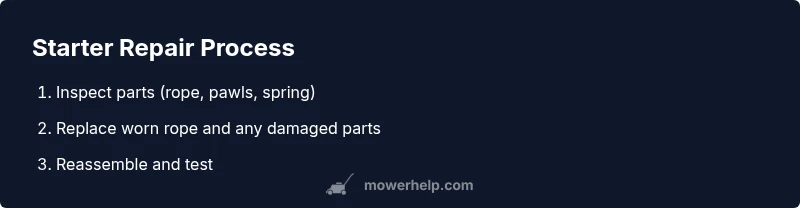
Many starter problems are fixable at home with basic tools, a replacement rope, and careful handling. Start by disconnecting the spark plug wire and securing the mower to prevent movement. Remove the starter housing to inspect rope, spring, and pawls. If you see a frayed rope, replace the rope with a matching length; if the spring is warped, replace it. Clean any debris from the pulley and flywheel; apply light lubrication to moving parts, avoiding excessive oil near the flywheel. Reassemble and test gently before attempting a full start. Working patiently and methodically reduces the risk of misassembly and parts damage. Always confirm that the mower is stable before starting any reassembly work.
Diagnosing rope, spring, and pawls
Assess the rope for frays and strands; measure the rope length as per manufacturer spec. Inspect the recoil spring for kinks or loss of tension. Check the pawls on the starter housing; if they are bent or sticking, replace them. Rotate the flywheel by hand (carefully) to feel for grinding or binding. If any part shows damage, replace it rather than forcing movement. In many models, a simple rope replacement and pawl adjustment restore most starting issues without a full kit. Keep spare pawls and ropes on hand for common mower models to minimize downtime.
Pre-reassembly checks and lubrication
Before you close the housing, wipe surfaces clean, remove any residue, and apply a light lubricant to the moving parts. Avoid lubricating the recoil spring directly, as excess oil can attract dust and cause binding. Re-check the rope length after winding; confirm the handle retracts smoothly through a full pull. Keep the screws organized and torque them to the manufacturer’s recommended specs if you have a torque wrench. These checks help ensure smooth operation and prevent recurrent sticking or binding after reassembly.
Testing, adjustments, and long-term maintenance
With the starter reassembled, reconnect the spark plug and perform a test pull. If the engine catches reliably, perform several more gentle starts to confirm consistency. If it stalls or the rope sticks, re-open the housing to re-check rope tension, pulley alignment, and pawl operation. As part of routine maintenance, inspect the starter every season and follow the manufacturer’s guidance for replacement parts. Keeping the area around the starter clean and free of debris helps prevent future issues and extends the life of your mower.
Tools & Materials
- Safety gloves(Protect hands during disassembly and reassembly)
- Screwdriver set (Phillips and flat-head)(For removing starter housing screws)
- Replacement recoil starter rope with handle(Match length to model, typical 32–60 inches)
- Needle-nose pliers(Remove or guide small components)
- Small brush or rag(Clean grit from housing)
- Light machine oil or spray lubricant(Lubricate moving parts; avoid over-lubricating)
- Torque wrench or precision screwdriver(Use if your model requires precise torque)
- Safety goggles(Eye protection during testing)
Steps
Estimated time: 30-60 minutes
- 1
Safely prepare and secure
Disconnect the spark plug wire to prevent accidental starts. Move the mower to a stable, well-lit workspace and gather your tools. Confirm the area is clear of bystanders and pets. This step reduces the risk of injury during disassembly.
Tip: Keep a labeled tray for screws and small parts to avoid misplacement. - 2
Remove the starter housing
Use the appropriate screwdriver to remove the screws holding the starter housing. Lift the cover carefully to expose the rope, spring, and pawls. Note the orientation of all parts for reassembly.
Tip: Take a photo of the setup before removing components. - 3
Inspect the rope and pulley
Check the rope for frays and wear; examine the pulley bearings for smooth rotation. If the rope shows signs of significant wear, plan for a full rope replacement. Ensure the rope winds and unwinds cleanly without catching.
Tip: Mark the rope end to confirm correct length during reassembly. - 4
Replace worn rope or broken spring
Install the new recoil rope, threading it through the housing and around the pulley, then anchor to the handle. Replace a warped or stretched spring only if you understand the tension requirements for your model.
Tip: Use the exact rope length recommended by your mower’s manual. - 5
Inspect pawls and flywheel condition
Check pawls for wear or sticking; test engagement by rotating the flywheel by hand with care. Replace any bent pawls or damaged pawl springs to ensure reliable engagement.
Tip: Never touch the teeth on the flywheel with bare fingers. - 6
Lubricate and reassemble
Apply a light film of lubricant to moving parts; reassemble the housing and secure screws snugly. Double-check that the rope has proper tension and that the handle retracts fully.
Tip: Avoid over-lubricating; excess lubricant can attract dirt and cause binding. - 7
Test start and verify
Reconnect the spark plug and perform several gentle pulls to verify smooth operation and consistent starts. If the starter still binds, reopen the housing to re-check tension and alignment.
Tip: Do a few short tests before trying a full start.
Got Questions?
What are the most common signs that my lawn mower starter needs repair?
Common signs include a rope that won’t retract, a hard-to-pull starter, or the starter housing spinning without engaging the engine. These symptoms point to the rope, spring, pawls, or flywheel as likely culprits.
Common signs are rope sticking or not retracting, hard pulls, or the starter turning without starting the engine. Check the rope, pawls, and springs to isolate the issue.
Can I fix a lawn mower starter without replacing the entire assembly?
Often you can fix a frayed rope or sticking pawls without replacing the entire starter. If the flywheel, springs, or pawls are severely worn, replacement may be the better option.
Yes, many issues can be fixed by replacing the rope or pawls. Severe wear on major parts may require a full replacement.
Is it safe to perform starter repairs at home?
Yes, with proper safety precautions and the right tools. Always disconnect the spark plug, secure the mower, and work on a stable surface.
Yes—just follow safety steps and use the right tools.
How long does a typical starter repair take?
Most basic repairs take about 30 to 60 minutes, depending on your mower model and how accessible the starter is.
Most fixes take roughly half an hour to an hour.
When should I replace the entire starter assembly?
If repeated maintenance fails to restore reliable starting, or the flywheel, spring, or pawls show repeated damage, replacing the starter is usually best.
If repairs keep failing, replacement is usually the better option.
Watch Video
The Essentials
- Identify the faulty starter component before replacing parts.
- Use the correct rope length and spring tension for your model.
- Keep the workspace clean to prevent dirt buildup on moving parts.
- Test the starter thoroughly after repair to ensure reliability.
- When in doubt, consult a professional repair service.