How to Prime a Lawn Mower Without Primer
Learn practical methods to start a lawn mower when there is no primer bulb. This educational guide covers choke use, fuel and air checks, and safe starting techniques, plus maintenance tips to reduce reliance on primer in the future. A complete how-to from Mower Help Team.


You’ll learn practical ways to start a lawn mower even when there’s no primer bulb. This quick guide covers choke usage, fuel and air checks, and safe starting techniques that minimize engine strain. It explains how to use the choke, adjust throttle, and perform a quick carb check to get reliable starts without a primer.
How to prime a mower without primer: why it matters
Starting a lawn mower without a primer bulb is a common scenario for DIYers, especially with older equipment or models that never included a primer. The primer’s job is to introduce a small amount of fuel into the carb so the engine can catch quickly. When a primer isn’t available, you can still achieve reliable starts by using the choke correctly, ensuring clean air intake, and confirming fuel quality. According to Mower Help, understanding these alternatives reduces frustration and engine wear, keeps you moving through the seasons, and preserves the life of your carburetor. This section lays the foundation for safe, repeatable starting techniques that work across many small-engine brands while keeping your mowing routine on track. As you read, keep in mind that the goal is a quick, clean start without forcing the engine or flooding the carb.
Safety and assessment before attempting a start
Safety comes first when starting any combustion engine. Before you try to prime or start a mower without a primer, wear eye protection and work in a well-ventilated area. Check for fuel leaks, cracked hoses, or a gummed-up carburetor. If you suspect a serious issue (puddling fuel, unusual smoke, or a strong odor), stop and service the mower instead of forcing a start. Also verify the spark plug is clean and correctly gapped for your model, and ensure the air filter is free of excessive dirt that could choke the engine. The aim is to eliminate obvious blockers so your non-primer starting attempt doesn’t cause flooding or backfire.
Step-by-step methods to start without a primer bulb
There isn’t a one-size-fits-all procedure for starting without a primer, but several reliable strategies apply to most two- and four-stroke lawn mowers. The core idea is to prepare the fuel-air mixture and use the choke to help the engine catch. Start with fresh fuel blended to the manufacturer’s recommendation and keep the spark plug dry and clean. When you position the throttle and choke correctly, you create a small, steady fuel-air mixture that allows the engine to “catch” on the first or second pull, instead of flooding the carburetor. If your mower has a hot-start procedure, follow it as guidance, but avoid cranking for long periods to prevent starter wear.
Using choke, throttle, and air for ignition
The choke helps restrict air intake to enrich the fuel mixture for a cold start. With the choke engaged, pull the starter handle one or two complete cycles, and then partially open the choke once you sense the engine attempting to run. If you have a throttle control, set it to a mid-range position—not too rich, not too lean—so the engine can sustain a startup without flooding. Ensure the air intake is clean and unblocked; a clogged air filter can prevent the correct air-fuel balance, making starting difficult. After the engine fires, gradually open the choke and let the engine warm up briefly before applying full throttle.
Alternative starting aids and cautions
Some DIYers consider starting aids like starting fluid, but use them sparingly and only in well-ventilated areas. A small spray into the carb intake can help a stubborn start, but excessive use can damage seals or lead to hydraulic lock on some engines. Avoid using ether-based products in enclosed spaces, and never spray directly into a hot engine. If you rely on any starting aids, monitor the engine closely for signs of flooding, such as black smoke or a strong fuel smell. When in doubt, switch to safe, proven methods first.
Maintenance practices to reduce dependence on primer
Prevention is better than troubleshooting. Regular carburetor maintenance minimizes situations where a primer would help. Use fresh, clean fuel and add a fuel stabilizer if you store gas for extended periods. Periodically clean or replace the air filter, inspect the carburetor and jets for varnish buildup, and check the fuel line for cracks or leaks. A well-maintained mower will typically start reliably with normal choke and throttle settings, even if the primer is missing. Keep spare parts like a spark plug and carburetor kit on hand for quick service.
Troubleshooting common issues when starting without primer
If the mower won’t start, reassess fuel quality, air intake, and spark. A flooded carburetor may flood the engine if you crank too long with the choke closed; in that case, wait a few minutes, open the choke, and attempt again with shorter pulls. If you hear a cough but no startup, the mixture may be too rich or lean; adjust the choke and throttle incrementally and try again. Persistent failure to start after several attempts warrants carburetor cleaning, fuel line inspection, and spark plug testing. Keeping a simple checklist helps you identify the root cause quickly.
Quick maintenance checklist for reliability
- Use fresh fuel and stabilize when storing for long periods.
- Clean or replace air filters regularly.
- Inspect spark plugs and replace as needed.
- Check carburetor for varnish and clean jets if required.
- Store the mower with proper fuel and oil levels and in a dry, ventilated area.
Following these steps makes starting easier over time and reduces the need for a primer.
Final tips: when to seek professional help
If you’ve exhausted safe starting techniques and the engine still won’t start, it’s time to consult a professional. Recurrent starting issues can point to worn carburetor inlet valves, degraded gaskets, or fuel system problems that require specialized tools. A pro can diagnose fuel delivery or ignition faults that aren’t obvious from basic troubleshooting, preventing further damage and downtime.
Tools & Materials
- Safety glasses(Protect eyes from fuel spray and debris)
- Gloves(Grip tools and protect hands)
- Fresh gasoline (per mower spec)(Avoid stale fuel; use proper octane if specified)
- Fuel stabilizer (optional)(Helpful for storage and running stability)
- Screwdriver set(For air filter covers or carb screws)
- Spark plug wrench(Check or replace spark plug gap)
- Carburetor cleaner or varnish remover(Use only if cleaning is needed)
- Clean rag or shop towels(Wipe any fuel spills and clean connections)
Steps
Estimated time: 30-45 minutes
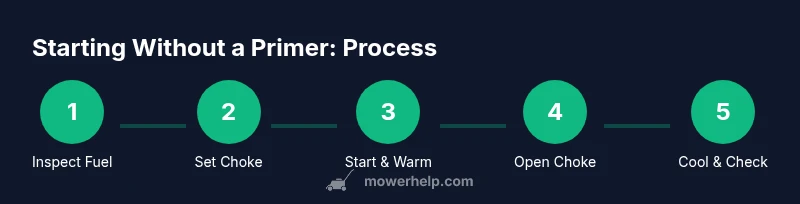
- 1
Inspect fuel and air pathways
Check that the fuel is fresh and reaches the carb inlet. Inspect the air filter and intake for blockages. Clean any dirt that could affect airflow.
Tip: If the fuel smells sour or varnished, replace it before attempting a start. - 2
Prepare the choke and throttle
Place the choke in the full or mostly closed position for a cold start. Set the throttle to a mid-range if your mower has one.
Tip: Avoid cycling the choke aggressively; slow, deliberate movements work best. - 3
Prime manually by technique (no primer bulb)
If there is no primer, use the choke to enrich the mixture and pull the starter rope in short, controlled motions until you hear the engine attempt to run.
Tip: Don’t pull with full force in rapid succession; short pulls reduce flooding risk. - 4
Attempt a start
With the choke engaged and throttle mid, pull firmly until the engine kicks or stumbles. If it coughs but won’t start, pause and recheck fuel and air conditions.
Tip: If it’s reluctant, stop and reassess rather than forcing a start. - 5
Open the choke gradually
As soon as you hear a sound from the engine, gently open the choke while maintaining a light pull until the engine runs, then let it idle to warm up.
Tip: Don’t fully open the choke all at once; gradual opening helps smooth startup. - 6
Check for flooding signs
If you smell raw fuel or see black exhaust, the mixture is too rich. Move to a richer air path or reset the choke, then try again after a short pause.
Tip: Waiting 60 seconds between attempts can help prevent flooding. - 7
Run the engine briefly
Let the mower run at low speed for 30–60 seconds to stabilize fuel flow and air balance. Do not push into full throttle until fully warmed.
Tip: Running briefly helps clear the carb and prevents stalling on first use. - 8
Shut down and inspect
After a successful start, stop the engine and recheck the air filter and spark plug to ensure the system remains clean for the next start.
Tip: A quick post-start check saves time later. - 9
Document maintenance plan
Note fuel type, filter status, and any adjustments for future starts to minimize primer dependence over time.
Tip: Regular maintenance reduces future starting issues.
Got Questions?
Can I start a lawn mower without a primer bulb?
Yes. Many small engines can start without a primer bulb by using the choke correctly, ensuring clean fuel, and managing air intake. If the mower won’t start, check fuel quality and air paths before considering carburetor service.
Yes, you can start a mower without a primer bulb by using the choke, fresh fuel, and clean air. If it won’t start, check fuel and air first.
What should I do if fuel is old or varnished?
Drain the old fuel, replace it with fresh gas per the mower’s specifications, and consider adding a stabilizer if you store fuel for long periods. Old fuel can gum up the carburetor and hinder starting.
Drain the old fuel and replace it with fresh gas. Add stabilizer if you store fuel often.
Is it safe to use starting fluid on a lawn mower?
Starting fluid can help with stubborn starts but should be used sparingly and only in well-ventilated areas. Excessive use can damage seals or flood the engine.
Starting fluid can help, but use it sparingly and only in a ventilated area.
Why won’t my mower start after trying without primer?
Common causes include flooded carburetor, dirty air filter, or stale fuel. Reassess fuel, inspect the air path, and consider carburetor cleaning if simple adjustments don’t work.
Common causes are flooded carb, dirty air filter, or bad fuel. Check these first.
Do I need to replace the carburetor if starting is unreliable?
Not necessarily. Many issues are solvable with cleaning and adjusting jets, seals, and gaskets. If starting remains unreliable after cleaning, seek professional service for a deeper inspection.
Often cleaning the carb fixes starting issues. If not, a pro should inspect it.
Watch Video
The Essentials
- Master choke-based starts when primer is absent
- Keep fuel, air, and spark clean for reliable starts
- Regular carburetor maintenance reduces future issues
- Use starting aids only with caution and ventilation