How to Use Electric Lawn Mower: A Practical Guide
Learn how to safely operate an electric lawn mower, covering setup, starting, mowing technique, maintenance, and troubleshooting for a healthy, tidy lawn.


In this guide, you’ll learn how to use electric lawn mower safely and effectively. You’ll explore the differences between corded and cordless models, how to start and operate the mower, and essential maintenance practices to keep cutting performance strong. Whether you own a battery-powered unit or a corded mower, you’ll gain clear, actionable steps tailored for homeowners and DIY enthusiasts.
What is an electric lawn mower and when to use it?
Electric lawn mowers are powered by either a cord connected to an electrical outlet or a rechargeable battery. Corded models deliver consistent power and are great for long, uninterrupted sessions on smaller to medium lawns where you can manage the cord. Cordless models offer freedom of movement and are ideal for yards with many obstacles or distant outlets, but you’ll rely on battery life and recharges. Compared to gas mowers, electric variants run quieter, produce no direct emissions during operation, and typically require less maintenance. For most residential homes, an electric lawn mower provides a practical balance of performance, ease of use, and environmental friendliness. When deciding how to use electric lawn mower, assess your lawn size, layout, and whether you value continuous power or cord freedom. This context helps you choose a model that fits your property and your maintenance routine.
Safety foundations: PPE and electrical safety
Safety should come first with any mower. Always wear sturdy footwear, eye protection, and gloves. Keep the mower and all electrical components dry; never operate a corded model in wet conditions and avoid mowing over puddles. Use a heavy-duty outdoor extension cord if you’re corded, and inspect cords for cuts or exposed conductors before each use. If you’re using a cordless mower, check the battery’s charge level and connections. Before starting, clear the mowing area of toys, stones, and debris that could be thrown by the blade. Never bypass safety features or remove blade guards. When in doubt, pause and recheck the setup to prevent accidents.
Corded vs cordless: choosing the right model for your yard
Corded mowers rely on a continuous power source, which eliminates battery degradation concerns but requires careful cord management and proximity to outlets. Cordless models give you greater reach and maneuverability, especially around trees, flower beds, and fences, but runtime and recharging become factors to plan around. For small, obstacle-free yards, cordless can offer quick setups and fast cleanup. For larger properties or areas without convenient outlets, a corded model with a long mating extension cord can reduce downtime between cuts. When selecting how to use electric lawn mower, match your yard’s size, terrain, and typical cutting height to the model’s power and weight. Regular battery maintenance will extend cordless performance over time.
Preparing the mower: charge, blade, and height
Before you begin, ensure the mower is in good working order. Fully charge a cordless battery or connect the charger for a corded unit as appropriate. Inspect the blade for nicks or dull edges and replace or sharpen as needed—a sharp blade yields cleaner cuts and reduces mower strain. Set the cutting height to match your grass length and local lawn care guidelines; starting too low can scalp the lawn, while too high can leave uneven patches. Clear the deck of grass clippings and debris to prevent clogging and overheating. If your mower has a safety key or switch, make sure it is engaged only when you’re ready to operate.
Operating technique: starting, mowing, and patterns
Begin by engaging safety features and turning on the mower according to the manual. For corded models, avoid rough handling of the extension cord; keep the cord behind or to the side to prevent tangling. Mow with steady, even passes in straight lines, overlapping slightly on each pass to ensure full coverage. Use wide, sweeping turns around the yard edges and around obstacles to reduce blade stress. If you’re mowing on a slope, move slowly and avoid steep angles that could cause tipping. Maintain a consistent pace and never rush the cut. When finished, switch off the mower before disengaging safety features.
Maintenance during and after mowing
After mowing, disconnect power or remove the battery before inspecting the blade and cleaning the deck. Wipe away grass residue and allow the mower to dry before storage. Check the blade for wear and replace when necessary; a sharp blade not only improves cut quality but also reduces motor strain. For cordless mowers, store batteries in a cool, dry place and avoid deep discharges. Regularly inspect the cord (for corded models) for wear and replace if damaged. Periodic checks of wheels and height settings help maintain consistent performance over the mowing season.
Troubleshooting and common problems
If the mower won’t start, verify that the safety switch is engaged, the battery is charged (or the cord is plugged in), and there are no obvious obstacles blocking the blade. Reduced cutting performance can result from a dull blade, a partially charged battery, or overheating. If the mower shuts off unexpectedly, check for overheating and ensure there is proper airflow around the motor housing. For corded models, ensure the extension cord is rated for outdoor use and that connections are secure. If grass clogs under the deck, turn off the mower and clear debris safely.
Authority sources
To support best practices, consult reputable, evidence-based resources from: | • U.S. Consumer Product Safety Commission (CPSC) — mower safety guidelines. | • University extension programs (e.g., Oregon State University Extension) for maintenance tips and region-specific lawn care. | • Consumer Reports and other major publications for overall mower performance and reliability.
Environmental and cost considerations
Electric lawn mowers offer lower operating emissions and quieter operation compared with gasoline models, contributing to a more comfortable outdoor environment. Energy efficiency is a key advantage, especially for homes with short mowing routines or frequent maintenance. While the upfront cost of electric models can be higher, the long-term savings come from reduced fuel, oil, and maintenance expenses. Consider the total cost of ownership, including charging equipment and battery replacement cycles, when evaluating different models.
Tools & Materials
- Electric lawn mower (corded or cordless)(Choose model suitable for yard size and terrain)
- Battery charger(Keep charger dry and ready for use)
- Spare battery (for cordless models)(Optional for large lawns)
- Extension cord (for corded models)(Use outdoor-rated, heavy-duty cord)
- Safety gloves(Protect hands during setup and maintenance)
- Safety glasses(Shield eyes from debris)
- Sturdy footwear(Non-slip, closed-toe shoes)
Steps
Estimated time: about half an hour to an hour
- 1
Inspect area and plan mowing path
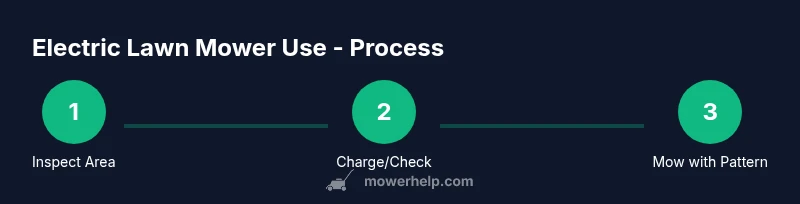
Walk the lawn to identify obstacles, slopes, and tight spaces. Plan a pattern that minimizes re-tracing and ensures even coverage. Decide where to start and how to finish near a power source if using a corded mower.
Tip: Map a few long straight passes first to set your rhythm and reduce turns. - 2
Charge and prep the mower
If cordless, ensure the battery is charged or charging. For corded models, confirm the power source and cord integrity. Check the blade for sharpness and confirm cutting height is set to the desired level before you begin.
Tip: A sharp blade improves cut quality and reduces mower strain. - 3
Start safely and check controls
Engage all safety features and start the mower according to the manual. Keep hands away from the blade and ensure the path behind you is clear of people and pets.
Tip: Never bypass safety interlocks; they protect you and bystanders. - 4
Mow with straight, overlapping passes
Maintain even pressure and move at a steady pace. Overlap each pass slightly to avoid uncut strips and keep a consistent cutting height across the lawn.
Tip: Use the wheel marks as a guide to keep lines straight. - 5
Edge and clear obstacles
After main passes, tackle edges, around flower beds, and along fences. Slow down on tight corners to prevent scalping and blade contact with hard surfaces.
Tip: Take small, controlled passes near obstacles to protect plants. - 6
Shutdown, clean, and store
Turn off the mower and unplug or remove the battery before inspecting the deck. Clean debris from the blade and under the deck. Store in a dry, cool place away from moisture and direct sun.
Tip: Regular cleaning extends blade life and maintains performance.
Got Questions?
Can I safely use an electric lawn mower on slopes or hills?
Yes, but proceed slowly and keep a wide stance. Avoid sharp turns on slopes and always prioritize stability over speed.
Yes, you can mow slopes by going slowly and staying stable; avoid sharp turns to prevent tipping.
Do electric mowers require oil changes or gas?
No oil or gasoline is needed for electric mowers. They run on electricity or batteries and have fewer fluids to manage.
No oil or gas is required for electric mowers; they run on electricity or batteries.
What maintenance is needed after mowing?
Clear grass from the deck, check the blade for wear, and recharge or reconnect the power source. Store in a dry location and inspect for any damage before the next use.
After mowing, clean the deck, check the blade, and ensure the power source is ready for next use.
Is a corded mower better for large properties?
Corded mowers provide continuous power but require careful cord management. For very large properties, cordless with multiple batteries or a second charger can offer flexibility.
Corded models give steady power but need good cord management; for large yards, consider multiple batteries or extended charging options.
Can I mow in the rain with an electric mower?
Mowing in the rain is not recommended. Wet grass can clog blades and extend cleaning time, and electrical components may pose safety risks.
No, mowing in the rain can be unsafe and should be avoided.
How should I store and charge spare batteries?
Store batteries in a cool, dry place and avoid deep discharges. Follow manufacturer's guidance for storage voltage and maintenance cycles.
Keep spare batteries in a cool, dry place and follow the manufacturer’s storage guidelines.
Watch Video
The Essentials
- Choose corded or cordless based on yard size and power needs.
- Charge and inspect the mower before each session.
- Mow with straight, overlapping passes for even results.
- Clean and store properly to extend life.