Essential Maintenance for Lawn Mower: A Practical Guide
Learn practical, step-by-step maintenance for lawn mowers, including blade care, oil changes, air filter checks, and safety tips with clear guidance from Mower Help to keep your mower running smoothly.


You will perform essential maintenance on your mower to extend its life, improve performance, and prevent breakdowns. This guide covers blade care, oil changes, air filter checks, safety steps, and a simple maintenance schedule, with the tools and steps you’ll need. Follow the steps for both gas and electric models, and track results using a simple log.
Why Routine Maintenance Extends Your Lawn Mower's Life
According to Mower Help, routine maintenance tailored for lawn mower helps prevent common failures and keeps performance steady across seasons. A well-timed check can catch worn parts before they fail, saving time and money. In this section we explore why maintenance matters, the most common weak points, and how to build a simple plan that fits a typical homeowner schedule. Whether you own a gas or electric mower, consistent care reduces heat buildup, extends blade life, and preserves fuel efficiency. Start with a clear goal: keep the mower safe to operate, reliable in cutting performance, and ready when you need it. The aim of this guide is not to replace factory service, but to empower you to handle routine tasks yourself with confidence. We’ll cover tasks that you can perform in under an hour for most models, plus longer tasks that you can schedule on weekends. The fewer surprises you encounter under the deck, the more time you’ll spend enjoying a well-manicured lawn.
From a maintenance perspective, treating a mower as a precision tool rather than a disposable device yields better cutting results and lower long-term costs. It also reduces the risk of sudden failures that interrupt chores. This section lays the groundwork for a practical, model-agnostic approach that applies to most gasoline and electric units used by homeowners.
Key idea: build a simple, repeatable routine and adapt it to your mower’s specific manual to maximize uptime for for lawn mower tasks.
Core Maintenance Tasks You Should Do Regularly
Maintaining a mower isn’t a mystery, but it does require a regular rhythm. The core tasks below form the backbone of any solid maintenance plan and apply to most common home-use models. Start with a quick weekly check, and move to monthly deeper maintenance. Keeping a log helps you notice pattern changes—like a slow blade dulling or a slight oil smell—that signal service is needed.
- Inspect the blade for nicks or dull edges; remove the blade only when the engine is off and the spark plug is disconnected (gas models) or the battery is removed (electric models). Sharpen or replace as needed.
- Check deck level and clean clippings from under the deck to prevent buildup that reduces airflow and performance.
- Check oil level (gas models) and top up if needed; for electric models, inspect the battery and connection pins for corrosion and secure fit.
- Inspect air intake and air filter; replace dirty filters to maintain proper airflow.
- Test safety features such as blade brake and kill switch to ensure safe operation.
- Inspect spark plug (gas models) and replace if worn or fouled. Tighten to the manufacturer’s torque spec.
- Inspect belts, pulleys, and cables for wear and proper tension on belt-driven models. Replace worn components before failure.
- Clean the underside and remove any debris that can overheat the engine or clog cooling fins.
A practical approach is to perform these tasks in a single 60–90 minute session every couple of months, with quick checks after each mowing cycle to catch issues early.
Blade Care: Sharpening vs Replacement
The blade is the heart of your mower’s cutting performance. Dull blades tear grass rather than cut cleanly, increasing mowing time and stressing the engine. If a blade has visible chips, cracks, or nicks, you should sharpen or replace it. Sharpening is cost-effective and great for minor dulling, but deep damage or bent blades should be replaced to prevent vibration and uneven cutting. When sharpening, remove the blade from the mower and secure it with a sturdy vise. Use a professional grinder or a quality file, maintaining the original edge angle. After sharpening, balance the blade on a balance tool to avoid engine vibration and uneven wear. If you choose replacement, select blades that match your mower’s model and deck width. Always reattach with the right torque and test the mower at low speed before full operation.
Engine Oil and Fuel System Upkeep
For gas-powered mowers, engine oil is the lifeblood of the engine. Check the dipstick regularly and change the oil per the manufacturer’s schedule, using the recommended viscosity. Regular oil changes reduce engine wear, improve fuel efficiency, and prevent sludge buildup. Use a clean drain pan, and dispose of old oil responsibly per local guidelines. Clean the oil fill area to prevent contamination. If your mower has a four-stroke engine, never mix oil with gasoline. For electric mowers, focus on battery health and charging practice. Keep terminals clean, store the battery in a cool, dry place, and avoid deep discharges that shorten life. If fuel sits for long in gas mowers, use a fuel stabilizer and run the engine periodically to prevent varnish from forming in the carburetor.
Air Filter, Spark Plug, and Electrical Checks
A clean air filter ensures the engine breathes freely, improving power and efficiency. Replace the filter if it looks dirty or clogged. The spark plug should be clean, correctly gapped, and free of deposits for reliable starts. On electric mowers, inspect battery contacts, charging cables, and safety interlocks. Loose or corroded connections can cause intermittent operation or start-up failures. Use protective gloves and tools to avoid damaging fins or wiring. Regularly check wiring harnesses for fraying and secure any loose connections with proper fasteners. This layer of checks reduces maintenance surprises and helps you catch electrical issues early, especially in older units.
Storage, Winterization, and Long-Term Care
Before putting a mower away for a season, perform a quick clean, remove moisture, and store in a dry, ventilated area. If applicable, run the engine briefly with fuel stabilizer in the tank, then drain or treat stale fuel to prevent varnish buildup. For electric mowers, charge the battery to around 50–80% before storage and disconnect if long-term storage is anticipated. Store blades with caution, keeping them dry and away from curious pets or children. A simple seasonal checklist can prevent corrosion, rust, and seal leaks and will make the next mowing season smoother.
Tools & Materials
- Screwdriver set (Phillips and flathead)(Sizes #1 and #2 common; use for blade and panel screws)
- Wrench set and pliers(Combination wrenches or adjustable wrenches; useful for blade bolts and belt tensioners)
- Oil pan and funnel(For draining and refilling engine oil (gas models))
- Replaceable blades and/or sharpening tool(Ensure compatibility with deck width and bolt pattern)
- Air filter(Spare filter of correct model; replace when dirty)
- Spark plug wrench and new spark plug(Check gap; replace if worn or fouled (gas models))
- Clean rags and degreaser(Clean under-deck surfaces and wipe parts clean)
- Battery charger or tester (electric mowers)(Keep battery in good health; avoid deep discharge)
- Fuel stabilizer (gas mowers)(Use if fuel sits in the tank for more than a month)
- Gloves and eye protection(Personal safety gear for all maintenance work)
Steps
Estimated time: 60-90 minutes
- 1
Prepare the mower and safety checks
Ensure the mower is on a stable surface, cool, and disconnected from power or spark plug. For electric models remove the battery; for gas models disconnect the spark plug wire. This prevents accidental starts while you work and protects you from injury.
Tip: Always wear protective gloves and eye protection. - 2
Drain old oil (gas models) or verify battery health (electric)
If your engine requires oil, place an oil pan beneath the fill plug and carefully drain to the recommended level. For electric mowers, inspect the battery terminals and charge level, and ensure the battery isn’t swollen or damaged.
Tip: Use proper PPE and never drain oil near flames or hot surfaces. - 3
Sharpen or replace the blade
Remove the blade from the spindle, secure it, and sharpen with a file or grinder to restore a sharp edge; balance the blade after sharpening. If damaged, replace with the correct model blade.
Tip: Keep blade flat and balanced to prevent vibration. - 4
Clean under the deck and inspect components
Remove grass buildup from under the deck, then inspect belt tension, pulleys, and the blade mounting hardware for wear or looseness.
Tip: A clean deck improves airflow and cutting performance. - 5
Replace air filer and check spark plug
Install a new air filter if dirty; inspect and gap the spark plug to the manufacturer’s spec. Clean any carbon deposits from the spark plug tip.
Tip: A fresh air filter and properly gapped plug improve starting and power. - 6
Inspect electricals and fuel system
For electric mowers, check battery connections and interlocks; for gas models, inspect fuel lines and carburetor seals for leaks.
Tip: Tighten connections and replace brittle hoses promptly. - 7
Refill fluids and reassemble
Refill oil to the correct level (gas), reconnect the spark plug wire or reattach the battery, reinstall the blade, and ensure all fasteners are tightened to spec.
Tip: Never run the mower without properly securing the blade and safety features. - 8
Test run and log results
Start the mower and listen for unusual noises or vibrations; test cutting on a small patch to confirm even performance. Log what you did and any parts replaced for future reference.
Tip: Update your maintenance log with date and tasks performed.
Got Questions?
Can I use regular motor oil in my lawn mower engine?
Most gas-powered mowers require specific engine oil types and viscosities; always check the owner’s manual. Using the wrong oil can reduce performance and damage the engine.
Check your manual for the recommended oil type and viscosity to avoid damage.
How often should I sharpen or replace the blade?
Sharpen when the edge dulls and the cut becomes ragged; replace if there are cracks or nicks that can’t be balanced after sharpening.
If the cut isn’t clean or the blade looks damaged, sharpen or replace it.
Is it necessary to drain fuel before storage?
If fuel sits in the tank for more than a month, consider draining or using a fuel stabilizer to prevent varnish and gum buildup in the carburetor.
Using a stabilizer can help if you won’t run the mower for several weeks.
Can I sharpen the blade myself or should I hire a pro?
Sharpening can be a DIY task if you follow safety steps and use the right tools. Replace if unsure about balance or blade integrity.
Yes, you can sharpen it yourself with care and the right tools.
What’s a quick test to know if maintenance worked?
After reassembly, start the mower and check for steady idle, smooth acceleration, and clean cuts in a test patch.
Test on a small patch of lawn to confirm everything runs smoothly.
Gas vs. electric: which needs more maintenance?
Gas mowers require more routine maintenance like oil changes and carburetor checks; electric mowers emphasize battery health and electrical safety.
Gas engines demand more routine oil and fuel system care.
Watch Video
The Essentials
- Develop a repeatable maintenance routine.
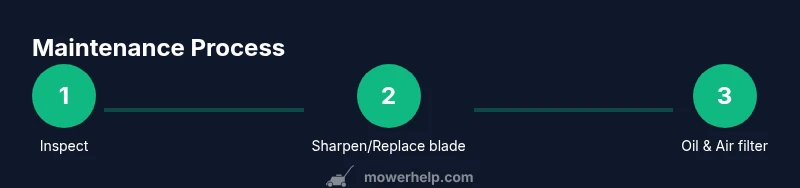
- Prioritize blade care, oil, and air filter checks.
- Safely handle parts and follow safety protocols.
- Keep a log to track maintenance history.