Gas Treatment for Lawn Mower: A Practical DIY Guide
Learn how to treat gasoline for your gas-powered lawn mower to prevent varnish, moisture buildup, and carburetor problems. This step-by-step guide covers stabilizers, storage, dosing, and safe handling for DIY homeowners.


By treating your lawn mower gas, you protect the carburetor, prevent varnish buildup, and extend fuel life between uses. This guide shows how to choose a fuel stabilizer, when to add it, and how to run the engine to circulate treated fuel. You'll also learn storage tips and safety steps to minimize fumes and fire risk.
What gas treatment does for your mower
Gas treatment for lawn mowers is more than just adding a stabilizer. Proper treatment protects the fuel system from moisture migration, ethanol-induced varnish, and gum deposits that can clog the carburetor and fuel lines. According to Mower Help, regular gas treatment lawn mower routines reduce the chance of stalled starts and hard sits during off-season storage. By treating gas before it sits, you ensure easier starts and smoother performance when mowing resumes. In practical terms, you’ll extend fuel life, minimize maintenance, and keep the engine pulling strong even after a few months of idle time. Understanding your mower’s fuel system—tank, lines, carburetor, and float needle—helps you pick the right product and dosing method. The goal is to maintain a clean, consistent fuel chemistry that the carburetor can burn efficiently. This section lays the groundwork for safe handling, choosing stabilizers, and how to apply treatment without harming the engine or environment.
The ethanol problem: moisture, varnish, and phase separation
Gasoline isn’t just gasoline. Most regions blend ethanol into pump gas, which pulls water from the air and slowly migrates into the fuel. Small engines like lawn mowers cannot tolerate high ethanol levels for long periods, leading to phase separation and varnish on the carburetor’s surfaces. When moisture phases separate, the supply can flood the engine or cause lean running issues, making starts unreliable and power inconsistent. Stabilizers help, but they must be compatible with ethanol blends and appropriate for the engine type. For homeowners, this means reading labels carefully and avoiding unproven “miracle” additives. The safe approach is to stabilize fresh fuel and rotate stock so you’re not dealing with old gasoline when you mow.
Stabilizers, detergents, and additives: what to look for
Fuel stabilizers come in both ethanol-containing and ethanol-free varieties. In most cases, a standard stabilizer with detergents and anti-oxidants is enough for a typical seasonal cycle. Detergent additives help keep carburetor jets clean, while metal deactivators prevent corrosion in metal parts of the fuel system. If you use ethanol-containing gas, look for stabilizers designed to combat ethanol-related moisture and phase separation. For older mowers, you may consider carburetor cleaners that are safe for small engines, but use them strictly as directed and never mix multiple cleaners. Always verify compatibility with your mower’s engine type and the user manual.
How to dose and mix: practical guidance for DIYers
Dosing is typically measured per fuel volume as indicated on the stabilizer label. The usual approach is to mix stabilized fuel in the storage can first, then fill the mower’s tank, ensuring you don’t exceed the recommended ratio. If you’re treating fuel for immediate use, you can add stabilizer directly to the tank and then fuel up. After dosing, gently mix by tilting the can or by running the engine to circulate the treated fuel. Avoid over-stabilizing, which can leave residues; always follow the manufacturer’s guidance and do a quick test start to confirm smooth operation.
Seasonal storage and winterization: avoid surprises when spring arrives
At the end of the mowing season, you often have a choice: drain old fuel, treat the remaining gas, or run the engine until the fuel becomes stale. The safest bet for many homeowners is to add a fuel stabilizer and run the mower for 5–10 minutes to circulate the treated fuel. For long-term storage, consider draining the tank and carburetor if you won’t use the mower for several months, and store fuel in a properly sealed, approved container away from heat sources. Regular checks of the air filter and spark plug complete the seasonal routine and prevent accumulative problems.
Tools & Materials
- Fresh gasoline(Use the fuel you intend to run; avoid old fuel.)
- Fuel stabilizer(Choose ethanol-containing or ethanol-free stabilizer compatible with your gas.)
- Fuel funnel(Useful for minimizing spills when filling the tank.)
- Measuring syringe or cap dose(Help ensure accurate stabilizer dosing per label.)
- Gas can with airtight cap(Store treated fuel separately from the mower to prevent contamination.)
- Rags and a small catch pan(Useful for catching drips and wiping spills.)
- Carburetor cleaner (optional)(Only if you’re planning a light carburetor refresh later; follow safety guidelines.)
- Gloves and eye protection(Gasoline and cleaners can irritate skin and eyes; protect yourself.)
Steps
Estimated time: 30-60 minutes
- 1
Inspect current fuel quality
Check the color and smell of the gasoline in the tank. If it’s cloudy, stale, or has a sour odor, don’t use it. Fresh fuel improves combustion and reduces varnish formation after treatment.
Tip: If in doubt, drain old fuel into an approved container and label it for disposal. - 2
Choose and dose stabilizer
Read the stabilizer label and measure the correct dose per the fuel volume. If you’re preparing for storage, a longer-life stabilizer may be beneficial; for routine use, standard stabilizers suffice.
Tip: Avoid mixing multiple additives; choose one stabilizer and follow its dosing chart. - 3
Combine fuel and stabilizer
Pour stabilizer into the storage can before adding fuel, or add directly to the mower’s tank if you’re refilling immediately. Gently mix by tilting the can or running the engine for a few minutes.
Tip: Use a funnel to minimize spills and keep a clean work area. - 4
Fill and circulate treated fuel
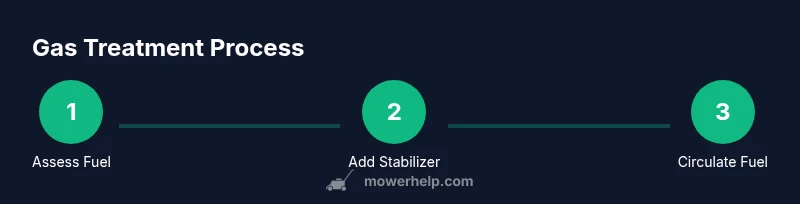
Fill the mower tank with the stabilized fuel and start the engine. Run for 5–10 minutes to ensure the stabilized fuel circulates through the lines and carburetor.
Tip: If the engine stalls, wait a moment and retry; avoid forcing the engine when it's cold. - 5
Storage and winterization
If storing for months, you have options: leave stabilized fuel in the tank, or drain it completely and treat residual fuel in the carburetor. Store in a cool, ventilated area away from flames.
Tip: Disconnect the spark plug wire during storage to prevent accidental starting. - 6
Carburetor and system check
If you suspect varnish or clogging, inspect or lightly service the carburetor, including the float needle and jets. Do not disassemble beyond your skill level; use professional service if needed.
Tip: Never spray cleaner into hot parts; allow the engine to cool before any maintenance.
Got Questions?
Do I really need to use a stabilizer for my gas lawn mower?
If you store your mower for more than a few weeks, a stabilizer helps prevent varnish buildup and moisture-related issues. For frequent, year-round use, stabilizers still help maintain engine performance by keeping fuel fresh.
Yes. Stabilizers help keep fuel fresh and protect the fuel system during storage and idle periods.
Can I use ethanol-free gasoline and skip stabilizers?
Ethanol-free gas minimizes moisture absorption, but stabilizers can still improve long-term storage and reduce varnish. If you can reliably source ethanol-free fuel, you may reduce the need for frequent stabilizer use.
Ethanol-free fuel reduces some risks, but stabilizers still offer protection during storage and long idle periods.
What is the safest way to drain old gas from a mower?
Use a proper fuel siphon or pour from the tank into a labeled approved container. Do not pour fuel down drains. Dispose of old fuel at an approved facility according to local regulations.
Drain old gas into an approved container and take it to a disposal site; never pour it on the ground.
How long can treated fuel sit before it goes bad?
Treated fuel can extend shelf life to several months, depending on stabilizer type and storage conditions. Always check the stabilizer label for the recommended window.
It depends on the stabilizer and storage, but follow the label’s shelf-life guidance.
Is gas treatment safe for all mower engines?
Most consumer stabilizers are safe for typical two-stroke and four-stroke mower engines when used as directed. Always read your mower’s manual and the stabilizer label before use.
In most cases yes, but always check your manual and the product label.
Watch Video
The Essentials
- Treat fuel before storage to prevent varnish and moisture issues.
- Choose a stabilizer compatible with ethanol blends and your mower.
- Run the engine after dosing to circulate treated fuel.
- Store or drain fuel properly to prevent surprises in spring.