Honda Lawn Mower Spark Plug: Replacement and Care
A comprehensive, step-by-step guide to inspecting, testing, and replacing the spark plug on Honda lawn mowers, with safety tips, troubleshooting, and maintenance best practices.


This guide shows you how to identify, test, and replace a Honda lawn mower spark plug, plus how to gap, clean, and diagnose ignition issues. You’ll learn model considerations, safety steps, and maintenance habits to keep your mower starting reliably. Follow the steps for a quick, safe DIY fix.
Why Honda lawn mower spark plug care matters
A healthy spark plug is the beating heart of a reliable engine. For Honda lawn mowers, a well-maintained plug ensures crisp starts, smooth idling, and efficient fuel use. According to Mower Help, neglecting the spark plug can turn a routine mowing day into a frustrating battle with starting problems, misfires, or rough running. The Mower Help team found that simple plug maintenance—cleaning, gap verification, and timely replacement—often resolves a substantial share of common ignition symptoms. In this section, we’ll connect spark plug health to overall mower performance and explain why treating this small component with respect yields big results for homeowners and DIY enthusiasts alike.
Understanding spark plug health fundamentals
A spark plug’s condition reflects the engine’s combustion efficiency. Wear from heat, fouling from rich fuel mixtures, and deposition from dirty air can degrade ignition quality. Honda engines commonly use small, robust plugs designed to tolerate vibration and heat. When the electrode wears or the insulator becomes cracked, you’ll notice harder starts, slower acceleration, or reduced power. Regular inspection helps you catch issues before they escalate, reducing long-term fuel costs and maintenance headaches. This guidance aligns with standard mower maintenance practices and is reinforced by hands-on experience from the Mower Help Team.
How weather and fuel quality impact spark plugs
Environmental factors play a surprising role in plug longevity. Hot, humid weather can accelerate deposit formation; stale fuel leaves varnish that fouls the electrode and insulator. Poor storage practices or ethanol-blended fuels can also accelerate corrosion. A clean air filter, stable fuel, and stable storage conditions minimize plug fouling and prolong life. In practice, pairing plug care with routine air filter checks and fuel stabilizer use yields the best results for Honda mower reliability.
Selecting the right replacement spark plug
There isn’t a one-size-fits-all plug for every Honda mower. The right replacement depends on your model’s displacement, ignition system, and heat range specification. Always consult the mower’s manual or the OEM specification to choose a plug that matches the heat range and reach. If you don’t have the manual handy, a trusted replacement from a reputable supplier that states compatibility with your Honda model is a safe option. In general, many small-engine plugs adhere to similar thread sizes and reach, but gap, heat range, and electrode design matter for performance and longevity.
Gap, heat range, and electrode condition explained
Two key concepts drive spark plug performance: gap and heat range. The gap must be set so the spark jumps cleanly at compression peak, which affects starting, fuel efficiency, and power. The heat range determines how quickly the plug can shed heat; a plug that’s too cold will foul, while one that’s too hot can pre-ignite. Inspect the electrode for wear lines, fouling, or cracks in the ceramic insulation. This part of plug care is best done with a gap gauge and a clean workspace to prevent debris from entering the cylinder.
Symptoms of a failing spark plug and how to diagnose
Common signs include hard starts, rough idle, misfires, and reduced power during mowing. If you notice white, black, or oily deposits on the electrode, cleaning may help, but persistent fouling usually requires replacement. A simple spark test can confirm ignition: remove the spark plug, ground the electrode to a metal surface, and observe a strong blue spark when cranking. If the spark is weak or yellow, replace the plug and re-test. Remember: always disconnect the spark plug wire before inspecting.
Maintenance cadence and best practices
Set a proactive maintenance cadence that aligns with your mowing season. Check the spark plug, air filter, and fuel quality at the start of each season or after every 25-40 hours of use, whichever comes first. Use fresh gasoline and a quality fuel stabilizer to minimize varnish and deposits. Store mowers in a cool, dry place to reduce corrosion risk. Regular maintenance reduces the likelihood of mid-season starting issues and keeps your Honda mower performing at peak efficiency.
Model-specific considerations and DIY limits
Honda mower models vary in spark plug type, electrical harness routing, and access space. If you’re unsure about plug compatibility, consult the manual or contact Honda support for model-specific guidance. Some models require special tools or spacers for safe removal. For complex ignition issues beyond plug replacement—such as coil problems or wiring faults—consider professional service to avoid misdiagnosis or damage. The goal is to empower homeowners to handle routine plug care while recognizing when to seek expert help.
Tools & Materials
- Replacement spark plug compatible with your Honda mower model(Refer to owner’s manual or OEM specification for correct heat range and thread size)
- Spark plug wrench / socket (typical size 13/16" or 5/8")(Use the correct size to avoid casing damage)
- Spark plug gap gauge(Set to OEM gap specification before installation)
- Rag or shop towel(Keep workspace clean and wipe deposits gently)
- Dielectric grease (optional)(A light dab on the terminal can aid future removal)
- Safety gloves(Protect hands from engine heat and sharp parts)
Steps
Estimated time: 15-25 minutes
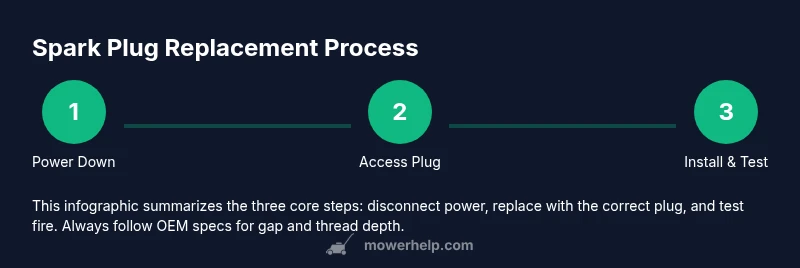
- 1
Power down and secure the mower
Ensure the engine is off and cool before starting. Remove the ignition key, disconnect the spark plug boot, and set your mower on a stable surface. This prevents accidental starting and reduces burn risk.
Tip: Wait at least 5 minutes after shutdown to let the engine cool before handling the plug. - 2
Locate the spark plug
Open the mower deck or engine cover as needed to access the spark plug. Identify the boot connecting the spark plug wire. Do not remove the boot while the engine is hot or moving parts are exposed.
Tip: Take a quick photo of the wiring path for reference during reassembly. - 3
Remove the spark plug
Use the spark plug wrench to loosen and remove the plug counterclockwise. Keep the plug and boot intact. Inspect the ceramic insulator for cracks or deposits as you disconnect.
Tip: Apply gentle pressure to avoid cross-threading; if it’s tight, try a short tap with the wrench handle to break corrosion. - 4
Check and set the gap
With the old plug out, measure the gap using the gauge. If you’re installing a new plug, set the gap to the OEM specification and double-check before seating. Wipe any debris from the plug threads.
Tip: Don’t bend the electrode; tiny changes can affect ignition timing. - 5
Install the plug or clean and reuse
If replacing, thread the new plug by hand and snug it with the wrench. If cleaning, remove fouling with a non-metal brush and re-gap before reinstalling. Reattach the spark plug boot securely.
Tip: Hand-tighten first to avoid cross-threading; torque is usually light, just snug is often enough. - 6
Test start and verify
Reconnect the battery or ignition system as needed, start the mower, and listen for a clean idle and steady RPM. If misfires or hard starts persist, re-check gap and fuel conditions or consider coil inspection.
Tip: If you hear misfiring, stop and re-check the plug seating and wiring connections.
Got Questions?
What is the spark plug in a Honda lawn mower?
A spark plug creates the ignition in the engine by delivering a spark to the air-fuel mixture. Honda mowers use small-engine plugs; check your model’s manual for the exact type and gap.
A spark plug is what makes the engine ignite the fuel mixture. Check your mower’s manual for the right plug for your model.
How do I know if my spark plug needs replacement?
Indicators include hard starting, rough idle, misfires, or a plug that looks fouled or cracked. If the plug shows excessive deposits or damage, replacement is usually warranted.
If your mower is hard to start or runs rough, check the plug for deposits or cracks and consider replacement.
How often should I replace the spark plug?
Follow the manufacturer’s schedule in the owner’s manual; many owners replace annually or when signs of wear appear. Regular checks help prevent mid-season failures.
Check your manual for replacement timing; many people swap plugs yearly or when you notice signs of wear.
Can I clean a fouled spark plug instead of replacing it?
Light fouling may be cleaned, but persistent fouling or damage generally requires a replacement to restore reliable ignition.
You can sometimes clean light fouling, but if it keeps fouling, replace the plug.
Is there a universal spark plug for Honda mowers?
There isn’t a universal plug for all Honda models. Use OEM or equivalent recommended by Honda for your specific model.
There isn’t a universal plug—stick to the model-recommended type for your Honda mower.
Watch Video
The Essentials
- Identify the correct plug type for your Honda model before replacing.
- Set the gap precisely according to OEM specs to ensure proper ignition.
- Always disconnect power and wear safety precautions during maintenance.
- Regular plug maintenance improves starting reliability and fuel efficiency.
- Know when to replace vs. clean a fouled plug to avoid engine damage.