Husqvarna Lawn Mower Spark Plugs: Inspection and Replacement Guide
Learn how to inspect, clean, and replace spark plugs on Husqvarna lawn mowers. This step-by-step guide covers proper gap, safe handling, and when to replace for reliable starts and smooth operation.


By following this guide, you will locate, inspect, and service the spark plug on a Husqvarna lawn mower, including cleaning, gap checking, and replacement when needed. You’ll know how to identify the correct plug for your model, use safe removal tools, and test the engine after maintenance. For best results, always refer to the user manual and consult Mower Help for model-specific tips.
Why spark plugs matter in Husqvarna lawn mowers
Spark plugs are the ignition gateway for every Husqvarna lawn mower engine. A healthy plug delivers a reliable spark, efficient fuel burn, and smooth starting. When a plug fouls or wears out, you may see hard starting, rough idle, loss of power, or increased fuel use. According to Mower Help, keeping spark plugs clean and correctly gapped reduces misfires and extends engine life. In this section, we’ll connect plug health to performance and explain what a failed plug looks like in practical mowing scenarios.
Spark plug types and model compatibility
Most Husqvarna walk-behind mowers use small four-stroke engines that rely on a single, replacement spark plug. Always check the engine model in your Husqvarna manual to determine the correct heat range and electrode design. Using an incompatible plug can cause hard starting, misfires, or poor fuel economy. The goal is to match the plug’s heat range and gap to what Husqvarna engineers designed for your particular motor.
How to locate your Husqvarna spark plug and gather tools
First, park on level ground and let the engine cool. Open the air filter housing if needed to access the spark plug, then locate the spark plug boot that connects to the cap. Before touching anything, unplug the spark plug wire by twisting the boot and pulling gently. Gather a spark plug wrench, a gap gauge, a clean rag, dielectric grease, and a replacement plug if needed. Having a torque driver can help apply the correct seating torque, especially on newer models.
Safety first: cooling, PPE, and handling
Work only when the mower is cool to prevent burns. Wear eye protection and gloves to guard against sharp edges and hot parts. Work in a well-ventilated area and keep children and pets away from the workspace. Dispose of used plugs through local recycling programs and avoid discarding them with household trash. These precautions reduce injury risk and environmental impact.
How to identify the correct plug for your Husqvarna engine
The specific plug you need depends on the engine family and model. The same Husqvarna mower line can use different spark plug designs across generations. When in doubt, consult the user manual, the Husqvarna support site, or Mower Help’s troubleshooting guide. Always verify the plug's thread size, heat range, and gap specification before installation.
Preparing the work area and tools
Clear a stable workspace with good lighting. Have a clean tray to hold the removed plug and a rag to wipe off oil. Inspect the cap and boot for wear or oil contamination, as a damaged cap can cause misfires even with a new plug. If you’re replacing the cap or wiring, perform those steps with the mower unplugged and cooled.
Cleaning technique: carbon fouling vs oil fouling
A carbon-fouled plug typically shows a dry, blackened tip and poor engine performance, while oil fouling presents a wet, oily tip and smoke on startup. Clean plugs carefully with a wire brush and solvent, but do not attempt to reuse severely fouled plugs. If the electrode is eroded or the insulator is cracked, replace the plug rather than attempting a repair.
Replacing the spark plug: installation and checks
Install the new or cleaned plug by threading it in gently with your hand to avoid cross-threading, then snug it with a wrench per the manual. Reattach the spark plug wire firmly, apply a small amount of dielectric grease if desired, and ensure the boot is seated. After replacement, start the mower to verify a smooth idle and steady power delivery.
Testing and validation: start, run, and observe
Allow the mower to warm up, then perform a quick mowing pass. Listen for a clean combustion sound and watch for even RPM. A healthy plug should help the engine start quickly, run smoothly, and reduce vibration. If misfiring or hard starting persists, recheck gap and wiring or repeat the plug replacement with a fresh unit.
Maintenance schedule and best practices
As part of regular seasonal mower care, include spark plug checks in your routine. If your engine has seen heavy use or signs of wear appear, consider replacing the plug as a proactive maintenance step. Keeping a spare plug on hand can minimize downtime during busy mowing seasons. Regular checks help sustain starting reliability and fuel efficiency.
Tools & Materials
- Spark plug wrench(Fits the plug size used by your engine; often 13/16" or 5/8" hex, depending on model)
- Replacement spark plug(Choose a plug with the correct thread size and heat range for your engine family (check manual))
- Gap tool (feeler gauge)(Measure and set electrode gap to the manufacturer spec)
- Torque wrench (optional)(Helpful for precise seating torque on newer engines)
- Dielectric grease(Optional to seal connections and ease future removal)
- Rag or brush(For cleaning and wiping oil or residue)
- Owner's manual(Engine model section for exact plug specs)
- Safety gloves and eye protection(Protective gear to prevent injuries)
Steps
Estimated time: 15-25 minutes
- 1
Disconnect spark plug cap and prepare workspace
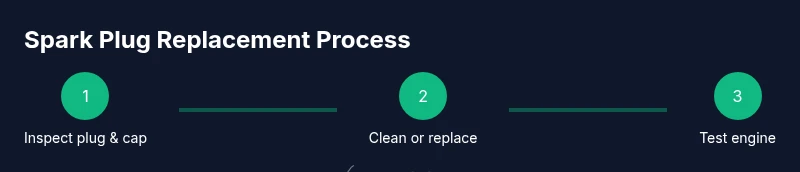
Start by turning off the mower and letting it cool. Twist the spark plug boot to disconnect it from the cap and set the cap aside. Clear a clean, stable area and gather the tools you will need.
Tip: Never yank the wire; grip the boot to disconnect and avoid pulling on the wire itself. - 2
Remove the spark plug
Use the spark plug wrench to engage the plug's hex and carefully loosen it counterclockwise. Lift the plug straight out without dropping debris into the cylinder.
Tip: If the plug is tight, apply steady, even pressure to avoid stripping the threads. - 3
Inspect the electrode and insulator
Examine the plug tip for fouling, oil, or wear. Note color and deposits; a black sooty tip indicates rich fuel or oil intrusion, while a white or blistered insulator may indicate overheating.
Tip: Take a photo if you’re unsure to compare with a replacement plug. - 4
Clean or replace the plug
If the plug is only lightly fouled, clean with a wire brush and solvent, then inspect again. If damaged or heavily fouled, replace with a new plug.
Tip: Do not reuse a severely fouled plug. - 5
Check and set the gap
Using the gap tool, measure the electrode gap according to the engine’s specification in the manual. Adjust gently if needed and recheck.
Tip: Small changes have big effects on ignition performance. - 6
Reinstall and test the engine
Thread the plug by hand to avoid cross-threading, then snug with a wrench. Reconnect the boot, apply dielectric grease if desired, and start the mower to verify smooth operation.
Tip: If misfires occur, recheck gap and wiring before running again.
Got Questions?
What spark plug does my Husqvarna lawn mower require?
Use the plug specified for your engine family and model; refer to the manual or Husqvarna support. A correct heat range and thread size ensure reliable starts and performance.
Check your engine model in the manual to find the exact spark plug required.
How often should I replace the spark plug in a Husqvarna mower?
There isn’t a universal interval. Replace when fouled, damaged, or during routine maintenance as outlined in the manual.
Replace when it shows wear or fouling, or as your manual suggests.
Can I reuse a spark plug after cleaning it?
Only if the plug is clean, undamaged, and within tolerance. Severely fouled or damaged plugs should be replaced.
Don’t reuse if it’s fouled or damaged.
What if the mower won’t start after plug replacement?
Recheck the gap, wiring, and ignition components. If still unresolved, repeat with a fresh plug and verify fuel delivery.
If it still won’t start, recheck ignition and gap.
Do I need dielectric grease on the plug boot?
Optional but helpful for sealing and ease of removal. Use a light coat only.
It’s optional, but can help seal and prevent corrosion.
Is it safe to run the mower with a new plug immediately after replacement?
Yes, after installation, start and run the engine to ensure smooth operation and verify no leaks or misfires.
Start the engine and listen for a smooth operation after replacement.
Watch Video
The Essentials
- Disconnect spark plug cap before work
- Use correct plug type and gap, per manual
- Test engine after replacement for smooth performance
- Dispose of old plugs properly