Honda Parts for Lawn Mower: A Complete Replacement Guide
A comprehensive guide to Honda parts for lawn mowers, comparing OEM vs aftermarket, how to verify compatibility, sourcing wisely, and maintenance tips for Honda-powered mowers in 2026.


Honda parts for lawn mower are replacement components designed for Honda-powered mowers, including blades, spark plugs, belts, and carburetor parts. Prefer OEM parts for guaranteed fit and performance, or select reputable aftermarket parts that match your model’s specifications to save money without compromising safety. This guide helps buyers identify compatible parts and avoid common mistakes.
Why Honda Parts Matter for Lawn Mowers
For homeowners maintaining Honda-powered lawn mowers, using proper parts is essential for safety, reliability, and long-term performance. The correct blade, air filter, spark plug, or carburetor kit ensures consistent starting, efficient fuel use, and balanced cutting. According to Mower Help, honda parts for lawn mower are not interchangeable with parts from unrelated brands, and choosing genuine Honda components often preserves engine timing and warranty coverage. This section lays the groundwork for understanding when to repair versus replace and how to verify part compatibility before you buy. The goal is to minimize downtime and maximize the life of your machine by prioritizing parts that meet Honda’s specifications and your mower’s specific model year. When in doubt, consult the manufacturer’s part catalogs or your local authorized dealer.
Understanding Compatibility: OEM vs Aftermarket
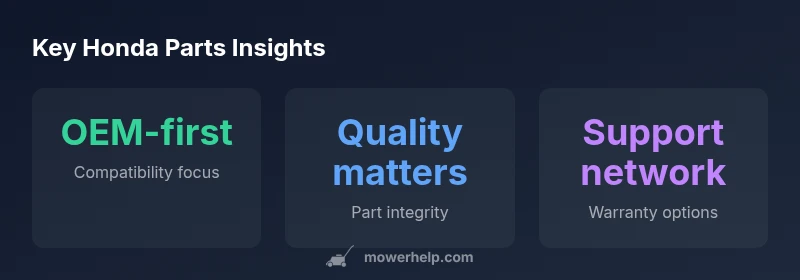
Compatibility is the cornerstone of a successful parts purchase. OEM, or original equipment manufacturer parts, are built to the exact specifications of your Honda mower’s engine and deck assembly. They tend to offer the most reliable fit and predictable performance, especially for critical components like the carburetor, gaskets, and drive belts. Aftermarket parts can be cost-effective and provide solid performance if sourced from reputable brands and if the part matches your model number and engine type. A practical approach is to verify the part number printed on your current component, cross-reference it with Honda’s official catalogs or authorized distributors, and read customer feedback for similar mower models. Always confirm warranty terms before buying, as some warranties require OEM parts for engine-related work.
Common Honda Lawn Mower Parts and Their Roles
Key components to inspect or replace on Honda-powered mowers include blades (for cutting quality and balance), spark plugs (for reliable starts), air filters (for clean combustion), belts (for drive and blade systems), fuel filters, and carburetor parts. The blade type matters: mulching blades differ from standard bags-in blades, and improper balancing can cause vibration. Spark plugs should be replaced at manufacturer-recommended intervals to maintain ignition efficiency. Regularly inspect the air intake for debris and check belts for signs of cracking or wear. Carburetor kits or rebuilds are common maintenance tasks when fuel quality, ethanol content, or idle performance becomes inconsistent. In all cases, ensure the replacement part is designed for Honda engines and is compatible with your mower’s model number.
Sourcing Honda Parts: Where to Buy
Begin with authorized Honda dealers or the official Honda parts website to guarantee compatibility and coverage under warranty. Reputable online retailers that specialize in outdoor power equipment can also be solid options, provided they list the exact part number and model compatibility. When shopping, compare return policies, stock availability, and shipping timelines. Be cautious of counterfeit parts or sellers offering steep discounts on obviously misfit items. Keeping a small inventory of frequently replaced parts—such as blades, filters, and spark plugs—can reduce downtime between maintenance sessions.
Maintenance Tips to Extend Part Life
A proactive maintenance approach extends the life of Honda mower parts and minimizes unexpected breakdowns. Follow a seasonal service schedule: clean the under-deck area after each cutting session, replace air filters as needed, and inspect blades for nicks or dull edges. Use high-quality fuel with stabilizer and avoid ethanol-heavy blends in older engines when possible, as ethanol can degrade gaskets and carburetor components. Regular oil changes (where applicable) and spark plug replacements can prevent hard starting and rough running. Store the mower in a dry environment and perform a quick pre-season check to ensure belts and connections are secure. Keeping a simple maintenance log helps track part life and schedule timely replacements.
Installation Basics and Safety Checks
Always disconnect the spark plug before starting any maintenance, and wear protective gloves and eye protection during parts replacement. Use the correct torque specifications for fasteners and avoid forcing components into misaligned positions. When replacing blades, ensure correct alignment, balance, and secure mounting with the appropriate nut or bolt; test blade balance with a simple method before final operation. For carburetor work, follow the manufacturer’s rebuild instructions precisely, and avoid over-tightening exhaust components. Finally, reinstall all safety guards and shields to maintain operator protection. If any part shows signs of heat damage, cracks, or excessive wear, replace it rather than attempting a risky repair.
Budgeting for Honda Parts and Accessories
Cost considerations vary widely by part and model. Plan for essential replacement parts such as blades, air filters, spark plugs, belts, and fuel system components. OEM parts generally carry higher upfront costs but can save time on compatibility issues and warranty concerns, while reputable aftermarket options may offer substantial savings with proven performance. Compare multiple sources, consider bulk purchases for frequently replaced parts, and factor in shipping or service fees. A well-planned parts projection helps keep downtime minimal and maintenance cycles predictable.
How to Find Honest Vendors and Warranties
Trustworthy vendors clearly display exact part numbers and model compatibility. Look for official brand pages, authorized dealers, and retailers with transparent return policies and clear warranty terms. OEM parts often come with Honda’s warranty coverage, while reputable aftermarket suppliers may offer their own guarantees. Read user reviews focusing on fit, performance, and customer service. Keep a record of purchase dates and part numbers to support warranty claims or future replacements.
Quick Start Checklist for Your Next Buy
- Identify your mower model and engine type
- Locate the exact part numbers from the current components
- Decide between OEM vs reputable aftermarket options
- Check compatibility with official catalogs or dealer support
- Review warranty terms and return policies
- Compare prices across trusted sellers
- Inspect part condition and packaging before shipping
- Confirm installation procedures and torque specs
- Schedule a pre-season maintenance check
Representative parts and notes for Honda-powered mowers
| Part Category | Honda Part Example | Compatibility Notes |
|---|---|---|
| Engine components | Carburetor kit | Verify part number for your model year |
| Cutting deck parts | Blades | Use OEM grade for balance and cut quality |
| Fuel system | Fuel filter | Check ethanol content and fuel quality |
| Electrical | Spark plug | Check gap and replacement interval |
Got Questions?
Are Honda OEM parts necessary for lawn mowers?
OEM parts are designed to fit Honda engines precisely, ensuring reliability and preserving warranty in most cases. Aftermarket parts can work well when sourced from reputable brands and matched to the exact model and specs.
OEM parts fit best and protect warranty, but good aftermarket parts can be a solid choice if they match your model.
How can I verify part compatibility for my Honda mower?
Use the model number from the mower’s labeling, then cross-check the part number in Honda’s official catalogs or with authorized dealers. Read product descriptions and user reviews for proof of correct fit.
Find your model number and cross-check against official part numbers from Honda or trusted dealers.
When should I replace versus repair a part?
For safety-critical parts like engine components, replacement is usually the safer option. For minor wear on non-safety parts, repair or rebuild can be cost-effective if quality parts are used.
If it affects safety or reliability, replace; for small wear, repair can work if you use quality parts.
Where should I buy Honda parts for lawn mowers?
Shop at authorized Honda dealers, official Honda parts websites, or reputable retailers with clear compatibility information and return policies. Avoid sellers with vague specs or questionable warranties.
Buy from official Honda sites or certified dealers to ensure compatibility and warranty.
Can I mix OEM and aftermarket parts?
Mixing is sometimes possible, but it can risk fit, performance, or warranty coverage. If you mix parts, ensure they match the exact specifications and are designed for your model.
Mixing parts can cause fit or warranty issues; verify specs carefully.
“OEM Honda parts deliver consistent fit and performance, while carefully chosen aftermarket options can reduce costs without sacrificing safety. Always validate compatibility before purchase.”
The Essentials
- Prioritize OEM parts for critical components
- Always verify exact part numbers before purchase
- Compare OEM and reputable aftermarket options carefully
- Follow a seasonal maintenance schedule
- Buy from authorized dealers when possible