How Long to Let a Flooded Lawn Mower Sit: Safe Recovery Steps
Learn how long to let a flooded lawn mower sit and why. This urgent guide from Mower Help covers safe drying, fuel and ignition checks, oil evaluation, and professional help when needed.


If you're asking how long to let a flooded lawn mower sit, the answer depends on the mower and environment. Water in the carburetor and fuel system can cause immediate starting problems and long-term corrosion. The Mower Help team emphasizes patience and thorough drying before attempting a restart. In many cases, moisture must be reduced to safe levels and fuel degraded or replaced to prevent damage. After a flood, moisture can be trapped in crevices, mufflers, and crankcases; this requires careful drying and inspection. By understanding the physics of water intrusion and the mower’s design, homeowners can avoid risky restart attempts and make a faster recovery. According to Mower Help, patience during this drying phase reduces the risk of hydrolock and corrosion. This approach minimizes damage and helps prevent dangerous starting attempts.
Understanding Flooded Mowers: Why Time Matters
If you're asking how long to let a flooded lawn mower sit, the answer depends on the mower and environment. Water in the carburetor and fuel system can cause immediate starting problems and long-term corrosion. The Mower Help team emphasizes patience and thorough drying before attempting a restart. In most cases, moisture must be reduced to safe levels and fuel degraded or replaced to prevent damage. After a flood, moisture can be trapped in crevices, mufflers, and crankcases; this requires careful drying and inspection. By understanding the physics of water intrusion and the mower’s design, homeowners can avoid risky restart attempts and make a faster recovery. According to Mower Help, patience during this drying phase reduces the risk of hydrolock and corrosion. This approach minimizes damage and helps prevent dangerous starting attempts.
Immediate Safety First: Disconnect, Drain, and Air-Dry
Safety is non-negotiable when dealing with a flooded mower. Start by powering off the mower, disconnecting any electrical power supply, and removing the spark plug on gas engines. Drain the fuel tank and carburetor bowls if accessible. Place the mower in a warm, dry, well-ventilated area, and allow liquids to evaporate. If you notice fuel smells or visible water droplets, do not attempt to start the engine. Avoid contact with metal parts that may be hot or sharp. These steps prevent short circuits and reduce the risk of accidental starts, which could cause hydrolock or electrical shock. The goal is to minimize risk while you dry and inspect.
How Water Affects Different Mower Systems
Water can affect several subsystems. The fuel system can emulsify fuel and hinder ignition; the carburetor float and jets can jam with water. The ignition system may corrode coils or dirty the spark plug. The oil can become contaminated if fuel leaks past rings. The air intake, muffler, and exhaust stack can collect moisture, leading to rust. Each system requires its own cleaning and drying approach. Ignoring these differences can mean you restart a wet engine and cause more damage. Mower Help analysis shows that fuel and ignition are the most common failure points after flooding.
Determining a Safe Waiting Window: Factors to Consider
There is no one-size-fits-all waiting time. The duration depends on engine type (gas vs electric), moisture level, temperature, humidity, and whether fuel has entered the carburetor. In dry, warm conditions, many homeowners wait several hours; in cooler or humid climates, waiting longer is prudent. The goal is to reach a moisture-free state and allow fuel separation to occur. Always verify the absence of visible moisture before refueling or attempting startup. The waiting window should be guided by how thoroughly the system dries, not by a fixed clock.
Quick Checks While It Dries
While waiting, perform non-destructive checks. Inspect the air filter and muffler for water intrusion; replace if damp. Dry the spark plug well and inspect for corrosion. If the spark plug shows signs of wear, replace it. Check the fuel to ensure it’s clear of water; if you suspect water contamination, drain and replace with fresh gasoline. Only reassemble after components are completely dry. These checks save time during the restart and reduce risk.
Drying, Cleaning, and Refilling Safely: Care Steps
Ensure all surfaces are dry; use a clean cloth to wipe moisture from the carburetor throat and air intake. Use compressed air if available to dry small passages; never use high pressure on seals. Refill the oil if there is any dilution with fuel. Replace fuel if contaminated. Reattach spark plug after dry. When in doubt, proceed with caution and keep the mower off for longer to ensure full dryness. This careful prep guards against corrosion and seal damage.
When to Call a Pro: Signs That Professional Repair Is Needed
If, after thorough drying and checks, the engine still won’t start or you detect persistent fuel odors, seek professional repair. Hydrolock, significant electrical damage, or internal corrosion may require specialized tools and parts. A pro can perform a precise carburetor clean, seal inspection, and oil system check to prevent further damage. The sooner you involve a technician after a flood, the better the prognosis.
Preventive Steps to Minimize Future Flood Damage
After recovery, implement preventive practices: store mowers in a dry area, use fuel stabilizers, and drain water-prone parts if storage is extended. Regular maintenance reduces flood-related risk and extends mower life. The Mower Help team recommends a seasonal checkup focusing on fuel lines, carburetor, seals, and air intake to minimize future issues. Keeping your mower dry and well-maintained is the best defense against recurrent damage.
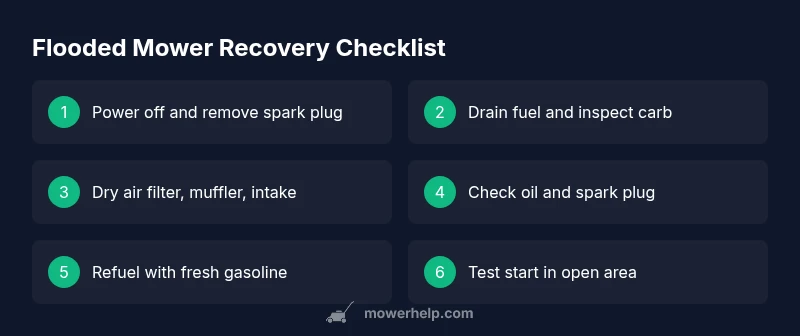
Quick Troubleshooting Visual Checklist
- Power off and remove spark plug on gas engines
- Drain and replace contaminated fuel
- Dry air intake, muffler, and exhaust pathways
- Inspect and replace oil and spark plug as needed
- Verify all connections and seals are dry before restarting
Steps
Estimated time: 60-120 minutes
- 1
Power down and secure safety
Power off the mower and disconnect any power source. Remove the spark plug on gas engines to prevent accidental cranking. Gather tools and a clean workspace so you can safely handle wet parts.
Tip: Label every part you remove to ensure correct reassembly. - 2
Drain fuel and inspect carburetor
Carefully drain the fuel tank and carburetor bowls if accessible. Inspect for water droplets or a cloudy emulsion. Replace with fresh gasoline after drying components.
Tip: Use a clean container to avoid cross-contamination. - 3
Dry critical components
Wipe and dry the air filter housing, muffler, exhaust, and carb throat. Use compressed air where available to clear small passages, being careful not to damage seals.
Tip: Do not blast moisture deep into seals with high pressure. - 4
Check oil and ignition parts
Inspect oil for milky appearance or dilution; replace if contaminated. Inspect the spark plug or ignition coil for corrosion or misfiring. Clean or replace as needed.
Tip: Replace the spark plug even if it looks fine; fresh timing helps restart. - 5
Reassemble and re-dry
Reassemble after all parts are dry. Give the system additional time in a dry, warm area to ensure complete evaporation of residual moisture.
Tip: Patience pays off; rushing can reinstate moisture problems. - 6
Test start with caution
Reconnect the spark plug, fuel lines, and battery if applicable. Start the mower in a safe, open area and observe for abnormal signs like smoke or rough idle.
Tip: If it doesn’t start after a couple of gentle attempts, stop and reassess.
Diagnosis: Lawn mower flooded after submersion
Possible Causes
- highWater in carburetor or fuel lines
- mediumMoisture in ignition system (spark plug, coil)
- lowWater in crankcase oil or mixing in fuel
Fixes
- easyDrain and replace fuel; flush carb bowls; use fresh gasoline
- easyDry or replace spark plug and ignition components; clean air filter
- easyCheck oil for water contamination and replace if found
- easyAir-dry and scrub muffler and exhaust; ensure moisture is gone before restart
- mediumIf engine shows hydrolock or will not crank after multiple attempts, seek professional help
Got Questions?
Can I start a flooded mower after drying it for a few hours?
Only attempt restart after the mower is completely dry and all components are inspected for water contamination. If unsure, wait longer or consult a pro.
Wait until the mower is completely dry and inspected before starting again. If in doubt, seek professional help.
What should I do first if water got into the carburetor?
Drain the carb bowls, replace any contaminated fuel, and dry the carb passages. A carburetor cleaning kit or professional service may be needed if performance remains poor.
Drain and clean the carb, replace contaminated fuel, and dry the passages. If you’re unsure, get expert help.
Is it safe to run an electric mower after flooding?
Flooded electric mowers require thorough drying and electrical inspection. Do not power on until all components are inspected for moisture and corrosion.
Don’t power an electric mower that’s been flooded until it’s inspected and fully dry.
Should I flush the fuel system after a flood?
Flushing or replacing the fuel and cleaning the carburetor is often necessary. If fuel smells sour or water is present, replace with fresh gasoline.
Yes, replace the fuel and clean the carburetor if water is detected.
How long should I wait after a flood before restarting?
There’s no fixed time. Wait until every part is dry, and fuel and oil are clean, then slowly test restart in a safe area.
Wait until everything is dry and clean before you retry starting the mower.
What if hydrolock occurs?
Hydrolock requires professional assessment. Do not crank aggressively; stop and call a tech if you suspect internal damage.
If you suspect hydrolock, stop and get a professional check.
Will warranty cover flood damage?
Warranty coverage varies by brand and policy. Document your steps and consult the manufacturer or a qualified service center for guidance.
Check your warranty terms or contact support for coverage details.
Watch Video
The Essentials
- Wait for thorough drying before restart
- Inspect fuel, ignition, and oil for contamination
- Drying and cleaning reduce corrosion risk
- Call a pro if hydrolock or extensive damage is suspected