How to Clean Lawn Mower Carburetor: A Step-by-Step Guide
Learn a practical, DIY method to clean your lawn mower carburetor, diagnose fuel issues, disassemble, clean jets, reassemble, and test performance to restore starting power.


Learn how to clean a lawn mower carburetor safely and effectively. This step-by-step guide walks you through diagnosing fuel-related issues, removing the carburetor, disassembling, cleaning jets and passages, and reassembling. You’ll need basic hand tools, carburetor cleaner, a safety mask, and a clean workspace. Follow the steps to restore starting power and improve fuel efficiency.
What a carburetor does and why it gets dirty
The carburetor meters fuel into the engine and mixes it with air for combustion. Over time, varnish, gum, and sediment from old fuel can clog jets and passages. In small engines like lawn mowers, these deposits reduce fuel flow and cause hard starting or rough idle. According to Mower Help, most carburetor problems stem from fuel residue that forms in the float bowl and jets. A clean carburetor restores proper fuel-air balance and improves starting power, efficiency, and engine smoothness. This overview explains the core function and how contamination disrupts performance. Proper maintenance can prevent recurring issues, and understanding the basic parts helps you troubleshoot with confidence.
Signs that a carburetor needs cleaning
Common indicators include hard starting, stalling at idle, rough running at mid-throttle, and reduced power. If you notice black exhaust smoke or frequent backfiring, fuel may be flooding or starving the engine. Before diving in, eliminate other culprits like a dirty air filter, old spark plug, or clogged fuel line since those problems can mimic carburetor issues. If you’ve left ethanol-based fuel in the tank for months, varnish and gum can form inside the carburetor, restricting fuel flow. Cleaning the carburetor involves removing the fuel bowl, jets, and passages and flushing out residue. After cleaning, you should observe smoother idle, easier starting, and consistent RPM. The key is to address the most accessible jet passages and ensure the float bowl is holding the correct fuel level. This discussion maps symptoms to internal passages that cleaning targets.
Tools, safety gear, and prep
Gather the following before you begin: a screwdriver set, socket wrench, carburetor cleaner spray, soft-bristle brushes, rags, a plastic tray, and a small container for soaking parts. Safety gear is essential: gloves and eye protection, plus work in a well-ventilated area away from open flames. Have spare gaskets on hand in case the old ones tear during disassembly. A clean workspace reduces part loss and damage, helping you stay organized throughout the job. Set the mower on a flat surface, disconnect the spark plug, and ensure the fuel valve is off.
How carburetor cleaning works (overview)
The goal is to remove varnish from jets and passages and restore proper fuel flow. You’ll typically remove the float bowl, inspect the jets, and flush passages with cleaner. Brushing and, if needed, gentle soaking break down residue. Do not force components through restricted channels; if a part is damaged or corroded, replacement is safer than reuse. This stage sets the foundation for a reliable engine restart and smoke-free operation.
Step-by-step approach (overview)
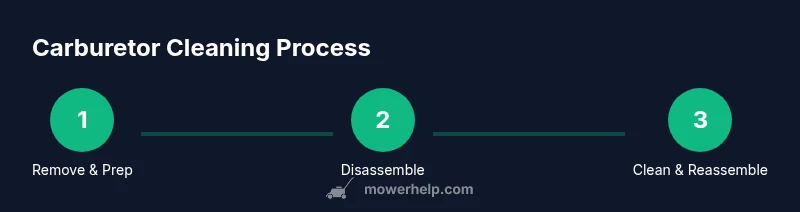
This article provides a detailed, safe approach without assuming prior experience. Expect to spend 30–45 minutes for a typical clean, longer if you’re inspecting and replacing gaskets. Handle each component carefully, label parts or take photos, and keep a small parts tray to avoid losing tiny screws. The next section breaks down the detailed steps you’ll perform. You’ll learn removal, disassembly, cleaning, and reassembly in a logical sequence.
Cleaning methods and best practices
Use carburetor cleaner spray to dissolve varnish, then brush jets and small passages with a soft-bristle brush or a pipe cleaner. Use compressed air to clear stubborn debris, holding the nozzle several inches away to avoid forcing parts. Soaking metal components in a dedicated carb cleaner for 5–10 minutes helps remove stubborn deposits; never soak plastic parts or gaskets to avoid damage. Refrain from using brute force on tiny passages; if a passage remains clogged, try a thinner wire or a specialized pick. Label parts as you go to simplify reassembly.
Post-clean test, adjustments, and maintenance
Reassemble the carburetor, reinstall it on the engine with the correct linkage, and reconnect hoses. Start the mower and check idle; adjust the idle screw very slightly to achieve a steady, low idle without stalling. If the engine runs rich or lean after cleaning, revisit the air-fuel balance and consider replacing gaskets or seals. Finally, drain and refresh fuel regularly and store using fresh fuel to prevent future varnish buildup. Consistent maintenance helps extend mower life and performance.
Troubleshooting and maintenance tips
- Always check the air filter and fuel quality; a dirty air filter can mimic carburetor symptoms. - Avoid using carburetor cleaner on plastic parts or gaskets that show wear. - Take photos during disassembly to aid reassembly. - Work in a well-ventilated area and wear eye protection when spraying cleaners. These practices reduce risk and improve outcomes.
Tools & Materials
- Safety gloves(Latex-free preferred)
- Safety glasses(Goggles recommended)
- Screwdrivers set(Flat and Phillips head)
- Socket/wrench set(Metric sizes typical)
- Carburetor cleaner spray(Solid spray nozzle for jets)
- Soft-bristle brushes(Small and stiff for stubborn deposits)
- Compressed air canister(Low pressure, short bursts)
- Rags and a tray(Contain spills, keep parts organized)
- Small container for soaking parts(Optional for soaking steps)
- Extra gaskets or O-rings(Prepare replacements if worn)
- Cleaner safe for metal plastics(Avoid harsh solvents on plastics)
- Old toothbrush or pick(Gently clean tiny passages)
Steps
Estimated time: 30-45 minutes
- 1
Shut off engine and disconnect spark plug
Ensure the mower is off and cool. Remove the spark plug wire to prevent accidental starting during the procedure. This safety step protects you from sparks and moving parts while you work.
Tip: Wait 5 minutes after stopping the engine to avoid hot components. - 2
Remove air filter cover and air filter
Open the air filter housing and take out the filter. This gives you clear access to the carburetor and its mounting screws. Inspect the filter for dirt; replace if clogged before continuing.
Tip: Take a photo of the air filter orientation to aid reinstallation. - 3
Disconnect fuel line and remove carburetor mounting
Carefully detach the fuel line from the carburetor and remove the linkage. Support the carburetor so it won’t fall when loosened from the intake. Keep screws in a labeled tray.
Tip: Use a small amount of carb cleaner to mist the area so dirt doesn’t fall into the intake. - 4
Disassemble carburetor: float bowl and jets
Remove the float bowl and note the position of jets and gaskets. Take photos to aid reassembly. Inspect the float and needle for wear before cleaning.
Tip: Lay out parts in order and label them; tiny parts can be hard to find if misplaced. - 5
Clean jets and passages
Spray carb cleaner through jets and passages; brush away varnish with a soft brush. Use compressed air to clear residual debris. Do not force debris through tight passages.
Tip: Work in short bursts to avoid creating a splashback and protect your eyes. - 6
Soak metal components (optional) and check parts
If deposits persist, soak metal parts in dedicated carb cleaner for 5–10 minutes, then rinse and air dry. Inspect all gaskets for wear and replace if necessary.
Tip: Do not soak plastic parts or soft gaskets; they can warp or degrade. - 7
Reassemble and reinstall on engine
Reassemble the carburetor following your photos, reinstall onto the engine, and connect linkage and fuel line. Start the engine, then adjust idle if needed and test performance at multiple speeds.
Tip: Make minoridle adjustments first, then test at high speed to ensure stability.
Got Questions?
What are common signs my lawn mower carburetor needs cleaning?
Hard starting, rough idle, stalls at low speed, and reduced power often point to carburetor issues. Fuel issues may mimic other problems, so rule out air filter and spark plug first. Cleaning the carburetor addresses varnish buildup that constricts fuel flow.
Common signs include hard starting and rough idle. Check the air filter and spark plug first, then consider cleaning the carburetor to remove varnish buildup.
Can I clean the carburetor without removing it?
For some models, you can flush through the carb with cleaner while still mounted, but many issues require removal to access jets and the float bowl. Refer to your mower manual and proceed with caution to avoid damaging linkages.
Some models allow flushing without removal, but often you need to remove it to access jets. Proceed carefully.
Is it necessary to replace gaskets after cleaning?
Gaskets should be inspected for wear; replace any cracked or damaged seals to prevent leaks after reassembly. If you notice a persistent fuel leak post-cleaning, swap the gasket and inspect the needle seat.
Inspect gaskets for wear and replace if damaged. Leaks may indicate worn seals.
How often should I clean the carburetor?
Frequency depends on fuel quality and storage. In areas with ethanol-blended fuel, perform cleaning if starting issues recur or after long storage. Regular seasonal maintenance helps prevent varnish buildup.
Clean as part of regular seasonal maintenance or when starting problems return.
What safety precautions should I take?
Work in a well-ventilated area, wear eye protection, and disconnect the spark plug before starting. Keep cleaners away from skin and flames, and follow label directions on cleaner products.
Ventilated area, eye protection, and spark plug disconnected. Follow cleaner instructions.
The Essentials
- Inspect fuel quality and air filter first.
- Disassemble carefully and document parts with photos.
- Clean jets and passages without forcing them.
- Test engine after reassembly and adjust idle as needed.