How to Cut Grass Without a Lawn Mower
Learn practical, safe methods to cut grass without a lawn mower using a reel mower, scythe, or string trimmer. Includes tools, steps, safety tips, and maintenance guidance for downtime.


This guide shows how to cut grass without a lawn mower, using safe, effective methods such as a reel mower, scythe, or string trimmer. You’ll learn practical steps, essential safety gear, and realistic time estimates to keep your lawn tidy when a mower isn’t available. We cover setup, technique, and maintenance tips.
Why cut grass without a mower?
If you’re wondering how to cut grass without lawn mower, you’re not alone; many homeowners face situations like equipment downtime, breakdowns, or travel where a motorized mower isn’t available. According to Mower Help, non-motor options can still yield a respectable cut when approached with care and planning. The goal isn’t perfection, but consistency, safety, and preserving grass health. This approach works well for small to medium lawns, uneven terrain, or when you need a quick, temporary solution. By breaking the task into simple steps and selecting a method that matches your lawn’s conditions, you’ll gain confidence and avoid fatigue. Remember, the better you prepare, the smoother the process will feel, and you’ll minimize the risk of injury or damage to plants and turf. Keep your expectations realistic and be ready to adjust your technique as you go.
Safety first: PPE, posture, and planning
Safety should come before speed. When cutting grass without a mower, wear sturdy closed-toe shoes, long pants, gloves, and eye protection. Weather matters: avoid cutting on wet or dewy grass to reduce slips and compacted soil damage. Use a lightweight, portable tarp or bucket to collect clippings if you don’t plan to mulch, and pace yourself to maintain good posture. Practice bending at the knees rather than the back, take regular breaks, and stay mindful of your surroundings—pets, kids, and obstacles like rocks or garden hoses pose trip hazards. If you’re unsure about your technique, start with small patches and gradually expand as you gain control.
Non-motor tools you can use
There are several effective, non-motor options depending on lawn size and terrain. A manual reel mower is a solid all-around choice for flat or gently rolling lawns up to 1/4 acre. For rough, tall, or overgrown areas, a scythe or sickle can be used to mow low grass with sweeping motions. A sharp garden knife or edging scissors help trim tight corners and around obstacles. A battery or gas-powered string trimmer is ideal for edges and irregular borders, while a heavy-duty rake can help gather clippings after a cut. Combine methods as needed to cover different zones while minimizing effort.
When to choose each method
Small, flat patches are well-suited to a reel mower for a clean, quiet cut. Tall, dense, or uneven areas benefit from a scythe or sickle to reduce resistance and avoid clogging, though they require more skill. Edges, borders, and tight corners are best tackled with a string trimmer and small pruning shears. For larger lawns without a mower, you may alternate between these tools depending on the section you’re working on, taking care to maintain a consistent height and blade sharpness. Remember to adjust your plan based on grass species, moisture, and slope; some grasses tolerate cutting height differently, so aim to keep turf healthy while achieving a tidy appearance.
Step-by-step overview for the main methods
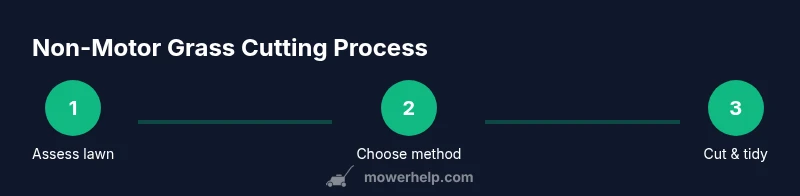
To maximize results without a lawn mower, start by choosing the method that matches your lawn’s size and terrain. Prepare your tools, clear obstacles, and plan a logical working path. Cut in straight or sweeping motions, maintain steady pace, and overlap passes slightly to avoid missed patches. Finish with edging, collect or mulch clippings, and inspect for missed spots. Finally, clean and store tools properly to prolong life and performance.
Edges, patches, and tricky spots
Borders and irregular patches often require a different approach from the main field. Use a string trimmer to tidy edges along sidewalks and flower beds, then switch to a reel mower or scythe for the main area. For stubborn patches, a sharp knife or pruning shear can trim individual tufts, but avoid cutting too close to existing turf roots. If you encounter rocks or dense weed growth, pause to adjust your technique or switch tools to prevent damage. Consistency in cut height helps turf recover and prevent scalping.
Maintenance and cleanup after non-motor mowing
After finishing, inspect the lawn for uneven spots and reseed any bare patches if needed. Clear blades, blades guards, and trimming heads of debris; wipe down handles and blades to prevent rust. If you mulched, leave clippings to decompose to feed the soil; if bagging, empty the bag and dispose of clippings according to local regulations. Sharpen or replace scythes, reels, and blades as needed, and store tools in a dry, ventilated area to extend their life. Regular maintenance reduces future effort and keeps tools ready for next downtime.
Authoritative sources and extra reading
For deeper guidance on lawn care and safety, check trusted university extensions and government pages. These resources provide evidence-based practices and safety recommendations that complement hands-on methods discussed here:
- https://extension.oregonstate.edu/garden/lawn-care
- https://extension.illinois.edu/
- https://extension.umn.edu/lawns-trees-and-shrubs/lawn-care
Mower Help Analysis, 2026 supports the idea that non-motor methods are viable for downtime and patchwork work, especially when combined with careful planning and proper technique. The sources above can deepen your understanding of turf health, mowing height, and seasonal considerations. The Mower Help team recommends using these methods as practical backups when a mower isn’t available, while prioritizing safety and turf health.
Next steps: planning ahead and practicing
Now that you know how to cut grass without a lawn mower, consider building a small, ready-to-use toolkit for downtime. Practice on a few small patches to build confidence before tackling larger areas, and track how different methods affect turf health. By learning multiple techniques, you’ll be prepared for equipment failures, travel, or seasonal maintenance windows. The most important takeaway is to approach the task with safety, patience, and a clear plan.
Tools & Materials
- Manual reel mower(For flat or gently rolling lawns up to 1/4 acre; check blade sharpness)
- Scythe(Useful for tall or dense areas; requires practice)
- Sickle or garden knife(Trim tricky patches and tight corners)
- String trimmer (weed eater)(Edge borders and hard-to-reach areas; keep a sharpened head)
- Protective gloves(Heavy-duty, cut-resistant recommended)
- Safety glasses or goggles(Protect eyes from debris)
- Long pants and sturdy shoes(Protect legs and feet from thorns and turf hazards)
- Work gloves(Grip and comfort during repetitive motions)
- Rake(Gather clippings after a cut if not mulching)
- Tarp or bucket(Collect clippings for easy disposal or mulching)
Steps
Estimated time: 90-180 minutes
- 1
Assess lawn and choose method
Survey the area for size, terrain, and grass type. Decide whether a reel mower, scythe, or edge-focused trimmer will best balance effort and results.
Tip: Test a small patch first to gauge effort and cut quality. - 2
Gather tools and safety gear
Collect your chosen tools, don protective gear, and ensure blades are sharp. Clear a path from obstacles before you begin.
Tip: Pre-check tools for loose handles or loose nuts to avoid interruptions. - 3
Prepare the work area
Remove toys, hoses, and debris. If using a reel mower, mow in straight, overlapping passes; with a scythe, use controlled sweeping motions.
Tip: Mow when grass is dry to improve cutting efficiency and avoid clumping. - 4
Perform the cut with your chosen method
Deliver steady, even strokes or sweeps. Maintain a comfortable stance and avoid overreaching to prevent fatigue.
Tip: Alternate passes and avoid rushing to keep the cut height uniform. - 5
Edge and tidy patches
Use a string trimmer for borders; finish with a hand tool for tight corners if needed. Overlap slightly to avoid uncut strips.
Tip: Work from the center outward to reduce re-cutting already cut grass. - 6
Clean up and store tools
Brush off debris, wipe blades, and dry tools before storage. Store in a dry, ventilated area.
Tip: Lubricate moving parts after use to prevent rust.
Got Questions?
Is it feasible to cut a large lawn without a mower, and how long does it take?
It’s feasible for several patches and smaller lawns using non-motor tools, but it typically takes longer than mowing with a powered mower. Plan for extended time and use efficient passes. If the lawn is very large, consider completing smaller sections over multiple sessions.
Yes, but expect more time and plan gaps between tasks when you’re not using a mower.
What is the best non-motor method for tall or dense grass?
For tall or dense grass, a scythe or sickle combined with careful, sweeping motions can be effective. It requires practice and proper technique to avoid fatigue and turf damage. Start with smaller areas to build control.
A scythe or sickle works best for tall grass with steady, sweeping motions.
What safety gear should I wear when cutting without a mower?
Wear sturdy shoes, long pants, gloves, and eye protection. Keep the work area dry and uncluttered; take breaks to prevent fatigue and maintain form to avoid injuries.
Always use gloves, eye protection, and sturdy shoes; stay mindful of your posture.
Can I use a regular garden rake to replace mowing the lawn?
A rake can help with gathering clippings and tidying edges, but it won’t replace cutting. It’s best used in conjunction with another method to achieve a clean finish.
A rake alone won’t cut grass; pair it with another tool for best results.
How should I maintain non-motor tools after use?
Clean blades and guards, dry thoroughly, and apply light lubrication to metal parts. Store tools in a dry, ventilated area to extend their life and prevent rust.
Clean, dry, and lubricate tools before storage.
Are there environmental benefits to cutting without a mower?
Non-motor methods can reduce emissions and noise. However, consistent turf height and healthy grass still require proper technique and regular mowing when possible to maintain turf health.
Yes, quieter work with fewer emissions, but turf health still matters.
Watch Video
The Essentials
- Choose the right non-motor method for your lawn size.
- Prioritize safety and proper tool handling.
- Plan and pace your work to avoid fatigue.
- Maintain tools after use to extend life.
- Have a backup plan for downtime to keep the lawn tidy.