What Lawn Mower Cuts the Shortest: A Practical Guide
Discover which mower type delivers the shortest cut, how to achieve it safely, and maintenance tips to keep performance sharp. A data-driven guide for DIY homeowners by Mower Help.


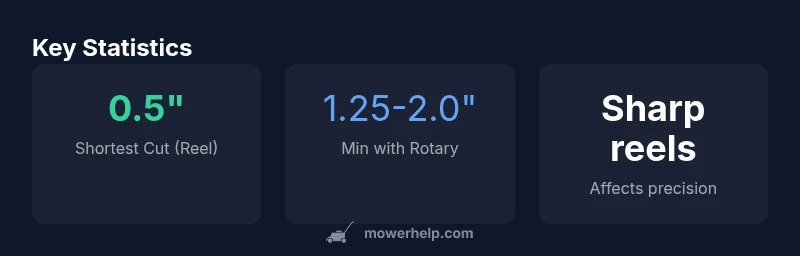
The shortest cut is typically achieved with a reel mower; some professional walk-behind reel systems can reach about 0.5 inches. Conventional rotary mowers generally minimum at 1.25–2.0 inches, and going lower risks scalping. For the absolute shortest look, use a sharp reel blade, set the height to the model’s minimum, and maintain consistent mowing technique.
What lawn mower cuts the shortest means for your lawn
When homeowners ask what lawn mower cuts the shortest, the answer hinges on mower type, blade design, and maintenance. In practice, the shortest cut is achieved by reel mowers. These blade systems cut grass between a fixed bedknife and the reel, producing a scissor-like slice that leaves a very even finish. According to Mower Help, reel mowers can achieve approximately 0.5 inches if you have a model with a low setting and properly sharp reels. By contrast, most rotary mowers, including gas-powered and electric models, bottom out around 1.25 to 2.0 inches in typical residential configurations, and attempting to push below that range often causes scalping. For lawns that require a true ultra-short look, you may choose a reel mower for the final pass or employ turf prep tools that produce a consistent height before mowing. The key takeaway is that the shortest cut is not a universal feature; it depends on the equipment type and how you use it.
Reel mowers: the shortest-cut specialists
Reel mowers are designed to slice grass rather than shear it, which yields a naturally shorter, cleaner finish when tuned correctly. The cutting action is a true scissor cut, which minimizes tearing and leaves clippings at a uniform height. The minimum height on typical reel models hovers around 0.5 inches, with some premium or specialized models dipping slightly lower. Maintenance matters here: sharp reels and a properly aligned bedknife ensure a consistent, even surface across the entire pass. In real-world use, a sharp reel can maintain short height longer than a dull blade on a rotary mower, especially on tender turf that bruises easily.
Rotary vs reel: how low can each go
Rotary mowers—gas or electric—offer broad versatility and easy operation, but their minimum cut height is generally higher. Most residential rotaries cut at 1.25–2.0 inches, and attempting to go lower can create scalping, ruts, or excessive blade chatter. For people who want the shortest possible finish with minimal effort, a reel mower is typically the better option. However, rotary mowers excel at speed and large-area coverage; if you need a short cut on uneven terrain, you may adjust expectations and use a two-pass approach: a slightly higher first pass to even the turf, followed by a second pass at the minimum height. The choice depends on lawn size, terrain, and your tolerance for extra maintenance.
How to achieve the shortest cut safely
To achieve the shortest, safest cut, follow these steps:
- Check your model’s minimum height setting and confirm it supports a very low cut without scalping.2) Sharpen the reel blades or replace the bedknife when you notice tearing or poor shearing.3) Set the cutting height to the model’s minimum and test on a small patch before a full pass.4) Mow dry grass and avoid damp conditions that can cause clumping or blade resistance.5) Use a consistent mowing pattern to prevent uneven scuffing.6) Maintain stable speed; rushing increases the risk of scalping and inconsistent height.
Maintenance to keep the cut short
Short, precise cuts require regular upkeep. Keep reels sharp with proper sharpening tools designed for reel mowers. Align the bedknife with the reel blades to ensure clean shearing. Clean under the deck to prevent grass buildup that raises blades at the cut line. Lubricate pivot points as recommended by the manufacturer and check wheel alignment to avoid height drift during a pass. Finally, store properly to prevent rust and ensure the next mowing session starts from a true baseline.
Factors that influence minimum cut height
Several variables determine how short you can cut effectively:
- Grass type and growth rate: dense, thick turf resists ultra-short cuts more than fine grasses.
- Soil moisture and compaction: soft, moist soil can scalp more easily when height is minimal.
- Grass height at mowing time: tall turf often needs a higher initial pass before a final short pass.
- Equipment condition: sharp reels, well-adjusted bedknife, and clean decks are essential for a clean, short cut.
- Weather and season: dry, cool periods typically yield better short cuts than hot, drought-stressed conditions.
Common mistakes and how to avoid them
Common mistakes include trying to chase a too-short cut too soon after a build-up of thatch or detritus, using a dull reel, and ignoring deck cleanliness. Avoid setting the height below the model’s recommended minimum. Test on a small area, observe for scalping, and adjust gradually. Also, avoid mowing when grass is wet or muddy—this can obscure height and produce uneven results.
When to stop chasing the shortest cut
While a very short cut looks pristine, it isn’t always ideal for every lawn. Ultra-short cuts can stress certain grasses, encourage weed establishment, or reduce drought tolerance. If you notice increased soil exposure, leaf scorch, or a thin, patchy lawn after repeated short passes, ease back to a higher setting and alternate with longer passes to maintain turf health.
Quick-start checklist
- Confirm your mower’s minimum height and ensure it supports a very short setting.
- Sharpen reels or replace bedknife; ensure proper alignment.
- Mow on dry days with even terrain; avoid damp, uneven soil.
- Use a single, straight mowing pattern and avoid overlapping aggressively.
- Regularly inspect and clean under the deck to prevent height drift.
Minimum cut height by mower type
| Mower Type | Typical Min Cut Height | Key Pros | Key Cons |
|---|---|---|---|
| Reel mower (manual) | 0.5 inches | Closest cut, quiet | Requires physical effort |
| Walk-behind reel model | 0.5-0.75 inches | Precise cut, low noise | Maintenance-heavy |
| Rotary mower (gas/electric) | 1.25-2.0 inches | Easy to use, fast coverage | Higher risk of scalping at short heights |
| Riding/Zero-turn | 1.5-2.5 inches | Even large-area coverage | Not ideal for tight spaces |
Got Questions?
Which mower cuts the shortest?
Reel mowers typically deliver the shortest cut, especially when blades are sharp and height is set to the minimum permitted by the model.
Reel mowers usually cut the shortest grass, especially when tuned and set to the minimum height.
What is the minimum height for a reel mower?
The minimum height depends on the model, but many reel mowers offer around 0.5 inches as a practical lower setting.
Typically about half an inch.
Can a gas-powered rotary mower cut as short as a reel mower?
Generally no; rotary mowers are not designed to cut as short as reel mowers without risking scalping.
Rotary mowers usually can't cut as short as reels.
How do I maintain a reel mower for short cuts?
Sharpen the reels, adjust the bedknife, keep the deck clean, and lubricate moving parts to maintain a crisp, short cut.
Keep the reel sharp and the height set.
Do grass type or moisture affect the shortest cut?
Yes. Stiff or tall grass, dry conditions, and soil moisture can influence how short you can cut safely; adjust height accordingly.
Grass condition changes the cut height.
“Reel mowers consistently deliver the shortest cut when properly tuned. The key is sharp reels and careful height adjustment.”
The Essentials
- Choose a reel mower for the shortest cut when space allows
- Keep blades sharp and height set to the model minimum safely
- Expect rotary mowers to require higher minimum heights
- Regular maintenance ensures consistency and prevents scalping