How to Fit Lawn Mower Pull Cord
Learn how to fit a lawn mower pull cord with a clear, step-by-step approach. Tools, safety tips, and troubleshooting for reliable starting and longer cord life.


To fit the lawn mower pull cord, you’ll re-tread the cord through the recoil housing, install a new handle if needed, and set the length to the original spec so the starter engages properly. Gather tools, measure the cord, and follow the step-by-step guide to thread, knot, and test the pull cord before reassembly.
Why a proper pull cord fit matters
A correctly fitted pull cord is the backbone of reliable starting. When the cord length is off or the path through the recoil is misrouted, you’ll experience hard starts, repeated rewinds, or a cord that refuses to retract. According to Mower Help, taking the time to size and thread the cord correctly prevents common starting issues and extends the life of the recoil and spring. In this guide we’ll unpack why length, routing, and knot strength matter, and how small setup mistakes can cascade into bigger repairs later on. By understanding the mechanics—how the cord winds, where it seats in the pulley, and how the handle attaches—you’ll gain confidence to diagnose and fix cord-fit problems without guessing.
Symptoms of a misfit cord
- The cord doesn’t retract fully after a pull
- the handle feels loose or wobbly
- the cord frays where it enters the housing
- resistance or grinding when you pull the cord
These signs point to a cord that is too long, too short, or not threaded correctly. Addressing these issues early avoids repeated starts and protects the recoil mechanism from unnecessary wear. Remember, a properly fitted cord improves starting reliability and reduces the risk of spring damage over time.
Materials and safety basics to prepare
Before you begin, make sure you have a clean workspace, good lighting, and a plan to manage small parts. Wear gloves to protect your hands from sharp edges inside the recoil housing, and disconnect power sources when applicable (gas mowers unplug the spark plug boot; electric mowers should be unplugged or battery removed). Having the right cord length and a secure knot are the core goals of this task. A tidy work area helps you keep track of screws, washers, and the cord end so nothing gets lost during reassembly.
Understanding cord routing and the recoil assembly
The pull cord threads from the handle, through the housing, and winds around the starter pulley. If the cord skips the pulley or sits on the wrong groove, it will not retract properly, causing jams or misfeeds. Inspect the recoil housing for cracks or wear; a compromised housing can alter cord alignment. Gently move the pulley by hand to feel for smooth rotation and listen for any grinding sounds that indicate a damaged spring or a bent pulley. A sound, well-aligned cord path is essential for reliable starts.
Real-world considerations for cord length and material
Cord length should be matched to the original fit; do not rely on memory for a precise measurement. If you don’t have the original cord, measure the distance from the handle hole to the housing with the cord fully extended, then replicate the tension you feel when the handle is at full extension. Use a round, braided nylon or similar recovery cord designed for recoil starters, not a generic rope. The cord diameter should fit the housing’s guide slots and the pulley groove to prevent snagging or fraying.
Putting it together: goals for a successful fit
Your end state should be a cord that - retracts cleanly when released, - extends smoothly to allow a full, tensioned pull, and - sits securely in the handle with a solid knot. If you encounter resistance, re-check the routing and knot type. A small, secure knot keeps the cord from slipping when you pull, while a clean reassembly prevents loose parts from rattling during use. Following these principles reduces downtime and keeps your mower ready to tackle weekend yard work.
Quick troubleshooting steps if the cord still fails
- Recheck the knot: a slipping knot is a common cause of failure. Re-tie with two or three wraps for extra security.
- Confirm the handle is firmly attached: missing or loose handles can give a false sense of failure.
- Inspect the spring and pulley: a stretched spring, bent pulley, or cracked housing will require more extensive repair.
- Test under load: after reassembly, perform a controlled pull to verify engagement before finishing the project.
Tools & Materials
- Replacement pull cord (matched to original length)(Choose a cord compatible with recoil starters; length should replicate the original when fully extended)
- Screwdrivers (Phillips and flathead)(Used to open the recoil housing and remove fasteners)
- Needle-nose pliers(For gripping small parts and guiding cord through tight channels)
- Scissors or utility knife(Trim cord cleanly and remove frayed sections)
- Tape measure or ruler(Accurately measure cord length to match original)
- Small tray or container(Keep little screws and washers organized)
- Gloves(Protect hands from sharp edges inside the housing)
- Lubricant (light oil) optional(Use sparingly if the spring feels dry or stiff)
Steps
Estimated time: 30-45 minutes
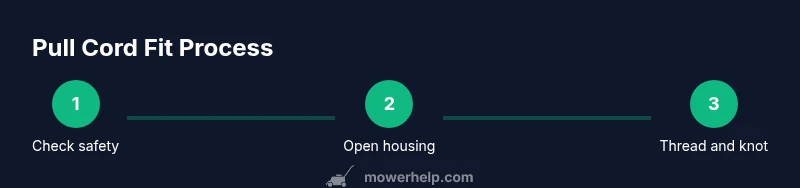
- 1
Disconnect power source and prepare
For gas mowers, remove the spark plug boot to prevent accidental starting; for electrics, disconnect the battery or unplug the unit. This ensures you won’t accidentally engage the engine while you work.
Tip: Use a spark plug wrench; it protects the plug and boot from damage. - 2
Open the recoil housing
Remove screws or clips holding the housing together and gently lift the cover to expose the pulley and the cord entry points. Keep track of fasteners so you can reassemble correctly.
Tip: Lay loose parts on a magnet tray to avoid losing tiny components. - 3
Inspect the cord and pulley
Check for worn cord, fraying, or a damaged pulley groove. If the pulley shows wear or the cord is deeply frayed, replace both to restore smooth operation.
Tip: If you see cracks in the housing, consider replacing the entire unit. - 4
Measure and cut the new cord
Measure the extended length of the original cord and cut the replacement to match. Ensure you’re leaving enough length for a secure knot and proper handle attachment.
Tip: Always cut a little longer first and trim later if needed. - 5
Thread the cord through the housing and pulley
Feed the cord from the handle side through the handle hole, into the housing, and around the starter pulley groove. Ensure the cord sits in the pulley groove without crossing over itself.
Tip: If the cord binds, stop and recheck the routing path. - 6
Attach the handle and secure the knot
Thread the cord end through the handle and tie a strong knot (double overhand or square knot) to prevent slipping. Trim excess cord near the knot carefully.
Tip: A two-wrap knot reduces the risk of loosening during pulls. - 7
Reassemble and test the system
Reinstall the recoil cover, tighten all fasteners, and slowly pull the cord to verify smooth recoil and engagement. If the cord binds or doesn’t retract, reopen the housing and check routing.
Tip: Test several light pulls before trying a full-start attempt.
Got Questions?
Should I replace the entire recoil assembly if the cord is intact but the housing is damaged?
If the housing is cracked or the spring fights when you pull, replacing the recoil assembly is usually the best long-term fix. A damaged recoil can cause repeated cord problems even after a new cord is fitted.
If the housing or spring is damaged, the safest fix is to replace the recoil assembly rather than trying to patch it.
Can I use any cord for a fit?
Use a cord designed for recoil starters with the appropriate diameter and strength. A mismatched cord can wear the pulley or fail to retract correctly, causing more issues.
Stick to a cord made for recoil starters and match the diameter to the pulley groove.
How long does the process take in a typical setup?
For most homeowners, completing the fit and test can take around 30-45 minutes, assuming no parts need replacement beyond the cord.
Most people complete the job in about half an hour to an hour, depending on hardware access.
What signs indicate the cord is too long or too short?
If the handle pulls out with excessive slack or the cord barely retracts, the length is likely off. Re-measure against the original length and adjust accordingly.
If there’s slack or no retraction, re-check the length and routing.
Is testing optional after reassembly?
Testing is essential. Perform multiple controlled pulls with the blade and engine off to confirm the cord retracts smoothly and engages the starter properly before using the mower.
Always test the recoil before putting the mower back to work.
Watch Video
The Essentials
- Match cord length to original for reliable engagement
- Ensure correct cord routing through the pulley
- Secure a strong knot to prevent slippage
- Test the recoil before finishing reassembly