How to Replace Lawn Mower Pull Cord
Learn how to replace a lawn mower pull cord safely and efficiently. This guide covers tools, safety, cord selection, precise steps, and testing to restore easy starting without full recoil replacement.


Replace lawn mower pull cord by removing the recoil housing, cutting a fresh cord to length, threading it through the housing, and reassembling. Confirm the spring and pulley function before testing. This guide covers safety, measuring the cord, and testing the starter—without replacing the entire recoil. You’ll need a basic set of tools and a replacement cord compatible with your mower model.
Why replacing the pull cord matters
A worn or frayed pull cord can make starting a mower a frustrating chore. If the cord breaks, you may be left with a mower that won’t start at all, wasting your time and energy. Replacing the pull cord is one of the simplest and most cost-effective fixes you can tackle as a DIY homeowner. According to Mower Help, replacing the cord is a practical option that preserves the existing recoil starter rather than replacing the whole unit. This keeps downtime to a minimum and helps you stay on top of yard work. Before you begin, assess whether the cord is worn, the spring retracts smoothly, and the housing screws are intact. If the spring is kinked or the pulley shows rust, replacement might involve more than the cord. In many cases, a quick check will reveal if you’re dealing with a cord issue that you can fix with the steps in this guide.
Tools and safety prerequisites
Before touching the mower, gather the following tools and safety gear. A replacement pull cord compatible with your model is essential. A basic screwdriver set, needle-nose pliers, and a utility knife or scissors are commonly needed. Safety gloves and eye protection reduce the risk of cuts or snapped cords during disassembly. Keep a small tray or labeled container to hold screws and small parts so nothing gets lost. Finally, a camera or note-taking method helps you remember the cord routing for reassembly. Remember, you are working near a spark plug and moving parts; never skip safety gear or step-by-step preparation.
How the pull cord and recoil starter work
The pull cord connects to the recoil starter, which uses a spring-loaded mechanism to wind the rope back after each pull. When you yank the cord, the pulley turns the engine’s flywheel, creating the compression needed to start. If the cord frays, breaks, or the spring becomes weak, starting becomes difficult or impossible. Understanding this mechanism helps you diagnose: is the problem the cord itself, the spring tension, or the pulley path? Most common issues involve a snagged cord, a misrouted line, or a wound spring that needs gentle guidance during reassembly.
Determine the right replacement cord
Cord compatibility matters for performance and safety. Start by checking your mower’s manual or the model plate for cord specifications. If you can’t locate the exact lengths, remove the old cord (carefully) and measure its overall length and the diameter. Take the old cord to a hardware or mower parts store to match the diameter and recommended material. Use a cord that matches the original path around the pulley and anchor point. If the old cord has worn ends or a frayed sheath, replace the entire cord assembly rather than trimming the old piece. The goal is a snug fit that rewinds reliably without snagging on the housing or screws.
Step-by-step overview before disassembly
Plan your work to minimize time and prevent lost parts. Clear a clean workspace large enough to lay out screws and small components. Disconnect the spark plug wire to prevent accidental starts, and remove the mower’s fuel if you’re comfortable doing so. Take photos or make notes of how the cord is routed before you begin. Label screws and small parts and keep them in a tray. If your model uses a one-piece cover, remove it carefully and set it aside. This preparation reduces surprises once you start disassembly.
Step-by-step replacement overview (high-level)
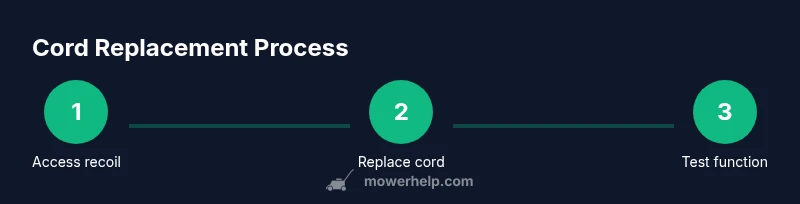
This section provides a concise preview of the actions you’ll perform in the detailed steps that follow. You will access the recoil starter, remove the old cord, measure and cut a replacement cord to the proper length, thread the new cord through the housing and pulley, re-wind the spring, reassemble the cover, and test the starter. Each task is performed with careful attention to alignment and tension to ensure reliable operation without damaging other components.
Maintenance tips to extend cord life
To extend the life of your pull cord, store the mower in a dry, shaded area to minimize sun damage to the rope and housing. Avoid yanking the cord with excessive force; instead, pull smoothly to prevent fraying and reduce shock on the recoil spring. Periodically inspect the cord for wear, especially at the entry and exit points. Keep the recoil cover clean and free of dirt, grass, and debris that can grind into the cord path. If you notice frequent fraying, consider replacing the cord sooner rather than later to avoid a sudden break during mowing.
When to replace the entire recoil starter vs cord
Cord replacement is often suitable when the cord is frayed or broken but the recoil mechanism and spring function well. If you observe a sluggish rewind, a stuck pulley, a compromised spring, or obvious damage to the housing, it may be safer and more effective to replace the entire recoil starter. In some models, the cord and the starter are integrated; in those cases, a full replacement is typically more economical than attempting a partial repair. Always assess cost, complexity, and safety when deciding which path to take.
Tools & Materials
- Replacement pull cord(Choose a cord that matches your mower model’s diameter and length; bring old cord for comparison if possible.)
- Screwdriver set(Phillips and flat-head sizes as needed; magnetized driver helps keep screws from dropping.)
- Pliers (needle-nose)(Useful for guiding the cord and handling small parts.)
- Safety gloves(Protect hands during disassembly and winding the spring.)
- Safety glasses(Prevent debris from flying toward eyes when the spring releases.)
- Utility knife or scissors(Trim the replacement cord ends cleanly and safely.)
- Small tray or magnetic tray(Keep screws and small parts organized during disassembly.)
Steps
Estimated time: 60-90 minutes
- 1
Disconnect spark plug and access recoil
First, locate the spark plug boot and disconnect it to prevent accidental starting. Move the mower to a clean workspace and remove any shields or guards necessary to expose the recoil housing. This step reduces the risk of injury and makes the rest of the process smoother.
Tip: Take a photo of the setup before removing parts to aid reassembly. - 2
Remove recoil housing screws
Use the appropriate screwdriver to remove the screws holding the recoil housing in place. Keep screws separated by location so you can reassemble correctly. Some models use clips; gently release any clips with a small flat-head screwdriver.
Tip: Work slowly and keep track of each screw; misplaced screws can damage the housing or misalign the rope path. - 3
Lift the recoil and identify cord path
Carefully lift the recoil starter assembly to reveal the cord’s entry points and the path around the pulley and spring. Do not let the spring snap back; keep tension controlled as you examine the rope’s routing.
Tip: Hold the pulley with one finger to prevent it from turning unexpectedly. - 4
Remove old cord and spool
Detach the old cord from its anchor point and carefully remove the spool from the housing. Note the orientation of the spring and how the cord threads around the pulley. If the cord is broken, you may need to unwind the spool more fully to access the anchors.
Tip: If the spring is stubborn, do not pry aggressively; recheck for additional fasteners. - 5
Measure and cut replacement cord
Compare the old cord to your replacement and cut the new cord to the correct length. Ensure the cut ends are clean to prevent fraying. A cord that’s too long or too short can cause binding or insufficient recoil.
Tip: Leave a small extra length for tying anchor knots; you can trim later if needed. - 6
Thread new cord through housing
Insert the cord through the entry holes and around the pulley as required, guiding it to the anchor point. Watch for kinks and ensure the rope sits in the groove properly. Secure the end with a sturdy knot designed to withstand repeated pulls.
Tip: Double-knot the end and test the knot by tugging firmly before reassembly. - 7
Wind the spring and reassemble
Gently wind the recoil spring as you guide the new cord toward the exit; reattach the spool and secure the housing. Reinstall screws, replace any shields, and ensure there’s no binding when the cord is pulled.
Tip: Do not over-wind the spring; it should spring back smoothly with moderate tension. - 8
Test and finalize
Reconnect the spark plug boot and perform a careful test pull away from the mower to confirm proper operation. Recheck for any snagging or misrouting during the first few tries, then reinstall the exterior covers.
Tip: If the cord binds, reopen the housing and verify the cord path and anchor knot.
Got Questions?
Can I replace only the cord if the recoil starter is still good?
Yes, if the recoil mechanism and spring function properly and the pulley path is undamaged.
Yes, you can replace just the cord if the recoil is in good condition.
How do I know the correct replacement cord length?
Refer to the mower manual or measure the old cord and compare to the new one; ensure the length allows full wind without slack.
Check the manual or measure the old cord to match the correct length.
What safety steps should I take during replacement?
Disconnect the spark plug, wear gloves and eye protection, and work in a clear area to avoid loss of small parts.
Always disconnect the spark plug and wear safety gear before starting.
Is it normal for the pull cord to rewind slowly after replacement?
If the rewind feels sluggish, inspect the cord path and ensure the spring is wound correctly and not binding.
If it rewinds slowly, check the path and spring tension.
When should I replace the entire recoil starter assembly?
Replace the full recoil starter if the spring is damaged, the pulley is warped, or reassembly does not restore proper function.
If the spring or pulley is damaged, consider replacing the whole starter.
Can I reuse the old hardware during reassembly?
Only reuse screws and components that are undamaged and fit securely; replace any stripped or bent fasteners.
Reuse hardware only if it’s in good condition and fits securely.
Watch Video
The Essentials
- Verify cord and spring condition before replacing.
- Use proper cord length and diameter for your model.
- Follow safe disassembly practices and keep parts organized.
- Test the recoil thoroughly before finalizing.
- Consider full recoil starter replacement if spring or pulley is damaged.