How to Stop a Lawn Mower Safely: A Step-by-Step Guide
Learn the exact steps to stop a lawn mower safely, including engine shut-off, blade disengagement, cooling, and post-stop checks. This practical guide helps homeowners and DIY enthusiasts prevent injuries and protect the mower.


This guide shows how to stop a lawn mower safely and quickly. You'll learn the exact shut-off steps, where to disengage the blade, and how to perform post-stop checks to prevent damage or injury. Have your manual handy and wear gloves for handling hot components. This quick start helps beginners and seasoned DIYers alike to avoid common hazards and extends mower life.
Why Stopping a Lawn Mower Safely Isn’t Optional
According to Mower Help, shutting down a mower properly protects you from burns, blade contact injuries, and unexpected starting failures. The engine and blade are hot after use, and a careless stop can fling debris or damage the blade. This section explains the core reasons to adopt a consistent shutdown routine: personal safety, equipment longevity, and prepping the mower for storage. When you learn how to stop lawn mower correctly, you reduce the risk of kickback and ensure the fuel system remains in good condition. The Mower Help Team emphasizes that a deliberate stop guides the mower to a safe rest position, preventing wear on the drive belt and carburetor components. Remember: every mower model has its own sequence in the manual, but the general principles are similar and transferable.
Immediate Engine Shutdown: Step One
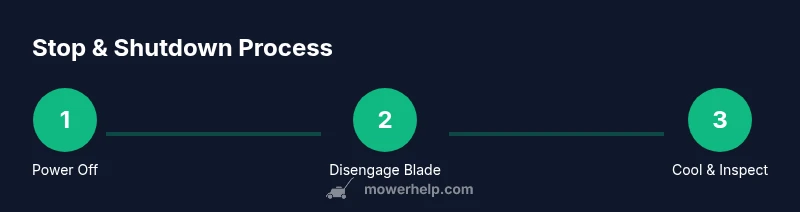
To stop a mower quickly after you finish cutting, pull back on the throttle to the idle position, then turn the ignition off or press the stop/kill switch, depending on your model. If you’re using a blade-control lever, release it to disengage the blade. The key here is to avoid sudden blade torque that could fling objects or injure your leg. While the engine slows, tilt the mower only if you’re sure the exhaust is cool and the fuel line won’t spill. The steps here are designed to minimize engine strain and prevent a stalled engine next time you start.
Blade Disengagement and Deck Guard: Safe Handling
Disengaging the blade is a critical safety step. If your mower has a blade-control lever, ensure it is in the neutral or off position before performing any post-cut checks. Remove your gloves and approach the deck from the side to avoid loose grass or debris. If you need to tilt the mower for transport, do so with care: keep hands away from the underside, and never tilt more than 15 degrees to prevent fuel leaks. The blade engagement mechanism wears over time and should be inspected after every shutdown to catch signs of wear early.
Stop Methods by Fuel Type: Gas vs. Electric
Gas-powered mowers usually require turning the ignition off and enabling the choke to stop fuel flow, followed by waiting for the engine to cool. Electric mowers suspend power with a switch that cuts current to the motor. If your electric mower uses a battery, remove the key or switch off the controller before unplugging. The main idea is to remove power from both the engine and the blade to avoid accidental starts. Each model differs, so consult the owner’s manual for model-specific steps.
Stopping Mid-Operation: What to Do if You Lose Power
If you encounter a stall or power loss, keep a firm stance and avoid sudden movements. For gas models, move the throttle to idle, switch off the ignition, and pull the spark plug cap loose only after the engine stops rotating. For electric models, press and hold the stop button until the motor ceases. Do not reach into the deck or near the blade while it’s spinning. Once it’s safe, inspect for clogged air intakes or blocked vents that might have caused the stall.
Handling Hot Surfaces and the Spark Plug
Even after shutdown, the exhaust and muffler remain hot for several minutes. Do not touch metal components with bare hands until they cool. If you need to inspect the spark plug, wait at least 5–10 minutes for cooling. When you reinsert the spark plug, ensure the gasket seat is clean and the gap is correct. Mower Help highlights that a hot or damaged plug can cause hard starting later, which means you should check gaps with a feeler gauge and replace worn plugs.
Post-Stop Inspections: Cleaning and Maintenance
Once the engine is cool, wipe down the deck, remove grass buildup, and check for obvious signs of damage. A clean mower reduces the risk of fire and improves airflow. Inspect belts for cracks, inspect recoil springs, and ensure the air filter isn’t clogged. If you notice fuel odors or leaks, address them before the next use. Post-stop maintenance is easier than you think and can be done in 10–15 minutes.
Safe Storage After Stopping
Before storing, ensure the mower is cool, refuel if needed in a well-ventilated area, and store upright if the design allows. Drain the fuel tank if you won’t use the mower for several weeks to reduce evaporation and spills. Disconnect the spark plug boot to prevent accidental startups. Mower Help’s storage tips emphasize labeling storage areas and keeping it away from children and pets, with a quick visual check to ensure no loose parts remain.
Troubleshooting: When Stop Steps Don’t Work
If the engine won’t shut off using the standard method, first check for a stuck blade-control lever or faulty kill switch. Then inspect the ignition system and battery connections in electric models. For fuel-driven engines that won’t stop, you may need to contact a professional technician. Do not try to forcibly disconnect wiring or remove safety components, which can create additional hazards and violate safety standards.
When to Seek Professional Help
If you notice persistent shutdown issues, unusual fumes, or degraded safety features, stop using the mower and consult a certified technician. A professional can diagnose weak ignition coils, defective kill switches, or hold-up valves. Regular maintenance services can prevent unexpected stops and ensure the mower remains compliant with local safety regulations. The Mower Help team suggests scheduling professional tune-ups at least once per season.
Authority Sources
For authoritative guidance on safe lawn mower shutdown and maintenance, consult the following sources: • U.S. Consumer Product Safety Commission (CPSC): https://www.cpsc.gov • Occupational Safety and Health Administration (OSHA): https://www.osha.gov • University Extension on lawn mower safety: https://extension.illinois.edu
Tools & Materials
- Owner's manual(Model-specific shutdown sequence and safety warnings)
- Gloves(Protect hands when handling hot components)
- Rag or towel(Wipe deck and spills during shutdown)
- Flathead screwdriver(If you need to access screws near the spark plug)
- Wire brush(Clean debris around cooling fins)
- Multimeter(Check electrical continuity if needed)
Steps
Estimated time: 8-12 minutes
- 1
Move to a safe area and prepare
Position the mower on level ground away from obstacles, shut off the engine using the ignition or stop switch, and engage the parking brake if equipped. Ensure you’re wearing gloves and eye protection. This safeguards you before any disengagement actions.
Tip: Always start from a stable, flat surface. - 2
Throttle to idle and stop engine
Gently move the throttle to the idle position, then switch off the ignition. If your model uses a kill switch, press it firmly until the engine dies. Waiting a few seconds allows the blade to stop completely.
Tip: Don’t rush the kill switch—let the blade come to a complete stop. - 3
Disengage blade if applicable
Release the blade-control lever or disengage the blade to separate the blade from the motor drive. Use the deck guard to protect hands while performing inspections.
Tip: Never attempt maintenance with the blade spinning. - 4
Cool down and inspect exterior
Allow the exhaust and engine to cool for 5–10 minutes. Wipe off grass and debris with a rag to prevent buildup, which can be a fire hazard later.
Tip: Cooling time reduces burn risk when handling components. - 5
Check spark plug and air filter
If accessible, inspect the spark plug and air filter for dirt or wear. Replace worn parts; this prevents hard starts and improves overall safety.
Tip: Replace with the correct gap for your model. - 6
Inspect belts and cooling fins
Check belts for cracks and cooling fins for debris. Clean as needed to prevent overheating and ensure smooth restart next time.
Tip: A clean belt reduces startup strain. - 7
Prepare for storage or transport
If storing, switch off gas supply and consider drainage if storing long-term. Disconnect spark plug boot to prevent accidental starts during storage.
Tip: Store in a dry, ventilated area.
Got Questions?
What is the first step to stop a lawn mower safely?
Turn off the engine using the ignition or stop switch, then disengage the blade if applicable. This sequence reduces blade contact hazards.
First, switch off the engine and disengage the blade, if required.
Why won’t my mower blade disengage after shutdown?
Check the blade-control lever and linkage for stiff or stuck movement. Worn components may require replacement or professional service.
Check the blade lever and linkage; replace worn parts if needed.
Is it safe to store a mower immediately after stopping?
Store only after the engine cools and fuel system is addressed. Disconnect the spark plug boot to prevent accidental starts.
Yes, but only after it cools and you disconnect the spark plug boot.
What should I inspect after stopping?
Inspect belts, air filter, spark plug, and cooling fins for wear or debris. Clean and replace parts as needed to ensure ready for next use.
Inspect belts and filters and clean debris for readiness.
When should I contact a professional?
If shutdown problems persist, odd odors, or overheating occur, seek a qualified technician for diagnosis and safe repair.
If shutdown problems persist, consult a qualified technician.
Watch Video
The Essentials
- Shutdown steps reduce injury risk.
- Disengage blades before inspections.
- Cool-down time prevents burns and damage.
- Post-stop checks extend mower life.
- Consult a professional for persistent issues.