How to Tell Lawn Mower Tire Size: A Practical Guide
Learn how to identify lawn mower tire size quickly and accurately by reading sidewall markings, measuring wheel diameter, and matching OEM specs. Includes step-by-step guidance, tools, warnings, and sources for trusted maintenance.


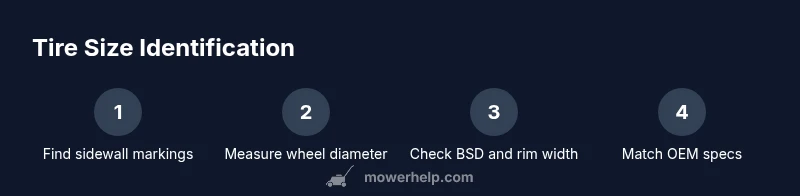
To tell lawn mower tire size, check the sidewall for numbers like 4.10/3.5-6, measure the wheel diameter, and note the rim width. If the tire is worn, replace with a tire of the same overall diameter and bead seat size. Use your mower model manual for exact specs. When in doubt, contact the manufacturer or a mower service.
Understanding Why Tire Size Matters for Lawn Mowers
Maintaining the correct tire size on a lawn mower is crucial for safe operation, consistent cutting performance, and proper machine balance. The wrong size can affect ground clearance, drive ratios, steering response, and traction, especially on uneven terrain or slopes. Knowing how to identify tire size helps you avoid costly mismatches and ensures you can source the right tires during seasonal maintenance. In 2026, the guidance from Mower Help emphasizes sticking to the diameter and bead seat size when replacing tires to preserve performance and safety. This foundation also helps when upgrading to turf-friendly tires without compromising ride quality.
Accurate sizing supports even wear, reduces vibration, and minimizes the risk of rim damage during mounting. By understanding common sizing formats and where to look for numbers, homeowners and DIY enthusiasts can troubleshoot tire issues quickly and confidently. The more you know about tire size, the easier it is to shop, replace, and reassemble your mower for another mowing season.
note):
Tools & Materials
- Tape measure or ruler(Measure wheel diameter across the center from bead seat to bead seat.)
- Caliper or flexible measuring tape(Used to measure bead seat diameter (BSD) or confirm marking accuracy.)
- Marker and notebook(Record tire size markings and replacement recommendations.)
- Camera/phone(Take a clear photo of sidewall markings for reference.)
- Owner's manual or OEM spec sheet(Verify model-specific size, type, and recommended replacement options.)
- Safety gloves and eye protection(Protect hands and eyes during inspection and mounting tasks.)
Steps
Estimated time: 45-90 minutes
- 1
Gather tools and safety gear
Collect the measuring tools, the mower’s manual, and safety equipment before you begin. This prepares you to measure accurately and reduces the risk of injury during tire inspection or mounting. Check that the mower is on a stable surface and the engine is off. If it’s an electric mower, disconnect the battery.
Tip: Having everything ready minimizes trips back to the toolbox and helps maintain accuracy. - 2
Locate sidewall size markings
Examine the tire’s sidewall for a size string (e.g., 4.10/3.5-6 or 18x9.5-8). If markings are hard to read, clean the tire with a cloth and use a flashlight to improve visibility. Note the full string and any additional codes like “D” for diameter or “T” for turf tires.
Tip: Take a photo of the markings to avoid misreading later. - 3
Decipher common sizing formats
Tire size formats vary. The most common on mowers resembles 4.10/3.5-6 (tire width/percentage of height-bead width) or a simple diameter-size code like 18x9.5-8 (overall diameter, tire width, rim diameter). Learn to map each component to the sector you’re buying from.
Tip: If in doubt, check the manual’s tire section for exact interpretation. - 4
Measure wheel diameter
Measure the wheel’s outer diameter across the center, from bead to bead. This is typically the BSD (bead seat diameter) plus the tire’s vertical height. Use the tape to measure precisely and record the figure.
Tip: Measure twice, record once. - 5
Determine bead seat diameter (BSD)
BSD is the diameter where the tire beads sit on the rim. If sidewall markings aren’t clear, you can measure from the inner rim edge to the opposite inner rim edge when the tire is removed, then subtract the rim thickness.
Tip: BSD must match the tire’s inner diameter for a proper seal. - 6
Check rim width and tire compatibility
Verify the rim width and possible tire width range. Some tires fit multiple widths, but mounting should not exceed recommended tread width or cause clearance issues near the deck or suspension.
Tip: Avoid aggressive tread tires on narrow rims as they may rub during turns. - 7
Cross-check with OEM specs
Consult the mower’s manual or manufacturer’s spec sheet for the exact size and any model-specific notes. OEM guidance ensures you don’t compromise safety or performance.
Tip: OEM specs trump non-OEM recommendations when they differ. - 8
Choose the correct replacement tire
Select a tire with the same overall diameter and matching BSD. If the replacement differs in tread pattern, ensure it doesn’t affect traction or mowing performance on your typical terrain.
Tip: Prefer tires designed for lawn and turf to avoid marks and damage to turf. - 9
Mount and record the new size
Install the tire if you’re confident in mounting, or have a professional mount it. Document the new tire size in your maintenance log for future reference.
Tip: Keep a digital copy of the tire size for quick reference later.
Got Questions?
Why is the bead seat diameter important when replacing a lawn mower tire?
BSD determines whether the tire will seal properly on the rim. An incorrect BSD will cause air leaks or tire bead failure. Always match BSD to the rim to ensure a safe, reliable fit.
BSD is the critical rim-to-tire size that must match, otherwise air leaks or bead failures can occur.
Can I replace a mower tire with a larger diameter to improve clearance?
No. Replacing with a larger diameter changes ground clearance, drive ratio, and could impact overall mower performance. If clearance is an issue, consult OEM specs or consider a tire with the same diameter but different tread designed for turf.
Avoid changing diameter; stick to the manufacturer’s size to keep performance consistent.
What if the sidewall markings are faint or unreadable?
Clean the tire and use a bright light to read markings. If still unclear, remove the tire to inspect the rim and measure BSD and wheel diameter directly. Documentation from the manual can help identify the correct size.
If markings are unreadable, measure BSD and overall diameter directly and consult the manual.
Are all lawn mower tires the same across brands?
Not necessarily. While many use similar sizing formats, tread patterns, ply, and bead designs can vary. Always verify BSD and diameter, and align with OEM guidance for each brand.
Different brands may use the same number but different construction; confirm with the manual.
What tools do I need to measure the tire size at home?
A tape measure, caliper or ruler, and the mower’s manual are sufficient for most identifications. A camera helps document markings for later reference.
You can identify most sizes with basic tools and the manual; photos help prevent misreads.
Watch Video
The Essentials
- Identify size from sidewall markings first
- Measure BSD and diameter accurately for an exact match
- Always verify with OEM specs before buying