Lawn Mower Tire Care: Replacement & Maintenance
Learn to inspect, inflate, and replace lawn mower tires to boost traction, extend mower life, and reduce downtime. This comprehensive guide covers tire types, wear signs, removal steps, safety tips, and maintenance practices for homeowners and DIY enthusiasts.


Goal: You will learn how to inspect, inflate, and safely replace a lawn mower tire with confidence. The guide covers tire wear signs, selecting compatible tires, checking proper pressure, seating the bead, and basic rim inspections. You’ll also see quick fixes for common punctures and practical maintenance tips to keep your mower rolling smoothly.
Why tire condition matters
Healthy tires are essential for traction, cut quality, and mower efficiency. Worn or damaged tires can cause uneven cutting, scalping, and poor maneuverability on slopes. They also increase the risk of flats during mowing and can stress the drive system. For push mowers and riding mowers alike, tires support weight, absorb shocks, and help maintain consistent blade contact with the grass. Regular tire checks help you catch issues early, avoiding unexpected downtime and expensive repairs. Start by inspecting sidewalls for cracking, peeling, or bulges; check tread depth for wear; and test for soft spots by pressing with your thumb. If you detect any of these signs or if your tires constantly lose air, plan a tire inspection before the next mowing session. For lawn care success, match the tire pressure to the owner’s manual specifications and to ground conditions. Underinflated tires increase rolling resistance and scorch the grass; overinflated tires reduce traction and increase ride harshness. Keep a tire pressure gauge in your toolkit and check tires when they are cool, ideally in the morning after they haven’t heated up from use.
Tire types and compatibility for lawn mowers
Lawn mowers use a few tire types, and compatibility hinges on size, tread, and rim interface rather than brand alone. Two common categories are pneumatic tires (air-filled) and tubeless, solid-like replacements. When selecting tires, you’ll want to confirm the overall diameter and width match the wheel hub, drive axle, and mower model requirements. Check the sidewall for the correct size code and compare it to your original tires or your mower manual. Consider tread pattern based on mowing conditions: smooth or semi-siped treads work well on flat lawns, while deeper tread can improve traction on uneven ground. Always verify that the tire’s bead seat and rim fit match your mower rim. Improper sizing or non-matching beads can lead to leaks or rapid wear. If you’re unsure, consult the mower’s manual or contact the manufacturer’s support line. Safety and compatibility come first to prevent unstable handling and uneven cut quality.
How to inspect tires for wear, punctures, and pressure
Begin with a visual inspection: look for sidewall cracks, cracks at the base of the tread, chunks missing, bulges, and signs of dry rot. A quick test by pressing the tread and sidewalls can reveal soft spots or split tires. Use a tire gauge to measure inflation; most lawn mower tires have a recommended range printed on the sidewall or in the manual. Inflate slowly to the recommended pressure, then inspect the bead seating by listening for a steady seal and checking for leaks with soapy water. If a puncture is present, assess the size and location. Small punctures in the tread may be repairable with a plug or patch, but sidewall damage usually requires tire replacement. While testing, ensure the mower is on a flat, stable surface and the ignition source is disabled for gas-powered units. After assessing, replace or repair only if it preserves safety and performance.
Step-by-step tire replacement process (overview)
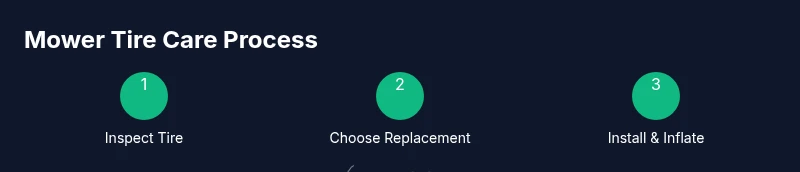
The following is a high-level overview of the tire replacement process. The detailed, step-by-step instructions appear in the dedicated STEP-BY-STEP section to avoid duplication and ensure safety. Key milestones include removing the wheel, deflating and separating the tire from the rim, inspecting the rim bead, installing a new tire, reseating the bead, inflating to the correct pressure, and reattaching the wheel to the mower. Throughout, pay close attention to rim integrity, bead seating, and the recommended torque for wheel fasteners. Poor bead seating or over-inflation are common causes of leaks and punctures after replacement.
Maintenance tips to extend tire life
To maximize tire life, practice proactive maintenance. Rotate wheels if your mower design allows, especially on riding mowers with multiple tires. Keep tires clean and free from debris that can hide cracks or wear patterns. Maintain correct pressure as per the manual, particularly when mowing on hills or soft soils. Use high-quality sealants or puncture-resistant inserts only if recommended by the mower manufacturer. When storing the mower for off-season, inflate tires to the recommended idle pressure and store on stands to avoid flat spots. Regularly inspect for signs of aging, such as sidewall perishing or tread separation, and address issues early.
Authority sources (useful for deeper learning)
For safety guidelines and best practices, consult official resources and university extension sites. Look up maintenance manuals and tire specifications from your mower’s manufacturer and trusted extension programs. These sources help verify recommended tire sizes, air pressures, and replacement recommendations. Public safety and maintenance standards can be found at government and university sites to ensure current, evidence-based guidance.
Tools & Materials
- Tire iron or wheel removal tool(Essential for prying tires off rims without damaging the rim.)
- Bead breaker or lever tool(Helps separate bead from rim when removing old tires.)
- Air compressor or manual inflator with gauge(Used to seat the bead and verify proper tire pressure.)
- Wrench or socket set for wheel nuts(Depends on mower model; ensure you have the correct size.)
- Replacement lawn mower tire or tire-tube kit(Match tire size to the mower’s wheel and axle specifications.)
- Soap solution or tire mounting lubricant(Helps the bead slide onto the rim with less resistance.)
- Gloves and eye protection(Personal protective equipment during tire work.)
- Rags or clean cloth(Clean rim and bead area before installation.)
Steps
Estimated time: 45-75 minutes
- 1
Prepare and safety-check the mower
Park on a flat surface, engage parking brake if available, disconnect spark plug wire on gas mowers, and unplug any power source for electric mowers. Confirm you have all tools and a replacement tire ready. Set the mower on blocks or a stable stand so the wheel is accessible without the engine turning over.
Tip: Always remove the spark plug wire first to prevent accidental starting. - 2
Remove the wheel from the mower
Loosen and remove wheel nuts or bolts. Lift the wheel away from the mower, keeping the axle steady to avoid bending the rim. If your model uses a quick-release, disengage it per the manual.
Tip: Take a photo of the wheel placement before removal to simplify reinstallation. - 3
Deflate and detach the tire from the rim
Release all air from the tire, then use a bead breaker or prying tool to separate the bead from the rim. Work carefully around the rim to avoid gouging the bead area. If your tire has a tube, deflate and remove the tube first.
Tip: Use soap solution to prevent pinching the bead when removing the tire. - 4
Inspect rim, bead, and new tire fitment
Check the rim for dents, cracks, or sharp edges that could cut the new bead. Inspect the new tire’s bead, sidewall, and overall condition. Confirm the new tire size matches the mower’s specifications and that the tread pattern suits your terrain.
Tip: If the rim is damaged, replace it before proceeding with a new tire. - 5
Install the new tire and seat the bead
Position the new tire onto the rim and work the bead over one side at a time. Use a bead seating lubricant or soapy water if needed to ease seating. Ensure the bead sits evenly around the rim and there are no kinks.
Tip: Take your time seating the bead to avoid bead damage; rushing can cause leaks. - 6
Inflate and verify bead seating
Inflate gradually to the recommended pressure while inspecting the bead for a proper seal. Check for leaks with soapy water around the bead and valve stem. If you see air escaping, reseat the bead and re-inflate.
Tip: Do not exceed the tire’s maximum pressure printed on the sidewall. - 7
Reinstall the wheel onto the mower
Slide the wheel back onto the axle, align mounting holes, and tighten lug nuts or bolts to the manufacturer’s torque specification. Reconnect any harnesses or quick-release if applicable and ensure the wheel spins freely without rubbing.
Tip: Use a torque wrench if your mower manual specifies a precise torque. - 8
Test the mower and check alignment
Lower the mower, perform a gentle test run on a flat surface, and listen for any unusual noises or vibrations. Check that the tire tracks straight and that there is no tramp or pull to one side. Recheck tire pressure after the test run.
Tip: Make a quick note of any misalignment and adjust toe or alignment as needed per the manual.
Got Questions?
How often should I replace lawn mower tires?
Replace tires when tread is worn to the point where grip is compromised, or if sidewalls show cracks, bulges, or repairable punctures exceed the tire’s repair limits. If you notice frequent air loss or poor traction, plan a replacement soon.
Tires should be replaced when wear or sidewall damage affects performance or safety, or if air loss becomes persistent. Check them at least once per mowing season.
Can I fix a punctured mower tire instead of replacing it?
Small tread punctures away from the sidewall may be repairable with a plug or patch, but punctures in the sidewall typically require tire replacement. For tubed tires, replacing the tube may be an option if the tire itself is intact.
A puncture near the tread can sometimes be repaired, but sidewall punctures usually mean replacing the tire.
What is the typical tire pressure for a push mower?
Refer to the mower’s manual or the tire sidewall for the recommended pressure. Most push mowers use tires in the range of 10–20 psi, depending on tire size and load. Check when tires are cold.
Look up the specific psi on the tire or in your manual; don’t guess based on similar mowers.
Are tubeless mower tires common for walk-behind mowers?
Many walk-behind mowers use tubeless tires, but some models still require inner tubes. Confirm your wheel type before purchasing tires and valves.
Tubeless tires are common, but always verify your mower’s wheel type before buying.
Will I need to replace rims or axles along with tires?
Rims and axles should be inspected for damage during tire replacement. If rims are bent, cracked, or corroded, replacing the rim may be necessary to ensure a safe seal and proper alignment.
Check the rim for damage before installing a new tire; a damaged rim can cause leaks and unsafe handling.
What’s the typical cost range for mower tire replacement?
Costs vary by tire size and model, but expect a range based on tire type and whether you replace a single tire or all tires on a riding mower. Always factor the cost of rim inspection and mounting as part of the project.
Prices depend on tire size and type; plan for inspection and mounting costs when budgeting.
Watch Video
The Essentials
- Inspect tires regularly to catch wear early
- Always match tire size to the mower’s requirements
- Ensure proper bead seating to prevent leaks
- Inflate to the recommended pressure, cool and before mowing
- Test drive to verify straight tracking and safe operation