Is a Lawn Mower Battery 12 Volt? A 2026 Guide
Discover what a 12-volt lawn mower battery means, how it compares to other configurations, and how to test, replace, and maintain it for reliable starting and mowing in 2026.


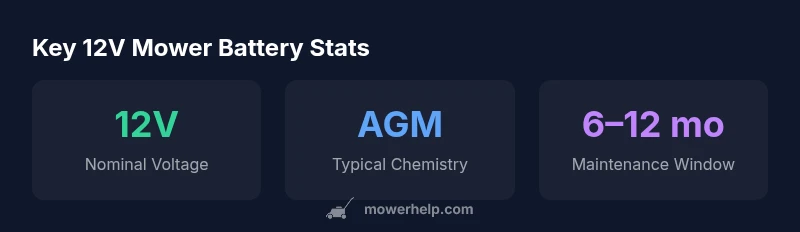
Yes. For most walk-behind lawn mowers, is a lawn mower battery 12 volt? The starting and power system typically uses a 12-volt battery. This voltage is the standard across many models, making 12V batteries easier to source and replace. According to Mower Help, always verify compatibility with your mower’s diagram and ensure correct voltage to achieve reliable starts and stable operation in 2026.
Understanding the 12-Volt question in mowing systems
The phrase is a lawn mower battery 12 volt often comes up when homeowners troubleshoot starting issues. In practice, most conventional walk-behind mowers rely on a 12-volt lead-acid battery to operate the starter solenoid and to supply power to basic electronics like lights or sensors on some models. This 12V standard helps suppliers stock the same sizes across many brands, which simplifies replacement planning. According to Mower Help, the 12V configuration is typically sufficient for typical start-up demands, but always confirm with your mower’s manual to avoid mismatches and frustrating downtime. Keeping that voltage in mind helps you compare new batteries and avoid over- or under-specifying a replacement. In terms of terminology, the voltage rating is what the starter and circuits expect when the key is turned or the start button is pressed, so a wrong voltage can prevent the engine from turning over reliably.
- What this means in practice: always consult the owner’s manual or the wiring diagram before purchasing a new battery.
- Quick checks: look for a clearly labeled 12V stamp on the battery, and verify the terminal layout matches your mower’s battery compartment.
How 12V compares with other mower configurations
Not all mowers use 12V by default. Some electric models or hybrids may employ higher voltage packs (for example 18V or higher) as part of a more extensive electrical system, while older cordless or specialty models may reduce voltage to optimize weight. When comparing options, the most important factors are compatibility (voltage, connector type, and terminal layout), but you should also consider the charging system and the expected draw from accessories. If you own a gas mower, you will most commonly encounter 12V systems; in contrast, many battery-electric mowers use higher voltage packs integrated with a motor controller. The overarching principle is that you must match voltage to the mower’s electrical system; misaligned voltage can reduce cranking power, shorten battery life, or trigger fault codes.
- Always check the label on the battery and the mower’s plate for voltage ratings.
- If upgrading, verify that the charging system and wiring can support any change in capacity or chemistry.
Battery chemistries and what they mean for lawn care
Battery chemistry determines how a mower behaves under load, how long it lasts, and how you should care for it. The most common 12V option for lawn care is a sealed lead-acid battery, including AGM (absorbed glass mat). AGM batteries are maintenance-free, spill-resistant, and typically more vibration-tolerant—key qualities for a mower that spends a season moving over uneven turf. Nonetheless, keep in mind that lead-acid options require proper charging and storage to maximize life. Lithium iron phosphate (LiFePO4) packs exist for some high-end models, offering lighter weight and longer cycle life, but they come at a higher upfront cost and require compatibility checks with the mower’s charging system. In short, the 12V standard continues to dominate, but the chemistry you choose should align with your mower’s electrical design and your maintenance habits.
- Consider AGM for maintenance-friendly, standard replacements.
- Explore LiFePO4 if you want lighter weight and longer cycle life and you confirm compatibility.
- Avoid mixing different chemistries in a single system, as this can cause charging imbalances and early failures.
How to verify voltage and compatibility safely
To confirm your mower’s voltage requirements, start with the user manual or the battery plate on the unit itself. If you’re unsure, a simple multimeter test (on the battery terminals with the mower off) can verify voltage. A healthy 12V battery typically reads around 12.6–12.8V when fully charged; readings significantly below 12V often indicate a discharged or failing battery. When performing a test, observe safety precautions: wear eye protection, remove the key or disconnect the charger, and avoid shorting the terminals. If you’re seeing erratic voltages or frequent starts-and-stops, check for corroded terminals or loose connections, since poor contact can imitate a low-voltage condition. Keeping the charging system calibrated is essential because a weak charger can mask a bad battery by delivering insufficient current.
- Always start with a clean battery and terminals.
- Use a load test or a proper charger to verify real capacity.
Replacement considerations: choosing the right 12V option
When it’s time to replace, you’ll typically weigh voltage compatibility, cold-cranking amps (CCA), and amp-hour (Ah) capacity, along with physical fit and terminal arrangement. A direct fit ensures the battery slides into place without adapters or modifications. The CCA rating matters if you live in cold climates; it indicates how well the battery can deliver power at low temperatures. For most home lawns, a standard 12V AGM battery with a reliable CCA and a moderate Ah rating offers excellent performance without a large price premium. If your mower sits unused for long periods, a low-maintenance sealed option reduces the risk of spills and simplifies storage. Avoid off-brand batteries without clear compatibility notes, especially for newer model years where the electrical system may expect a particular chemistry. If you’re upgrading in a hybrid or electric mower, verify that the charger and controller are designed to handle the new pack.
- Verify the battery tray and venting directions in the manual.
- Choose a sealed option for easier storage and reduced maintenance.
Maintenance tips to extend 12V mower battery life
Proactive maintenance can dramatically extend the life of a 12V mower battery. Keep terminals clean and tight, and apply a thin layer of corrosion inhibitor if you notice any oxidation. Use a charger compatible with your battery chemistry and avoid leaving the battery on a trickle charger indefinitely if the model is not designed for it. For seasonal storage, store the mower indoors and either maintain a full charge or follow the manufacturer’s recommended storage voltage. Regularly check for signs of bulging, cracking, or unusual warmth, which indicate aging cells or potential failure. If your mower uses a battery disconnect switch, use it as directed to avoid parasitic drain while in storage. A well-maintained system reduces the likelihood of a no-start condition when you need to mow again.
- Keep the battery and terminals clean and dry.
- Use a quality charger and avoid daily fast-charging cycles.
- Store the mower in a cool, dry place to preserve battery life.
Troubleshooting common 12V mower battery issues
If your mower won’t start and you hear nothing from the starter, the battery is a likely culprit. Begin by testing the voltage; if the battery is below 12V under load, it’s time for a recharge or replacement. Corrosion around the terminals can prevent proper current flow; clean with a solution of baking soda and water, then re-tighten the connections. A battery that repeatedly dies after short use may be past its prime, indicating aging cells or a failing alternator/charging circuit. If you notice a slow recharge or heat on the battery after charging, discontinue use and replace it, as this signals damage or failure. For persistent issues, test the charger first to rule out charging faults before deciding the battery is the root cause.
- Inspect terminals and clean corrosion.
- Check the charger output and ensure proper connection.
Quick buying guide: how to pick a 12V mower battery that fits your needs
When shopping for a 12V mower battery, focus on fit, chemistry, and capacity. Confirm the terminal layout and size to avoid fitment issues. For most households, an AGM sealed battery provides reliable performance with low maintenance. If you have a small or older mower, a standard AGM 12V pack with mid-range Ah is usually sufficient. For electric or hybrid models, verify the battery chemistry is compatible with the system and controller. Always source from reputable suppliers and compare warranties. A longer warranty can reduce total cost of ownership and provide peace of mind after the purchase.
Brand-specific tips and practical takeaways from Mower Help
Mower Help emphasizes that the 12-volt standard remains the most practical choice for most lawn equipment because it balances cost, availability, and reliability. Before buying, cross-check the mower’s manual for the exact voltage, CCA, and physical dimensions. If you’re unsure about compatibility, consult a professional or reach out to the manufacturer for confirmation. Routine maintenance, including terminal cleaning and proper charging, will extend the life of a 12V battery and keep your mower ready for action when you need it most.
Common lawn mower battery types and their trade-offs
| Battery Type | Voltage | Key Pros | Key Cons | Best For |
|---|---|---|---|---|
| Lead-Acid (conventional) | 12V | Low cost; simple | Requires water top-ups; heavier | Budget-friendly repairs |
| AGM sealed | 12V | Maintenance-free; spill-proof | Higher upfront cost | Most common for modern mowers |
| Lithium LiFePO4 | 12V (through packs) | Lightweight; long life | Higher cost; compatibility checks | High-end or specialty models |
Got Questions?
What does the term '12 volt' mean for lawn mower batteries?
The '12 volt' label indicates the nominal electrical pressure the battery can deliver to start the engine and power basic electronics. It’s the standard for most walk-behind mowers, and you should replace with a battery of the same voltage to avoid compatibility issues.
The 12-volt rating is the electrical pressure the battery provides; replace with the same voltage to ensure proper operation.
Can I use a car battery in my lawn mower?
Using a car battery is generally not recommended because car batteries are larger and designed for different starting circuits and charging profiles. Mowers typically require a compact 12V battery with appropriate CCA and amp-hour ratings. Check your mower’s manual and avoid mismatched currents that can damage the starter or wiring.
Car batteries aren’t usually compatible with mower starters; use a proper 12V mower battery with the correct ratings.
How do I test a 12V mower battery?
Use a multimeter to measure voltage across the battery terminals when the mower is off. A healthy, fully charged 12V battery should read about 12.6–12.8V. If under load the voltage drops significantly, the battery may be weak or failing and needs replacement or a proper recharge.
Test with a multimeter; aim for around 12.6 volts when fully charged.
Are lithium-ion 12V batteries common for lawn mowers?
Lithium-ion options exist but are less common and typically more expensive. They offer weight savings and longer cycle life, but you must confirm compatibility with your mower’s charging system and controller.
Lithium options exist but verify compatibility before buying.
How long should a mower battery last under normal use?
Most 12V mower batteries last several seasons under typical use and storage, with lifespan influenced by climate, charging habits, and maintenance. Expect longer life with AGM batteries and proper care.
With good care, a 12V mower battery should last multiple seasons.
“A correctly matched 12V battery is essential for reliable starts and long-term mower health. The right chemistry and proper maintenance maximize life and performance.”
The Essentials
- Confirm voltage before replacing batteries
- Choose AGM for maintenance-free reliability
- Match CCA/Ah to climate and mower load
- Keep terminals clean to prevent voltage loss
- Follow manufacturer guidance for storage and charging