Lawn Mower Overfilled with Oil: Quick Troubleshooting Guide
Learn how to safely diagnose and fix a lawn mower that’s overfilled with oil. This practical guide covers draining excess oil, checking for damage, and preventing future overfills for DIY homeowners.


Overfilling a lawn mower with oil is the most likely cause of smoking, poor performance, and potential engine damage. The quick fix is to safely drain the excess oil to the correct level, then restart and test. If you notice leaks, unusual noises, or oil in the air filter or fuel, stop and seek further guidance.
Why oil overfill is risky for your mower
According to Mower Help, the mower’s lubrication system relies on a precise oil level. When you overfill, the extra oil can churn into foam, pressurize the crankcase, and push oil into seals, plugs, or the air intake. This can cause smoking, hard starting, and accelerated wear. Even if the engine runs, continued overfill can shorten engine life and create safety hazards around a hot, moving machine. In this guide, we walk through safe checks and a clear drainage process to prevent permanent damage. You’ll learn how to verify oil level, drain correctly, and test the mower without risking further harm to seals or the crankcase. The goal is to restore proper lubrication while keeping you, your mower, and your yard safe.
Quick physical check before draining
Before you touch hot engine parts, move the mower to a flat, level surface and let the engine cool. Disconnect the spark plug cap to prevent accidental starts. Wipe the dipstick clean, reinsert it, and pull it out to read the level against the marks. If the level reads above the full line or shows a foamy consistency, the oil is overfilled. Keep a container handy to catch drainage and have a funnel ready to avoid spills. This step reduces mess and makes drainage safer and more precise. Remember, this is a do-it-yourself task, but never rush the process if you’re unsure.
Immediate safety actions you should take
If you notice smoke, strong odor, or oil bubbling near seals, shut the engine off, let it cool completely, and move the mower away from dry grass or flammable materials. Do not start it again until you have corrected the level. Wear gloves and eye protection; oil can irritate skin and splash back. Keep children and pets away. After cooling, prepare to drain oil using the recommended method for your model. This safety-focused approach protects you and reduces the risk of engine damage.
Diagnostic flow: symptoms, causes, and actions
Symptoms of an overfilled crankcase include smoke on startup, oil foaming, blue exhaust, and a noticeable dip in oil pressure readings. The likely causes are excessive oil depth, splashing into the crankcase, or oil bypassing seals due to pressure. Less common is contamination of the air filter if oil splashes into the intake. Start with a visual oil level check, then proceed to draining and refilling. If symptoms persist after draining, consider inspecting the spark plug, air filter, and seals for contamination. This diagnostic flow helps you prioritize steps and avoid unnecessary replacements.
Step-by-step: drain excess oil and refill correctly
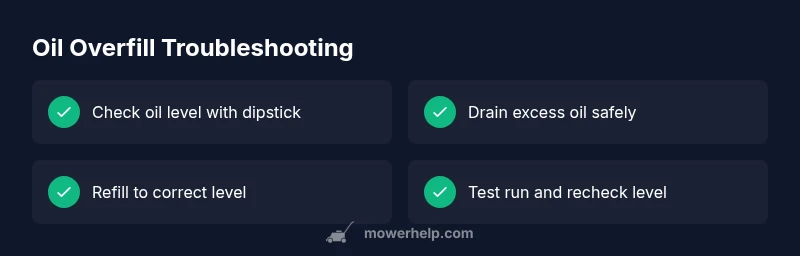
- Park on a level surface and ensure the engine is cool. 2) Remove the spark plug cap and place a drain pan underneath. 3) Drain until the dipstick reads at or below the full line. 4) Wipe the dipstick clean, reinsert, and check again for level accuracy. 5) Refill with the recommended oil type in the manufacturer's manual, adding gradually and rechecking. 6) Start the engine on a test run, listen for unusual noises or smoke, and stop if any appear. 7) Recheck oil level after the test run and top off if needed. Remember to dispose of drained oil properly and clean any spillage.
Post-fix checks and testing the engine
With the oil corrected, perform a gentle start and a brief idle to confirm stable operation. Check for leaks around the drain plug and where the dipstick sits. Listen for knocking or tapping sounds that could indicate lingering pressure or crankcase issues. If you notice smoke, strong odor, or reduced power after the fix, shut off the engine and reassess. A second drain and oil change may be required if the oil is contaminated. Maintain a steady pace; rushing can miss signs of damage.
Prevention tips to avoid future overfills
Develop a simple routine to prevent future overfills. Check oil when the engine is cold and on a level surface. Always use the dipstick and the manual’s recommended oil type and capacity. Use a clean funnel for filling, pour slowly, and recheck before starting. Keep maintenance gear in a dedicated area to avoid cross-contamination. Finally, log oil changes and level checks in a small notebook or app reminder to build a safe maintenance habit.
Steps
Estimated time: 40-60 minutes
- 1
Power off and cool the mower
Shut off the engine, disconnect the spark plug, and wait 5-10 minutes for components to cool before touching anything. This reduces burn risk and prevents accidental starts.
Tip: Always remove the spark plug boot to avoid shocks or sparks. - 2
Position and prepare drainage area
Move the mower to a flat, concrete surface. Place a drain pan underneath the oil drain plug or dipstick reservoir as dictated by your model. Keep rags ready for spills.
Tip: Have absorbent pads on hand to catch any spills. - 3
Drain excess oil to correct level
Open the drain plug or carefully siphon the excess depending on your model. Drain until the dipstick shows the full line, then stop and wipe the dipstick clean.
Tip: Pour slowly and measure accurately to avoid underfilling. - 4
Refill with the proper oil
Use the recommended oil type and viscosity from the manual. Add a little at a time, checking the level after each addition to prevent overfilling again.
Tip: Never mix different oil types; ensure the engine is off and cool. - 5
Reinstall caps and components
Reconnect the dipstick and spark plug cap. Wipe any residue from the area and reset any coolant or air intake components that were moved.
Tip: Take a photo of the setup before disassembly; it helps during reassembly. - 6
Test start and monitor
Start the mower and run at idle briefly to observe for smoke, unusual noises, or leaks. If any signs appear, shut down and recheck.
Tip: Allow a brief run to settle the oil and confirm stable operation.
Diagnosis: Engine smokes, runs poorly, or shows unusual oil behavior after an oil overfill
Possible Causes
- highOil depth exceeded crankcase capacity
- mediumOil fouling the air intake or spark plug
- lowOil sealing surfaces damaged by pressure
Fixes
- easyDrain excess oil to the correct level and recheck
- easyInspect/replace spark plug and clean air filter if contaminated
- mediumPerform a full oil change if contamination is suspected
Got Questions?
What should I do first if I discover oil is overfilled?
Turn off the engine, disconnect the spark plug, let it cool, and plan to drain the excess oil. Do not start the mower again until the level is corrected.
First, turn off the mower, wait for it to cool, and disconnect the spark plug before draining.
Is it safe to drain oil while the engine is hot?
No. Let the engine cool completely before draining. Hot oil can cause burns and may spray unpredictably.
Let the engine cool first; hot oil can burn you and splash unpredictably.
Can an overfilled oil cause permanent engine damage?
Yes, if oil remains over the correct level for an extended period, it can put strain on seals and crankcase components.
Yes. If the overfill continues, it can stress seals and crankcase parts.
Do I need to replace the oil filter after an overfill?
If your mower has an oil filter and it was contaminated by oil, replacement may be necessary. Check the filter for signs of oil saturation.
If your mower has an oil filter and it's saturated or contaminated, it should be replaced.
What if I can’t drain enough oil or still see problems?
If drainage doesn’t restore proper level or symptoms persist, consult a professional technician to avoid further damage.
If draining doesn't fix it, seek a professional.
Watch Video
The Essentials
- Drain excess oil promptly to prevent damage
- Verify level with a cold engine using the dipstick
- Inspect for contamination and replace filters if needed
- Follow the exact oil type and capacity from the manual