Why Is My Lawn Mower Smoking? A Quick Troubleshooting Guide
Discover why your lawn mower is smoking and how to diagnose it safely. This urgent guide covers common causes, quick fixes, and safety tips from Mower Help.


Most lawn mower smoke comes from overheating or burning fluids. The simplest checks are: inspect and clean the air filter, inspect oil level and leaks, and look for spilled fuel. If smoke persists after these basic fixes, stop mowing and seek professional help to avoid engine damage.
Why is my lawn mower smoking? Key causes
If you're wondering why is my lawn mower smoking, you're not alone. In most cases, smoking signals an overheating engine or fluids burning inside the exhaust path. According to Mower Help, the top culprits are a clogged air filter, blocked cooling fins, oil leaks, and a too-rich fuel mixture. These problems can escalate quickly, but you can diagnose many with safe, simple checks on a cool engine. Wear gloves and keep hands away from sharp blades while inspecting the mower.
The phrase you’re likely muttering to yourself—why is my lawn mower smoking—often points to airflow and lubrication as the root issues. Start with the basics before you dive into the carburetor or fuel system. A clean air intake and proper oil levels are the first line of defense. If you notice bluish or acrid smoke, that can indicate burning oil; white fuel vapor usually means steam or a lean fuel-air mix, while black smoke often signals a rich fuel mixture.
Quick checks you can perform before mowing again
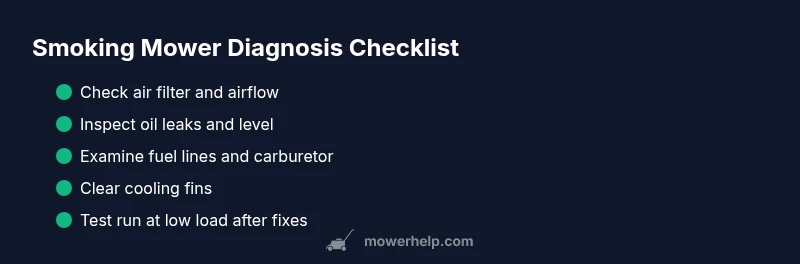
Before you pull the starting cord again, perform these safe checks on a cool engine:
- Check the air filter: remove the cover and filter element. If dirty or oily, replace or clean per manufacturer instructions.
- Inspect oil level and look for signs of leaks around the engine. If oil is low or you see oil on the cooling fins, address the leak first.
- Look at the muffler/exhaust area for residue or burnt oil; excessive buildup can ignite and cause smoke when hot.
- Check for spilled fuel around the carburetor or fuel lines; a rich mixture or spilled gas can produce noticeable smoke when the engine warms.
- Ensure the cooling fins and engine grate are clear of grass buildup, leaves, or debris blocking airflow.
Diagnosing smoke color and timing helps isolate the cause
Smoky conditions aren’t all equal. Bluish smoke often means oil is burning, white smoke can indicate steam or unburned fuel, and black smoke points to a rich fuel mix. If the color changes as the engine warms, or if it’s only present at start-up, take note for the diagnostic flow. Remember, safety first: never run the mower with a known leak or while smoking near open flames. The presence of smoke is a warning sign that should be treated seriously to protect your engine.
Safety steps before you fix anything
Always work on a cool engine and disconnect the spark plug wire before touching any moving parts or air intake components. Use gloves and eye protection, and remove the spark plug boot to prevent accidental starts. If you’re unsure about any step, pause and consult a manual or a professional. Safety ensures you don’t turn a simple fix into a costly repair.
Prevention tips to keep it from smoking again
After you’ve resolved the immediate issue, adopt a preventive routine: clean or replace the air filter monthly during peak mowing season, perform oil checks and changes on schedule, and keep cooling fins free of grass and debris. Regularly inspect fuel lines and carburetor seals for signs of wear. A proactive approach reduces the odds of sudden smoking and engine damage.
What to do if smoke returns after fixes
If smoke comes back after completing the above checks, stop mowing, perform a fresh diagnostic run, and consider parts inspection (oil seals, carburetor gaskets, muffler). Persistent smoking may indicate internal engine trouble that requires professional service. Delaying diagnosis can lead to severe damage and higher repair costs.
Steps
Estimated time: 45-90 minutes
- 1
Safety: disconnect power and remove spark source
Power off the mower, remove the ignition key or battery, and unplug any electric start connections. This prevents accidental starts while you inspect critical parts.
Tip: Never bypass safety features; they protect you from blade contact. - 2
Cool down the engine
If the mower has just run, wait at least 10 minutes for the engine and exhaust to cool before handling components. Heat can cause burns and also mislead heat-related diagnostics.
Tip: Check the fuel cap release after cooling to avoid pressure buildup. - 3
Inspect the air filter
Remove the air filter and housing. If the filter is dirty, oily, or degraded, replace it. A clogged air filter reduces airflow and can cause overheating and smoke.
Tip: Use the exact replacement filter recommended by the manufacturer. - 4
Check the oil level and leaks
Wipe the dipstick and check oil level. If oil appears burnt or you notice oil pooling near seals, address leaks or replace gaskets as needed.
Tip: Do not overfill oil; excess oil can foam and burn. - 5
Inspect cooling fins and muffler area
Clear grass clippings and debris from cooling fins. Inspect the muffler for oil residue or damage that could cause smoke when hot.
Tip: A leaf blower can help remove stubborn debris safely. - 6
Examine fuel system and carburetor
Check for fuel leaks and ensure fuel lines are secure. If the carburetor appears overly rich, adjust or clean according to the manual.
Tip: Avoid using starting fluid as a quick fix; it can hide deeper issues. - 7
Reassemble and test at low load
Reinstall any covers, reattach spark plug wire, and perform a cautious test run at low speed to observe for smoke. If smoke appears, stop and reassess.
Tip: Test on a non-grassy area to avoid damage while diagnosis continues. - 8
Decision point: seek professional help if needed
If smoke persists after all basic checks and cleaning, the issue may be internal. A professional evaluation can prevent catastrophic engine failure.
Tip: Document what you checked and what you observed to aid the mechanic.
Diagnosis: Engine emits smoke while running or after startup
Possible Causes
- highOverheating due to restricted airflow from dirty air filter or blocked cooling fins
- highOil burning from leaks or oil reaching exhaust
- mediumFuel-system issue causing an overly rich mixture or fuel leakage
- lowDebris or burnt residue near exhaust igniting
Fixes
- easyClean or replace the air filter and clear any grass or debris from cooling fins
- easyInspect oil level, seal leaks, and wipe down surfaces to confirm oil isn’t burning on hot components
- mediumCheck fuel lines, carburetor seals, and exhaust for leaks or leaks; adjust carburetor if needed
- hardIf smoke persists after basic checks, stop using the mower and seek professional service
Got Questions?
What are the most common causes of lawn mower smoking?
The top culprits are overheating from a dirty air filter or blocked cooling fins, oil leaks burning on hot surfaces, and a too-rich fuel mixture. Visual cues like color and odor help narrow the issue.
Common causes include overheating from a dirty air filter, oil burning from leaks, or a rich fuel mix. Look for color and smell clues to narrow the problem.
Can smoking be caused by overheating oil?
Yes. If oil escapes into hot engine areas or exhaust components, it can burn and produce blue smoke. Check seals and the oil routing paths.
Yes, burning oil can produce blue smoke. Inspect seals and oil routing to find leaks.
Is it safe to keep mowing if I see smoke?
No. Stop immediately and diagnose the cause. Continuing to mow can worsen engine damage and lead to a costly repair.
No—stop now and diagnose. Continuing can cause more damage.
When should I see a professional about mower smoke?
If smoke persists after basic checks, or you notice oil leaks near the exhaust or internal engine parts, seek professional service to prevent engine failure.
If smoke keeps coming back after simple checks, get a professional to look at it.
How can I prevent smoking in the future?
Perform regular maintenance: clean or replace the air filter, change oil on schedule, and keep cooling fins free of debris. Regular checks reduce routine smoking risks.
Keep up with maintenance like air filters, oil changes, and clearing cooling fins to prevent smoking.
The Essentials
- Inspect air filter and airflow first to curb overheating
- Check oil and leaks before deeper diagnoses
- Color of smoke helps identify the issue
- If smoke persists, stop and call a professional