Why Do Lawn Mowers Smoke? A Troubleshooting Guide
Urgent guide to diagnose why do lawn mowers smoke, with actionable steps for oil, fuel, cooling, and maintenance to prevent engine damage.


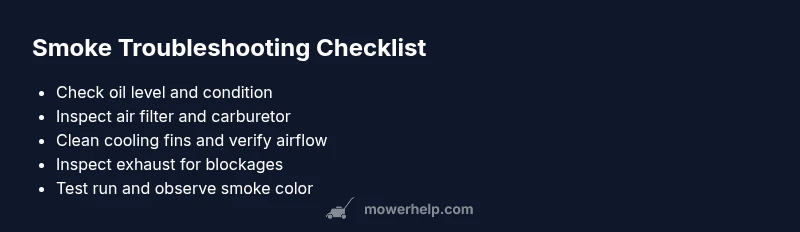
According to Mower Help, smoke from a lawn mower almost always signals a fixable problem. The quickest fix starts with stopping the mower, checking oil level and for leaks, inspecting the air filter, and ensuring the cooling fins are clear. If smoke persists, follow the full diagnostic flow before resuming use.
Color codes and what they indicate
When you notice smoke from a lawn mower, the color matters. Blue smoke almost always means the engine is burning oil, often from overfill or worn seals. Black smoke usually points to a rich fuel mix caused by a dirty air filter or carburetor issues. White or gray smoke can indicate water or coolant involvement in the combustion process, though this is less common on air‑cooled mowers. In any case, abrupt or persistent smoke should trigger an immediate safety stop and a closer inspection. If you’re wondering why do lawn mowers smoke, start with the color as a first clue and move to the simpler checks before diving deeper into the engine.
Immediate safety steps you should take
First, shut off the mower and disconnect the spark plug to prevent accidental starting. Move the mower to a clear, level area and allow the engine to cool before handling any parts. Check for obvious oil leaks around the dipstick, oil cap, and gasket surfaces. If you smell burning oil or see oil on the ground, address leaks before running the engine again. Keep a fire extinguisher or water source handy when testing fixes, and never work on a hot engine. These safety precautions are essential when diagnosing why do lawn mowers smoke and ensuring you don’t put yourself at risk.
Quick diagnostic framework you can trust
A practical approach to diagnosing mower smoke is to classify symptoms, compare them with common causes, and apply safe fixes in order of simplicity. Start with the least invasive checks: oil level, air filter, and cooling. If smoke changes color or persists after these checks, advance to fuel system inspection and potential carburetor cleaning. For owners, this framework helps you stay organized and avoids unnecessary disassembly.
Oil-related smoking: common causes and fixes
Oil burning is a frequent culprit in mower smoke. Overfill can push oil into the combustion chamber, while a leak or worn rings can let oil burn off in use. Both situations can produce blue smoke. Start by verifying oil level with the dipstick; remove excess oil if needed and wipe clean seals to spot leaks. If oil appears contaminated or you notice burning odors, plan a tune‑up or oil change as part of the fix. Routine oil changes are a cornerstone of mower maintenance and help prevent this issue long‑term.
Fuel system and air intake issues you should address
A dirty or restricted air intake forces the engine to run with more fuel than air, creating black smoke. Replace a clogged air filter and clean the carburetor jets if necessary. Use fresh, stabilized fuel and avoid leaving fuel in the tank between uses. In some cases, adjusting the carburetor’s idle and mixture screws may be needed, but refer to your mower’s manual to avoid overadjustment. This section answers the question of why do lawn mowers smoke when the fuel system is to blame.
Cooling, exhaust, and preventive maintenance
Overheating can cause smoke as lubricants break down in the hot engine. Ensure cooling fins are free of grass clippings and debris, and verify the muffler pathway isn’t blocked. Regularly clean the cooling surfaces after mowing sessions and check for any obstructions around the engine shroud. A well‑ventilated engine stays cooler, reducing the chance of oil burning and other smoking causes. Prevention is always easier than repair, especially for home DIYers.
When to call a pro and how to prevent future smoking
If smoke persists after performing the above checks, stop using the mower and seek professional service. Internal engine wear, a failing gasket, or cracked components may require specialized tools to diagnose. To prevent smoking down the line, maintain a routine service schedule, use the correct oil grade, replace worn parts promptly, and store fuel properly. Following these steps minimizes the risk of future smoking and extends mower life.
Steps
Estimated time: 45-60 minutes
- 1
Stop the mower and ensure safety
Power down the mower completely and disconnect the spark plug to prevent accidental starts. Move to a safe, level area and wait for the engine to cool before touching any parts. This prevents injury and gives you a stable baseline for inspection.
Tip: Use gloves and eye protection; never work on a hot engine. - 2
Check oil level and condition
Place the mower on a level surface, pull the dipstick, wipe clean, reinsert, and read the level. If the oil looks milky or is overfilled, drain the excess and replace if contaminated. Oil in good condition should be clear or amber, depending on grade.
Tip: Avoid overfilling; too much oil increases pressure and can cause smoking. - 3
Inspect for oil leaks and seals
Look for oil around the dipstick cap, gaskets, and valve cover. Any puddles or wet spots indicate leaks that must be repaired before reuse. Clean the area to help spot new leaks during operation.
Tip: Take photos of the leak location to show a service tech if needed. - 4
Evaluate air intake and carburetor
Remove and inspect the air filter; replace if dirty or damaged. If you’re comfortable, carefully inspect the carburetor jets for clogs and clean with the proper carb cleaner. Ensure you use fresh fuel to avoid varnish buildup.
Tip: Never spray cleaner into hot components; allow cooling first. - 5
Inspect cooling fins and exhaust path
Clear grass and debris from cooling fins and paths around the engine. Check the muffler for obstructions and clean any buildup. Good airflow helps prevent overheating and reduces smoking.
Tip: Use a soft brush to avoid damaging fins. - 6
Test run and evaluate
Reassemble components, reconnect spark plug, and start the mower in a safe area. Run under light load for 2–3 minutes and observe smoke color and intensity. If smoke returns, stop and consult a professional.
Tip: Document symptoms and steps taken for your mechanic.
Diagnosis: Mower emits smoke during operation
Possible Causes
- highOil overfill or oil leaks causing burning oil
- highClogged air filter or dirty carburetor causing rich fuel mixture
- mediumOverheating due to blocked cooling fins or debris
- lowExhaust blockage causing backpressure
Fixes
- easyCheck oil level; drain excess oil or replace if contaminated
- mediumInspect for oil leaks and replace gaskets or seals as needed; seek pro if leaks persist
- easyReplace or clean air filter; clean carburetor and ensure fresh fuel
- easyClean cooling fins and remove debris around engine; ensure proper airflow
- easyInspect muffler/exhaust for blockages and clear obstructions
- hardIf smoke continues after these checks, stop using the mower and arrange professional service
Got Questions?
What does blue smoke mean when my lawn mower smokes?
Blue smoke usually means the engine is burning oil, often from overfill or worn seals. Stop mowing, check the oil level and for leaks, and inspect the gaskets. If the blue smoke continues, perform the full diagnostic flow.
Blue smoke generally means oil is burning inside the engine; stop and inspect the oil and seals.
Is it safe to keep mowing if the mower is smoking?
No. If your mower is smoking, stop using it immediately and inspect the oil, air intake, and cooling. Continuing to mow can cause serious engine damage or fire risk.
No, stop and inspect the mower rather than continuing to mow.
How do I check the oil level on my mower?
Place the mower on a level surface, wait for the engine to cool, remove the dipstick, wipe, reinsert, and read the level. Add oil if low and ensure you don’t overfill.
Check the oil level with the dipstick and adjust to the recommended level.
Can a dirty air filter cause smoking?
Yes. A clogged air filter can cause a rich fuel mixture and black smoke. Replace the filter and clean the air intake. If the problem persists, inspect the carburetor.
A dirty air filter can lead to smoky operation; replace it and test again.
When should I take my mower to a shop?
If blue or white smoke remains after basic checks, or you suspect internal engine wear, seek professional service. A shop can diagnose gasket leaks, worn rings, or crankcase issues.
If smoke persists after basic checks, take it to a professional.
What maintenance helps prevent smoking?
Regular oil changes, clean or replace the air filter, use fresh fuel, and keep cooling passages clean. A proactive maintenance routine reduces the chance of engine smoking.
Keep up with oil changes, air filter care, and cleaning to prevent smoke.
Watch Video
The Essentials
- Stop and assess safely before continuing
- Color of smoke guides the probable cause
- Maintain oil, air intake, and cooling for prevention
- Call a pro if symptoms persist after basic checks