What to Do When Your Lawn Mower Is Smoking
Urgent guide to diagnose and fix a smoking lawn mower. Learn safety steps, common causes, DIY checks, and when to call a pro to prevent damage.


Smoke from a lawn mower is a warning sign. Stop use immediately, let it cool, and perform basic checks: inspect oil and fuel lines, clean air intake, and ensure the engine isn’t overheating. If smoke persists, switch off and call a pro.
What to do when your lawn mower is smoking
If you see smoke, the first priority is safety. Do not ignore the sight or assume it will stop on its own. Smoking can indicate overheating, oil or fuel leaks, or a malfunctioning carburetor. In the worst cases, continuing to operate a smoking mower can start a fire. The moment you notice smoke, stop the engine, move the mower to a clear, nonflammable area, and stay clear of the exhaust and muffler. According to Mower Help, smoking is a warning sign that should not be taken lightly. This guide walks you through immediate safety steps, what the smoke could mean, and practical DIY checks you can perform before deciding whether professional repair is necessary. The goal is to help homeowners and DIY enthusiasts diagnose safely and prevent costly engine damage while keeping your lawn mower in good working order.
Immediate safety steps to take right now
Safety is non-negotiable when you notice smoke. Start with these steps:
- Shut off the engine and remove the spark plug boot (or disconnect the battery on electric mowers).
- Move the mower away from houses, vehicles, and flammable materials.
- Wait for the engine and exhaust to cool before touching any parts.
- Do not open the fuel cap while hot, and avoid leaning over the mower’s underside.
- If you smell or see strong fuel fumes, evacuate the area and ventilate before investigation.
Following these steps reduces the risk of fire and keeps you safe while you troubleshoot. Remember, if there is visible fire or you cannot safely inspect the mower, call emergency services and contact a professional mechanic.
Blue, white, and black smoke — what each means
Different smoke colors point to different issues:
- Blue smoke typically means oil is burning. This can come from worn piston rings, valve guide seals, or overfilled oil. It can also indicate excessive crankcase oil leaks.
- White smoke often signals coolant entering the combustion chamber, a sign of a head gasket issue or a cracked engine. In some small engines, white smoke can also be steam from a coolant leak.
- Black smoke usually indicates a rich fuel mixture or a clogged air filter. This causes incomplete combustion and can happen after a carburetor adjustment or fuel-quality problems.
Interpreting the color helps you narrow down the likely causes and choose the right next steps. If the smoke color changes over time or the mower runs poorly, stop using it and pursue a more thorough inspection or professional service.
DIY checks you can perform safely
Some checks are safe and simple but must be done with the engine cooled and the spark plug disconnected when possible:
- Check oil level and look for visible leaks around the engine. If the oil is dirty or milky, replace or filter it as recommended by the manufacturer.
- Inspect the air filter for clogging. A dirty air filter can cause a rich fuel mixture and smoke; replace if necessary.
- Inspect fuel lines and the carburetor for cracks or leaks. Replace damaged hoses and clean jets if you know how to do so safely.
- Examine the cooling fins and the under-deck area for built-up grass and debris. Clear with a soft brush or compressed air.
- Look for any visible oil or fuel leaks near the exhaust or muffler area.
These checks can help identify the most common causes of smoking. If any step feels risky or you detect fuel leaks, discontinue DIY work and seek professional help to avoid fire hazards.
Diagnosing the most likely causes in order
A practical order of diagnosis helps you triage the problem efficiently:
- Overheating due to clogged cooling fins or heavy load: high likelihood if mowing thick grass or under hot conditions.
- Oil leaks or burning oil: high likelihood if you notice blue smoke or oil smell. Check oil level and inspect gaskets and seals.
- Rich fuel mixture or clogged air filter: medium likelihood if the air filter is dirty or carburetor is not adjusted properly.
- Exhaust system faults or damaged piston rings: low to medium likelihood depending on age and maintenance history.
- Electrical short or wiring issue: low likelihood but possible if you notice melting insulation or unusual smells near wiring.
Proceed from high to lower likelihood; always stop if new hazards appear or if you cannot safely continue.
Step-by-step fixes for the most common cause
If overheating with debris buildup is the top suspect, use this practical fix sequence:
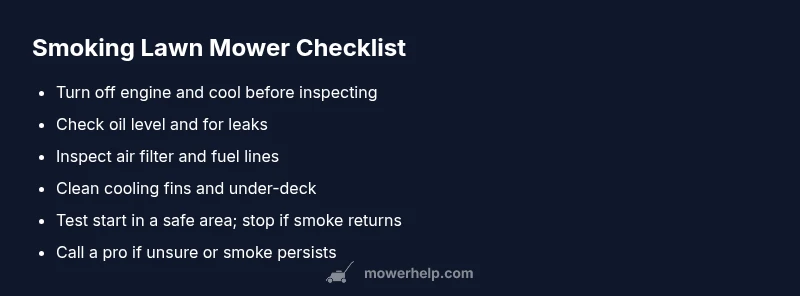
- Allow engine to cool completely, then remove debris from cooling fins and under-deck. Clear any grass wrap and ensure airflow paths are unobstructed.
- Check oil level and condition; top off or replace if dirty or low.
- Inspect air filter and replace if clogged. A clean filter improves air intake and fueling balance.
- Reconnect spark plug; start mower in a well-ventilated area and observe for smoke. If blue smoke returns, oil-related components may be at fault.
- Check for visible fuel leaks around the lines and carburetor; replace any damaged hoses or clamps.
- If smoke persists or you detect a coolant smell, stop and seek professional service to avoid engine damage.
Always follow the manufacturer’s service manual and use OEM parts when possible. If any step feels risky, pause and contact a pro.
Safety, mistakes to avoid, and when to stop
A few safety notes can prevent injuries or further damage:
- Never operate a mower with hot components exposed or near open flames.
- Do not run the mower with a known oil leak or coolant leak; shut down immediately if you detect uncontrolled leaks.
- Avoid using highly flammable cleaners or aerosols near hot exhaust.
- If you notice a strong fuel smell, stop, allow cooling, and inspect gas lines and carburetor for leaks.
- If uncertainty remains or the problem recurs after basic fixes, stop DIY work and contact a qualified technician.
These cautions help ensure you don’t turn a smoke issue into a fire or an expensive repair bill.
Prevention tips to keep your mower smoke-free
Prevention is better than repair when dealing with lawn mowers. Implement these practices to reduce smoking incidents:
- Use clean, fresh gasoline and proper oil-to-fuel ratios. Avoid old fuel or fuel with water contamination.
- Regularly replace air filters, spark plugs, and fuel filters according to the maintenance schedule.
- Clean the cooling fins and under-deck after every use to prevent overheating.
- Perform routine carburetor adjustments only if you have the right tools and knowledge; otherwise, have a professional tune-up.
- Store the mower in a dry, well-ventilated area to reduce corrosion and fuel degradation.
With consistent maintenance and proper usage, you can minimize smoking events and extend the life of your mower.
Steps
Estimated time: 60-90 minutes
- 1
Stop and Cool
Shut off the mower and wait until all moving parts are completely cooled before touching anything. This prevents burns and reduces risk when inspecting components.
Tip: Always unplug spark plug boot or disconnect battery before handling parts. - 2
Check for Visible Leaks
Look for oil or fuel leaks around the engine and under the mower. Leaks indicate seals or hoses may be failing and need replacement.
Tip: Do not run with a known leak; patch temporary leaks only if you can safely do so. - 3
Inspect Air Intake and Filter
Remove and inspect the air filter; a clogged filter reduces air flow and can cause a rich fuel mix that smokes.
Tip: Replace with OEM filter for best fit and performance. - 4
Assess Oil Condition
Check oil level and look for milky appearance or unusual smell, which can signal coolant intrusion or breakdown.
Tip: If oil is contaminated, perform a full oil change. - 5
Examine Fuel System
Inspect fuel lines, clamps, and carburetor for cracks or leaks. Clean or replace parts as necessary.
Tip: Use fresh fuel and avoid ethanol blends if your mower isn’t designed for them. - 6
Cool Down and Re-Test
After performing checks, start the mower in a safe area to monitor for smoke. If smoke returns, stop and seek professional help.
Tip: Take photos of any leaks or damaged components for reference when talking to a pro. - 7
Assess Engine for Damage
If white or blue smoke persists or you notice unusual noises, it may indicate internal damage requiring engine service.
Tip: Do not attempt major disassembly unless you have proper training. - 8
Call a Professional if Needed
Persistent smoke or unfamiliar smells warrant a professional inspection to prevent fire or serious engine failure.
Tip: When in doubt, it's safer to get a professional diagnosis.
Diagnosis: Lawn mower emits smoke during operation
Possible Causes
- highOverheating due to blocked cooling fins or heavy load
- highOil or fuel leaks causing smoke
- mediumExhaust system issue or rich fuel mixture
- lowWorn piston rings or internal engine damage
- lowElectrical shorting or melted wiring
Fixes
- easyShut off engine, let cool, inspect for debris and clean cooling fins
- easyCheck oil level and look for leaks; replace oil if contaminated
- easyInspect air filter, carburetor, and fuel lines for clogs or damage; replace as needed
- mediumIf smoke persists, stop and consult a professional; engine damage may be present
Got Questions?
Why is my lawn mower smoking after starting?
Smoking can result from oil burning, a rich fuel mix, coolant leaks, or overheating. Start with safety steps and basic checks to identify the most likely cause before proceeding to more complex repairs.
Smoking after starting usually means oil or fuel issues, or overheating. Begin with safety steps and simple checks to identify the likely cause.
Is it safe to keep using a smoking mower?
No. Stop operating the mower immediately, allow it to cool, and inspect for leaks or damage. Continuing to use a smoking mower can cause fire or severe engine damage.
No, stop and let it cool. Smoking can lead to fire or engine damage, so inspect or call a pro if unsure.
What should I check first when I see smoke?
First, shut off the engine and inspect for obvious leaks, check oil level, and verify air filter cleanliness. If the leak or smell persists, avoid further DIY and seek professional help.
Shut it off, check for leaks, oil level, and filter. If it persists, get professional help.
Can I repair a smoking mower at home?
Some issues, like a dirty air filter or loose fuel line, can be fixed at home with proper safety. More serious problems or coolant/oil leaks should be handled by a professional.
Some fixes at home are possible, but serious problems require a pro.
When should I replace parts or seek service?
If smoke continues after basic checks or you notice internal engine noises or leaks, stop DIY and arrange professional service to prevent further damage.
If smoking persists after checks, seek professional service.
What safety steps are essential before troubleshooting?
Disconnect power (spark plug boot or battery), ensure the mower is cooled, and work in a well-ventilated area away from flammables. Wear gloves and eye protection.
Disconnect power, cool it, work safely, wear protection.
Can a smoking mower be prevented?
Regular maintenance, clean cooling fins, use fresh fuel, replace filters and spark plugs on schedule, and store properly to minimize smoke incidents.
Maintain regularly, keep fuel fresh, and clean cooling areas to prevent smoke.
What if I smell fuel or see flames?
If you smell fuel strongly or see flames, evacuate the area and call emergency services if needed. Do not attempt repairs in a hazardous situation.
If fuel smells strong or flames appear, step away and call for help.
Watch Video
The Essentials
- Turn off and cool the mower before inspecting any parts
- Identify smoke color to narrow down the cause
- Check oil, air filter, and fuel lines first for quick wins
- If smoke persists, stop DIY and contact a pro
- Prevent smoking with regular maintenance and clean cooling paths