How to Tell If Your Lawn Mower Engine Is Blown
Urgent, step-by-step guide to diagnose a blown lawn mower engine. Learn signs, safety actions, diagnostic flow, and precise steps to decide between repair or replacement.


How to tell if lawn mower engine is blown is urgent to assess before costly repairs. Common signs include smoking, a seized crank, loud knocking, or complete loss of power. Stop the unit, unplug safety, and check oil level, fuel supply, and the air filter. If smoke continues or you hear grinding, this signals likely engine damage.
Overview: What it means when a mower engine is blown
When homeowners ask how to tell if lawn mower engine is blown, they’re usually trying to distinguish a serious internal failure from a simple maintenance issue. A blown engine generally means internal components have failed severely enough to prevent normal operation, often due to a seized piston, damaged rings, or a cracked block. In practical terms, you’ll notice a dramatic drop in compression, unusual noises, or an inability to start despite fresh fuel and a clean air intake. For DIY troubleshooters, this guide focuses on urgent indicators, safe initial checks, and decision points to avoid unnecessary repairs. Throughout, you’ll see practical checks that help you decide between repair, replacement, or professional evaluation, all framed by the reality that faster action can save you time and money.
Immediate safety actions you must take
Before you touch the mower
- Park on a flat surface and disconnect the spark plug wire to prevent accidental starting.
- If the mower has fuel leaking or you smell strong fumes, move to a well-ventilated area and avoid smoking or sparks.
- Let the engine cool before inspecting hot components or touching mufflers.
Quick checks to perform without dismantling
- Check the oil level and color: milky oil or metal particles mean potential internal damage.
- Inspect the air intake and filter: a severely clogged filter can mimic starting issues but doesn’t cause engine blow.
- Look for obvious external damage: cracked housing, warped fins, or loose heads.
If you complete these steps and still observe signs like oil venting, smoke, or unusual noises, you’re dealing with a high-lraud risk issue that merits a deeper diagnostic flow or professional help. The key is to avoid running the engine when you suspect a blown condition, as continued operation can worsen damage.
Common signs of a blown lawn mower engine
- Persistent smoke from the exhaust or air intake when starting or running.
- Knocking, grinding, or rattling noises that don’t occur with normal operation.
- Sudden loss of compression or failure to start after a brief attempt.
- Oil with metal shavings, milky consistency, or coolant odors.
- Seized stiffness: the crank or piston feels stuck when turning manually.
- Severe loss of power or misfiring that doesn’t respond to fuel or air changes.
Each sign by itself may result from a simple issue (air filter, old fuel, clogged carburetor). When multiple signs appear together, the likelihood of a blown engine increases and warrants careful diagnostic steps rather than a quick fix attempt.
Diagnostic flow: symptom to diagnosis (at a glance)
This flow helps you systematically verify if the engine is blown, starting with safe checks and moving toward compression and mechanical inspection. If at any point a test requires specialized tools or opens the engine, consider skipping to professional evaluation.
- Symptom: Engine won’t start or runs poorly with noises.
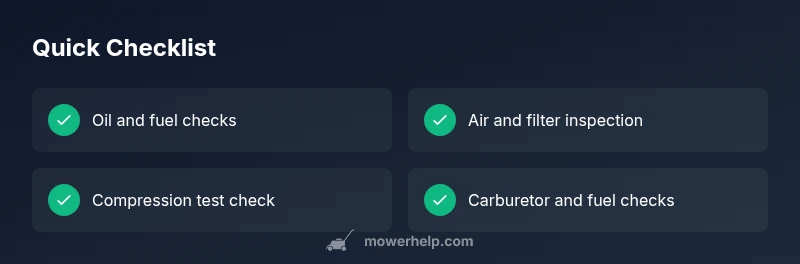
- Check 1: Safety and external checks (oil, fuel, air filter).
- Check 2: Compression test: low compression indicates internal damage.
- Check 3: Spark plug and ignition system: confirm timing and spark flow good.
- Check 4: Fuel system: inspect carburetor, fuel lines, and filters for contamination.
- Diagnosis: If compression is low and there’s metal in oil or consistent mechanical noise, likelihood of blown engine is high. Solutions differ: replace engine or repair major components.
- Action: If you’re unsure after tests, seek professional evaluation.
Step-by-step: fix path for the most common cause
- Stop and secure the mower; disconnect the spark plug. 2) Remove the spark plug and perform a compression test with a gauge; record the reading and compare to manufacturer spec. 3) Inspect the cylinder and piston visually if feasible; look for scoring, scratches, or broken rings. 4) Check oil around the crankcase; milky or sludgy oil indicates coolant intrusion or contamination. 5) Examine the carburetor and fuel lines for clogs or varnish deposits; clean or replace components as needed. 6) Reassemble and test spark, fuel, and air delivery. 7) Decide: if compression remains low after cleaning and the oil shows contamination, engine replacement is typically the most reliable option. 8) If you’re uncomfortable, contact a professional mechanic.
Tip: Always work with the flywheel cover off and the spark plug disconnected to avoid accidental starts.
Safety tips and common mistakes to avoid
- Never run a mower with suspected engine damage; heat and friction can worsen internal failures quickly.
- Avoid forcing parts or using excessive solvents around seals; this can create additional leaks.
- Don’t ignore oil condition; contaminated oil can hide symptoms and mislead compression tests.
- Use the correct fuel type and fresh fuel; stale gas can mimic clogged injectors or carburetor issues.
- If you don’t have a compression gauge or feel unsure performing diagnostics, seek professional help rather than guessing.
Prevention, maintenance, and what to do next
Preventive maintenance remains the best defense against engine failure. Schedule regular oil changes, clean or replace air filters, and inspect the carburetor before and after heavy mowing days. Use fresh fuel and stabilizer to reduce varnish buildup and ensure the spark plug is clean and gapped correctly. If you detect performance issues early—rough starts, smoking, or knocking—address them promptly; delaying can lead to a blown engine scenario that is harder and more costly to fix. In such cases, consider a replacement engine or a professional assessment to determine cost-effectiveness.
Steps
Estimated time: 45-90 minutes
- 1
Secure the mower and remove spark plug wire
Ensure the mower is on a flat surface. Disconnect the spark plug wire to prevent accidental starts. Remove the spark plug to prepare for compression testing if you have a gauge.
Tip: Double-check the flywheel to avoid accidental movement while the cover is removed. - 2
Check oil and external condition
Inspect oil level and color; milky oil or metal shavings indicate serious internal issues. Look for oil leaks or unusual residue around seals.
Tip: Note oil condition before you drain—this can guide diagnosis. - 3
Perform a compression test
Attach a compression gauge according to the manual. A reading well below spec indicates potential internal damage, especially if accompanied by smoking or knocking.
Tip: Always compare against service spec for your model. - 4
Inspect air intake and fuel system
Check air filter for heavy dirt, and inspect carburetor for varnish or varnish residue. Clean or replace as needed to rule out fuel delivery issues.
Tip: Use manufacturer-approved cleaners and avoid harsh solvents near seals. - 5
Check ignition system
Remove and inspect the spark plug; test ignition with a spark tester. Replace worn or fouled plugs and ensure correct gap.
Tip: Ignition faults can mimic engine blow symptoms. - 6
Reassemble and re-test
Reinstall the spark plug, reconnect wiring, and run the engine briefly to observe performance. If compression remains low, plan for engine replacement.
Tip: Document readings and symptoms for your repair history.
Diagnosis: Engine won't start or runs poorly with unusual noises
Possible Causes
- highLow or contaminated oil
- mediumClogged air filter or carburetor
- lowIgnition system fault (spark plug, coil)
- highSeized piston or damaged rings (engine blown)
- mediumFuel delivery issues (old fuel, damaged lines)
Fixes
- easyCheck oil level and quality; replace if milky or metal-containing
- easyClean or replace air filter; clean carburetor jets if accessible
- mediumTest spark plug and ignition coil; replace faulty parts
- hardPerform compression test; if low compression persists, plan engine replacement
- easyReplace damaged fuel lines and use fresh fuel with stabilizer
Got Questions?
Can a lawn mower engine be repaired if it is blown?
It depends on the damage. If compression is severely low due to piston, rings, or a cracked block, replacement is often more cost-effective than repair. A professional assessment helps determine the best option.
Repair may be possible in limited cases, but usually a blown engine requires replacement after an expert evaluation.
What are the first signs that should worry me the most?
Smoke, loud knocking, or a sudden loss of power are the most alarming signs. If you notice metal shavings in the oil or milky oil, expect serious internal damage.
Smoke, knocking, and power loss are your red flags for possible engine failure.
Is a compression test necessary to confirm blown engine?
A compression test is highly recommended to confirm internal damage. It provides a quantitative measure to compare with manufacturer specs and helps guide next steps.
Yes, a compression test helps confirm whether the engine is blown and to what extent.
Should I attempt to repair the carburetor or other components instead of the engine?
Carburetor issues can cause symptoms similar to a blown engine, but they are often solvable and far cheaper. If tests point to internal damage, carburetor work won’t fix the root problem.
Carburetor fixes are worth trying if tests point away from internal engine damage.
When is professional help required?
Call a professional if you observe signs of internal damage, low compression that persists after basic fixes, or if you’re uncomfortable performing compression testing and engine disassembly.
Get professional help when internal damage is suspected or if you’re unsure about the steps.
Can I prevent blown engines in the future?
Regular maintenance, using fresh fuel with stabilizer, proper oil changes, air-filter upkeep, and prompt attention to unusual noises or performance loss dramatically reduce the risk of catastrophic engine failure.
Keep up with regular maintenance to prevent future failures.
Watch Video
The Essentials
- Identify signs early and stop use to prevent further damage
- Compression tests are decisive for engine-blown diagnosis
- Oil condition and metal in oil are critical red flags
- Rule out simple causes (air, fuel, ignition) before engine replacement
- Seek professional help when unsure about major internal damage