Lawn Mower Blowing Black Smoke? Quick Troubleshooting and Fixes
Learn why a lawn mower blows black smoke and how to diagnose, fix, and prevent it. Step-by-step checks, safety tips, and pro maintenance guidance from Mower Help.


Immediate fix: A lawn mower is blowing black smoke most often due to an overly rich fuel mixture, a clogged air filter, or a failing carburetor. According to Mower Help, start by checking the air filter and spark plug, then inspect fuel lines and the carburetor. The Mower Help team found that addressing the simplest cause first usually restores power and reduces smoke.
Why the lawn mower is blowing black smoke and what it means
If you notice a lawn mower is blowing black smoke, you’re seeing unburned fuel or an excessively rich fuel mixture entering the exhaust. This is a warning sign that the engine is not burning fuel cleanly, which can lead to performance loss, reduced efficiency, and potential damage over time. In many cases the cause is simpler than it appears: a clogged air intake, a stuck choke, or degraded fuel. According to Mower Help, addressing smoke quickly minimizes wear on the engine and helps protect your mower’s life. When the mower is blowing black smoke, you may also notice hard starting, rough idle, or a strong fuel odor. By recognizing these patterns early, you can prioritize the safe checks that usually resolve the issue without expensive repairs. Consistent documentation and routine maintenance are your best defense against recurring smoke problems, and using high-quality fuel can prevent varnish buildup that worsens performance.
Safety first: don’t run it in enclosed spaces
Before you touch anything, make sure the mower is on a level surface, the spark plug is disconnected, and the engine is cool. Wear eye protection and gloves. Keep a fire extinguisher nearby if you’re handling fuel. Never service a hot engine or work near open flames. If you smell strong fuel vapors or hear coughing pops from the exhaust, pause and reassess. Safety is the foundation of any repair, and a cautious approach reduces the risk of injury or accidental fuel ignition.
Quick checks you can do in minutes (non-destructive)
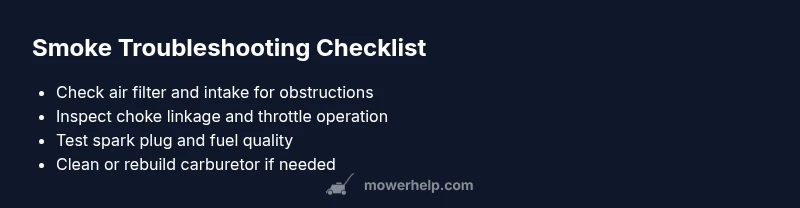
- Inspect the air filter: a clogged or dirty filter restricts air flow, causing a rich fuel mix. Replace if dirty or torn.
- Check the air intake for obstructions: debris, grass, or leaves can choke airflow.
- Inspect the spark plug: fouled or worn plugs can cause irregular combustion and smoke. Replace if needed.
- Look at the fuel: ensure you’re using fresh gasoline and that it isn’t contaminated with water or dirt.
- Verify the choke position: if the choke is stuck closed, it can flood the engine and produce excessive smoke. Adjust as per your manual.
- Check for oil in the air intake or exhaust: while less common, overly oily mixtures can also produce dark exhaust. If you find oil leaks, address them promptly.
These quick checks often reveal the root cause. If smoke persists after addressing air and fuel components, proceed to a deeper diagnosis. Remember: repeated smoke is a symptom of an imbalance that warrants careful inspection and possibly professional service.
In-depth fuel and air system diagnosis
A rich fuel mixture is the most common cause of black smoke. Start by testing fuel quality; old or ethanol-laden fuel can degrade carburetor performance. Replace old fuel with fresh, proper gasoline for your engine. Examine the carburetor’s float and jets for varnish buildup and varnish that blocks fuel flow. If the carburetor is flooding or the float needle sticks, you’ll see black smoke as unburned fuel escapes through the exhaust. Check the air filter housing seal as well; a loose seal can pull in extra air or allow unfiltered air to bypass the filter, upsetting mixture balance. After any cleaning or adjustment, re-check the exhaust smoke under a light load to confirm improvement.
Carburetor cleaning and adjustment: what you need to know
Carburetor cleaning is often the turning point. Use a carburetor cleaner spray to dissolve varnish, then reassemble carefully, ensuring all gaskets seat tightly. Do not over-tighten screws; improper torque can cause air leaks. If required, replace worn gaskets or the entire carburetor. For some models, a rebuild kit provides new diaphragms and needles that restore proper fuel metering. After cleaning and reassembly, run the mower at a light load for several minutes to verify smoke reduction before applying full throttle.
When to seek professional help and long-term maintenance tips
If you’ve exhausted basic checks and the mower still blows black smoke, a professional service can diagnose internal wear, compression issues, or fuel delivery faults beyond simple carburetor work. Advanced testing may include compression checks, fuel-pressure tests, and electronic ignition diagnostics. Regular maintenance—air filter changes, spark plug replacement, and proper fuel handling—prevents many smoke-related issues. To minimize risk, keep up with manufacturer-specified maintenance intervals and use quality fuel, oils, and replacements that match your mower’s spec.
Prevention: keep the problem from returning
Routine maintenance dramatically lowers the chances of black smoke. Schedule air-filter changes and spark-plug replacements at manufacturer-recommended intervals, use clean fuel, and avoid leaving fuel stabilizer unattended. Store mowers properly, with a drained carburetor if you won’t be using it for an extended period. When in doubt, perform a quick pre-season check before the first cut: air intake, fuel quality, and the exhaust condition will tell you if any issues are brewing. Proactive care is cheaper than repeated smokey starts and rough running.
Steps
Estimated time: 45-60 minutes
- 1
Power down and cool the engine
Stop the mower, disconnect the spark plug, and allow the engine to cool completely before touching any parts. This reduces the risk of shock or fuel ignition while you work.
Tip: Never touch hot surfaces; plan a quick safety drill before starting. - 2
Remove the spark plug wire and inspect basics
With the spark plug wire disconnected, inspect for corrosion or a severely worn plug. A fouled plug is a common source of irregular combustion that can cause smoke.
Tip: Have a spare plug ready for a quick swap. - 3
Inspect the air filter and air intake
Check the air filter for dirt, tears, or clogs. Clean or replace the filter if debris is present, and inspect the housing seals for gaps that could allow unfiltered air in.
Tip: Run your finger around the seal to feel for leaks. - 4
Check the choke and throttle linkage
Ensure the choke aligns correctly and that linkage moves freely. A stale or stuck choke can flood the engine, causing black smoke during startup or running.
Tip: Lubricate moving parts with a light oil if they feel stiff. - 5
Test fuel quality and delivery
Drain old fuel if it’s stale or contaminated. Refill with fresh fuel and, if possible, use ethanol-free or lower-ethanol gasoline appropriate for your engine.
Tip: Never mix fuel on hot surfaces; do it outdoors. - 6
Inspect or clean the carburetor
Remove the carburetor body, inspect jets for varnish, and clean with approved cleaner. Replace worn gaskets or diaphragms if needed.
Tip: Take photos during disassembly to aid reassembly. - 7
Reassemble, reconnect and test run
Reinstall components, reattach the spark plug wire, and start the mower with a light load to observe smoke under normal operation. If smoke persists, increase test load gradually while monitoring exhaust color.
Tip: If in doubt, perform a controlled test in an open outdoor area. - 8
Evaluate results and plan maintenance
If smoke disappears, note what change resolved it for future reference. If it returns, consider a professional inspection to check compression and internal seals.
Tip: Record maintenance steps for next season.
Diagnosis: Lawn mower is blowing black smoke
Possible Causes
- highOverly rich fuel mixture due to choke, carburetor, or fuel delivery problems
- highClogged or dirty air filter restricting air intake
- mediumStuck or malfunctioning choke
- mediumFaulty spark plug or ignition timing issue
- lowOld, contaminated, or incorrect fuel
- mediumCarburetor flooding or damaged float valve
Fixes
- easyInspect air filter, replace if dirty or torn, and clean housing seals
- easyCheck choke position, reset if stuck, and ensure proper air-fuel balance
- easyReplace spark plug and verify gap, especially if plug is fouled
- easyDrain old fuel, fill with fresh, use the correct octane rating for your engine
- mediumClean or rebuild carburetor, including jets and diaphragms
- hardIf flooding continues or carburetor can't be rebuilt, consider professional service
Got Questions?
What causes a lawn mower to blow black smoke?
Black smoke usually indicates a rich fuel mixture or poor combustion. Common culprits include a clogged air filter, a stuck choke, or a failing carburetor. Checking air intake, fuel quality, and spark plug often reveals the root cause.
Black smoke usually means the engine is burning too much fuel or not enough air. Start by checking the air filter, choke, and spark plug, then inspect the carburetor.
Is black smoke dangerous for my mower?
Yes. Prolonged smoking can indicate unburned fuel entering the exhaust and may cause engine damage over time. It also increases fire risk and fouling of exhaust components.
Yes. Continuous smoke signals potential engine damage and a higher fire risk; address it promptly.
How do I fix a clogged air filter quickly?
Power down the mower, remove the air filter, and clean or replace it with a compatible filter. Check the air intake for obstructions and seal gaps in the housing.
Power down, replace or clean the air filter, and ensure the intake is clear.
When should I replace the carburetor instead of cleaning it?
If cleaning fails to improve performance or if the carburetor shows damaged gaskets or worn components, a replacement or rebuild may be necessary.
If cleaning doesn’t help and gaskets look worn, consider replacing or rebuilding the carburetor.
Can old fuel cause black smoke?
Old or contaminated fuel can cause varnish buildup and improper fuel delivery, leading to smoke. Replace with fresh fuel and consider stabilizer for storage.
Yes, old fuel can cause smoke; drain it and use fresh fuel for best results.
Do I need professional help?
If simple checks don’t resolve the issue or if you suspect internal engine problems, seek professional service. Electrical ignition or compression issues require skilled diagnostics.
If it doesn’t clear up after basic checks, a pro should diagnose engine health.
Watch Video
The Essentials
- Identify smoke source by starting with air and fuel checks
- Address the simplest cause before complex repairs
- Always unplug spark plug during maintenance
- Use fresh, proper fuel to prevent varnish and clogging
- Regular maintenance reduces future smoke incidents