What Causes Lawn Mower Backfire: Quick Troubleshooting Guide
Discover the common causes of lawn mower backfire and how to diagnose and fix them quickly. Safe, practical steps cover fuel, ignition, and exhaust issues.


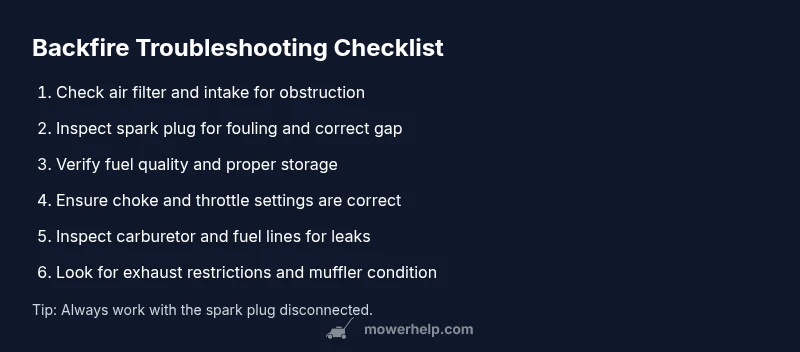
Backfire in a lawn mower usually happens when unburned fuel ignites in the exhaust or intake. The quickest fix is to check the air filter, carburetor choke, and spark plug, then inspect fuel quality. If the mixture is off or the plug is fouled, replace components as needed and avoid running stale fuel.
Understanding Backfire in Lawn Mowers
According to Mower Help, backfire occurs when a portion of the air-fuel mixture fails to ignite in the cylinder and instead ignites in the exhaust or intake system. This phenomenon manifests as a loud pop, a brief flame at the muffler, or a plume of smoke. While a single backfire may be harmless, repeated episodes can indicate an underlying problem that, if ignored, risks damage to the exhaust valve, spark plug electrode, and catalytic elements in modern engines.
Backfire is not the same as a normal combustion miss. It often happens during startup, throttle transitions, or when the mower is hot after a long cut. The root causes span several subsystems: fuel delivery, air intake, ignition timing, and exhaust restrictions. The goal of troubleshooting is to localize the fault without blindly replacing parts. A systematic approach saves time, prevents injuries, and preserves the mower’s performance.
This guide helps homeowners identify the most common culprits and provides safe, practical steps to verify each area. You’ll learn how to test for air leaks, inspect for oil or fuel contamination, and recognize symptoms that point toward a carburetor or ignition issue. When in doubt, err on the side of caution and consult a professional.
Primary Causes You Should Check First
Backfires almost always originate from fuel, air, or ignition anomalies. The most frequent culprits are a dirty air filter or clogged intake passage that creates a lean condition; stale or ethanol-laden fuel that fouls carburetor jets; and a spark plug that is fouled or has a worn gap. A choked or sticking carburetor can let raw fuel into the exhaust, producing a backfire. Vacuum leaks around the intake manifold or carburetor mounting can also cause unmetered air to enter, triggering explosions in the exhaust.
Other less common causes include an incorrect idle speed, a malfunctioning ignition module, and exhaust restrictions such as a damaged muffler or carbon buildup. In some cases, a recently serviced carburetor or fuel line installation introduces air bubbles or leaks that manifest as backfire during acceleration. While these problems share symptoms, they require different fixes, so a careful diagnostic flow is essential.
Before you replace parts, perform a quick reality check: ensure the mower is on level ground, the spark plug boot is secure, and there’s no fuel smell near the engine. Small checks at the outset often reveal the simplest cause and prevent unnecessary repairs.
Fuel System Troubleshooting
Fuel quality and delivery are top suspects when backfires occur. Start by using fresh fuel and avoiding old, degraded blends that varnish carburetor passages. If you suspect fuel quality, drain the tank and refill with clean gasoline, then add a stabilizer to help future storage. Inspect the fuel cap vent to confirm it opens freely; a blocked vent can create a vacuum in the fuel tank, altering pressure and fuel flow.
Next, examine the carburetor for varnish or debris. A gummed-up jet or stuck metering needle can cause erratic fueling and fuel-rich or fuel-lean conditions that lead to backfires. Cleaning the carburetor requires care: remove the bowl, spray appropriate carb cleaner, and avoid bending delicate components. Reassemble with gaskets properly seated and test in a safe environment.
Finally, verify fuel lines and connections for cracks or leaks. A small air leak in the line or at the carburetor base can skew the air-fuel ratio, causing misfiring and backfire. If you’re unsure about the carburetor's condition or cannot access the fuel system safely, seek professional service rather than forcing a DIY fix.
Ignition System and Timing Troubleshooting
Ignition timing plays a critical role in preventing backfire. A worn or fouled spark plug can delay ignition or misfire, allowing unburned fuel to escape into the exhaust. Check the spark plug for oil or carbon buildup, inspect electrode gap, and replace if necessary. Always use the recommended plug type for your mower model and verify the gap specification before installation.
Another potential issue is the ignition module or points (in older engines), which can deteriorate and cause late or inconsistent sparks. If you notice weak or inconsistent spark on a test, do a controlled spark test with a tester or a known-good battery supply, following safety precautions. Be mindful of timing-related problems after adjustments to throttle and choke.
Finally, confirm that the ignition wiring is intact and connections are clean. A loose ground or damaged wire can lead to harsh ignition timing or intermittent firing, which tastes like backfire during acceleration. If you cannot locate timing issues with basic checks, consult a service technician who has the proper testing equipment.
Exhaust, Air Intake, and General Maintenance
Exhaust restrictions, carbon buildup, or a jammed muffler can force the engine to expel unburned fuel into the exhaust path, producing a backfire. Inspect the muffler for holes, cracks, and heavy carbon deposits; replace the muffler if necessary. Check the exhaust gasket and mounting hardware for leaks that might feed back into the intake area.
Air intake cleanliness remains a simple but often overlooked cause. A clogged air filter blocks the correct air amount and can cause either a lean condition or rich adjustments when the engine compensates. Replace disposable filters and clean the housing; verify that ducting is intact and not collapsed. Don’t forget the simple step of confirming that the air intake is properly sealed to prevent unmetered air from entering.
Finally, commit to a preventive maintenance routine. Regularly service the air filter, fuel system, spark plug, and exhaust components, and use fresh fuel and stabilizers during storage. A proactive approach reduces backfire risk and extends engine life.
Final Prep: Safety and Professional Help
Before you power anything, disconnect the spark plug wire and ensure the mower is on a stable surface with the blade belt secure. Wear eye protection and gloves, keep hands away from hot surfaces, and work in a well-ventilated area. If the backfire persists after completing the checks and repairs described above, stop and seek professional help. An experienced mower technician can verify timing, diagnose carburetor anomalies, and test ignition components with the proper equipment.
To prevent future backfires, follow a simple maintenance calendar: replace spark plugs on schedule, use fresh fuel with stabilizer, clean or replace air filters, and inspect exhaust parts during periodic service. These habits help protect your engine from misfires, reduce emissions of unburned fuel, and keep mowing sessions safe and productive.
Steps
Estimated time: 45-60 minutes
- 1
Inspect air filter and intake
Remove the air filter and housing to inspect for dirt, oil, or damage. Clean or replace the filter as needed and ensure the intake path is clear of obstructions. Reassemble securely and perform a test start.
Tip: Keep spare filters on hand for quick swaps during maintenance. - 2
Test fuel quality and mixture
Check fuel in the tank for freshness. If unsure, drain and refill with fresh gasoline. Add a fuel stabilizer if you plan to store the mower long-term. Start with a cautious idle to observe for any backfire signs.
Tip: Avoid mixing old fuel with new in the same tank. - 3
Check spark plug
Remove the spark plug and inspect its condition. Look for fouling, oil, or heavy carbon buildup and correct gap to the manufacturer spec. Replace if necessary and torque to spec.
Tip: Ground the plug to the engine block during inspection to safely test ignition spark. - 4
Inspect carburetor and choke
Ensure the carburetor is clean and that the choke operates smoothly. Look for sticky valves or jets and clean or service as needed. Reassemble and throttle test to verify smooth fuel delivery.
Tip: Do not force components; use proper carburetor cleaner and follow service manuals. - 5
Exhaust and muffler check
Inspect the muffler for holes or heavy carbon buildup. If restricted, clean or replace the muffler and inspect the exhaust gasket. Ensure there are no leaks feeding back into the intake.
Tip: Perform this check only when engine is cool to avoid burns. - 6
Test run and confirm resolution
Run the mower under light to moderate load and listen for backfire signs. If absent, gradually increase throttle to verify stability. If backfire returns, seek professional service.
Tip: Record a short video of the test run to show the technician if needed.
Diagnosis: Loud pop or flame at exhaust during startup or acceleration
Possible Causes
- highIncorrect air-fuel mixture due to dirty air filter or carburetor settings
- highWorn or fouled spark plug causing misfire
- mediumStale or contaminated fuel leading to varnish and poor fuel metering
- lowExhaust restriction or muffler carbon buildup
Fixes
- easyClean/replace air filter; inspect intake and choke operation
- easyInspect/replace spark plug and verify gap
- easyDrain old fuel, fill with fresh fuel, and add stabilizer
- mediumClean carburetor passages or replace carb kit if needed
- mediumCheck exhaust for obstructions or muffler damage and repair
Got Questions?
What causes lawn mower backfire?
Backfire is typically caused by ignition timing issues, a lean or rich fuel mix, or air-path problems such as a dirty air filter. Stale fuel and exhaust restrictions can also contribute. A systematic check across fuel, ignition, and exhaust components helps identify the exact cause.
Backfire usually comes from timing, fuel, or air-path problems. A step-by-step check across those areas will pinpoint the cause.
Is backfiring dangerous for the engine?
Repeated backfiring can indicate conditions that may stress exhaust valves or ignite parts outside the cylinder. While brief, occasional backfires aren’t always harmful, persistent issues should be diagnosed by a professional to prevent long-term damage.
Persistent backfires can harm engine parts; seek professional diagnosis if it keeps happening.
Can stale fuel cause backfire?
Yes. Old fuel can varnish carburetor jets and lean or richen the mixture, causing misfires and backfires. Drain and replace with fresh fuel, ideally treated with stabilizer for storage.
Old fuel can cause backfires by fouling the carburetor; replace with fresh fuel.
Will replacing the spark plug fix backfire?
Replacing a fouled spark plug often resolves backfire caused by misfire. If backfire persists after replacement, inspect other systems like the carburetor and exhaust.
Sometimes a new spark plug cures backfire, but check other systems if it continues.
When should I call a professional?
If backfire continues after completing the basic checks and fixes, or if you smell fuel leaks or see smoke, stop and consult a mower technician with proper testing equipment.
If backfire won’t stop, get a professional to diagnose the timing and fuel system.
Watch Video
The Essentials
- Investigate fuel, ignition, and air paths first
- Replace fouled spark plugs and use fresh fuel
- Clean or service the carburetor as needed
- Inspect exhaust for restrictions and leaks
- Follow safety steps and seek pro help if unresolved