Lawn Mower Trouble Starting? Fast Fixes & Safe Diagnostics
Urgent troubleshooting guide to diagnose and fix lawn mower starting problems. Learn step-by-step checks for fuel, ignition, safety interlocks, and carburetion to get your mower running quickly.


Most lawn mower trouble starting stems from fuel, ignition, or safety systems. Check the choke, clean or replace a fouled spark plug, and verify the primer or decompression bulb works. Inspect fuel quality and the shutoff switch, and ensure the blade brake isn’t engaged. If it still won’t start, follow the diagnostic flow for a safe, stepwise fix.
Overview of Common Causes
According to Mower Help, lawn mower trouble starting is most often caused by faults in the fuel system, ignition circuit, or safety interlocks. This triad makes up the majority of beginner mistakes and stubborn starts. The typical failure pattern is straightforward: stale or contaminated fuel that won't ignite, a fouled or worn spark plug, a choke or primer left in the wrong position, or an interlock that prevents cranking. The Mower Help team found that simple seasonal maintenance—draining old fuel, replacing worn parts, cleaning air paths, and testing safety switches—prevents most start-up headaches. When you know which subsystem is involved, you can apply targeted fixes instead of replacing parts blindly. This guide first helps you diagnose the likely culprit and then walks you through safe, practical steps to get back to mowing. Expect a practical, and urgent, approach built for homeowners and DIY enthusiasts alike.
Steps
Estimated time: 40-60 minutes
- 1
Ensure Safety & Pre-checks
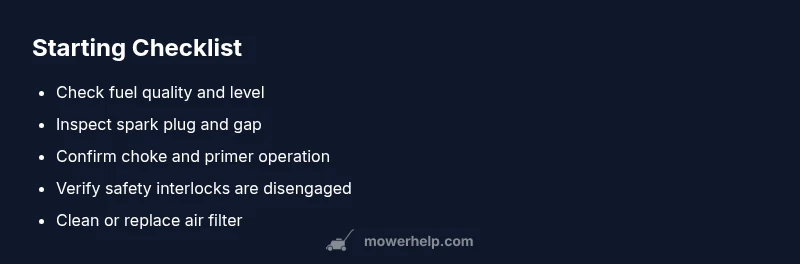
Before touching the mower, disconnect the spark plug boot and place the unit on a non-conductive surface. Run through a quick checklist: is there fuel, is the choke set correctly, and is the blade brake off? These basics cover most failures.
Tip: Always disconnect spark plug before inspection. - 2
Check Fuel Quality and Lines
Inspect the fuel level, sniff for sour fuel odor, and look for visible signs of contamination or water in the tank. If in doubt, drain the tank and fill with fresh fuel. Inspect fuel lines for cracks or kinks and replace if necessary.
Tip: Stale fuel can dramatically reduce starting performance. - 3
Inspect Spark Plug
Remove the spark plug and inspect for soot, oil, or wear. Clean with a wire brush or replace if fouled or damaged. Re-gap to manufacturer spec and reattach the cap firmly.
Tip: Keep a couple of spare spark plugs handy for quick swaps. - 4
Assess Choke, Primer, and Air Intake
Ensure the choke position matches starting conditions. Verify the primer pump works smoothly and the air filter isn’t clogged. A dirty air path can starve the engine of air, making starting difficult.
Tip: A clogged air filter often masquerades as a fuel problem. - 5
Examine Safety Interlocks
Check the blade brake, PTO, or operator presence switches to confirm they disengage correctly during starting. A faulty interlock can crank without delivering ignition. If suspected, test per the manual or replace the switch.
Tip: Interlock testing varies by model—consult your manual if unsure. - 6
Attempt Start and Observe
With all checks complete, attempt a start using the proper procedure. Listen for a smooth sputter or steady RPM; if it coughs but won’t stay running, the carburetor or fuel system may require cleaning or adjustment.
Tip: Note any unusual sounds or behaviors to guide further diagnostics.
Diagnosis: Lawn mower won't start
Possible Causes
- highFuel issues (old fuel, empty tank, clogged fuel line)
- mediumIgnition problems (faulty spark plug, wiring)
- lowSafety switch/interlock failure (blade brake, PTO)
Fixes
- easyCheck fuel, add fresh gas, drain old fuel if stale, replace fuel filter; inspect fuel line for kinks
- easyInspect/replace spark plug, gap check, clean terminal; replace if fouled
- easyTest safety switches and interlocks; ensure operator presence lever engages; replace faulty switch
Got Questions?
Why won't my lawn mower start with fresh fuel?
Fresh fuel helps, but a range of issues can prevent starting, including a bad spark plug, a clogged carburetor, or a faulty safety switch. Use the diagnostic flow to isolate the problem.
Fresh fuel helps, but another issue like a spark plug or safety switch could be stopping the start.
How do I test the spark plug safely?
Remove the spark plug boot, ground the plug against the engine, and pull the starter rope to see if a bright spark appears. If there is no spark, replace the plug and re-test.
Take out the spark plug, ground it on the engine, and pull the cord to check for spark.
What if the engine dies after starting?
Dieseling after starting often points to carburetor, air-fuel mixture, or idle settings. Clean the carburetor, reset air-fuel balance, and verify idle rpm per manual guidance.
If it dies after starting, the carburetor or idle setting is a likely culprit.
Should I replace the air filter regularly?
Yes. A clogged air filter restricts airflow and makes starting harder. Replace or clean the filter according to your mower’s maintenance schedule.
A dirty air filter can keep the engine from starting properly.
Is old fuel safe to use?
Old fuel can deteriorate and cause starting and running problems. Drain and replace with fresh fuel, and consider using a fuel stabilizer for storage.
Old fuel is usually not safe for reliable starting.
How often should I perform preventive maintenance?
Follow the manual’s guidance for preventive maintenance, typically at regular intervals based on hours of operation or storage season. Routine checks reduce starting problems and prolong mower life.
Do regular maintenance as outlined in your manual to prevent starting issues.
Watch Video
The Essentials
- Start with basic checks: fuel, spark, and safety interlocks.
- Replace fouled spark plugs promptly.
- Check choke, primer, and air filter during troubleshooting.
- Test safety switches if starter won’t engage.
- Seek professional repair before opening carburetor or deep fuel-system work.